Oddlet · 2 min read
Feb 19, 2026
Oddlet · 2 min read
Feb 19, 2026
🇬🇧The Girl Who Was Struck by Lightning
Her neighbors believed she became a genius because lightning killed three women standing next to her when she was fifteen months old.
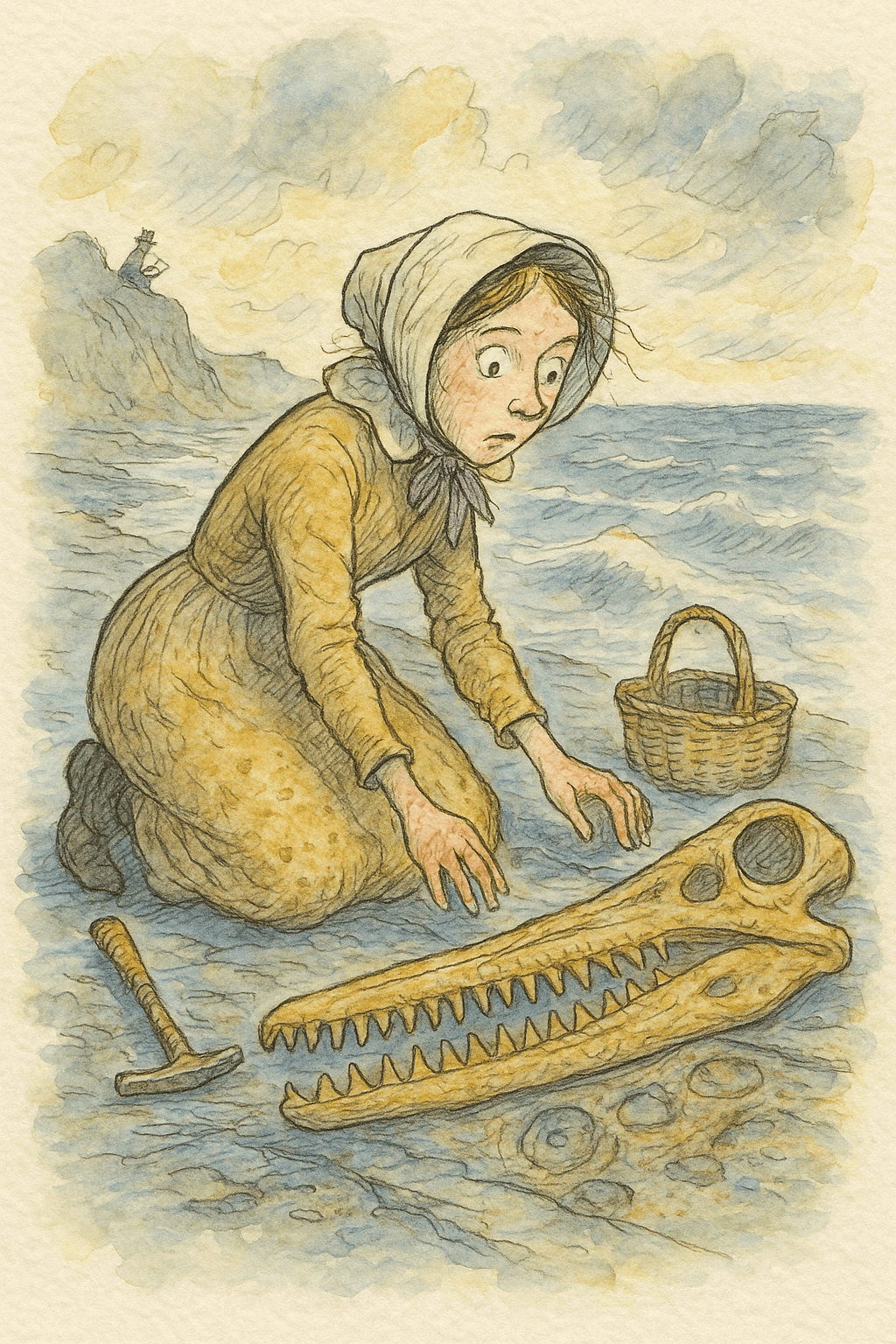
Mary Anning was one of the most important fossil hunters who ever lived. She discovered the first correctly identified ichthyosaur skeleton at the age of twelve — seventeen feet of ancient sea monster, pulled from the cliffs of Lyme Regis with hand tools. She later found the first complete plesiosaur, a creature so strange that scientists initially accused her of faking it. She found the first British pterosaur. She taught herself anatomy, geology, and French so she could read Cuvier's papers, and leading geologists traveled to Dorset to consult her before publishing their own work.
She could not join the Geological Society of London, attend its meetings, or put her name on a scientific paper.
She went to the cliffs anyway. Every day, in every weather, scanning the rocks that the sea had freshly exposed, racing to extract fossils before the next tide smashed them to pieces. She nearly died in a landslide in 1833 that killed her dog. She went back the next morning.
Her neighbors in Lyme Regis had a theory about where all this came from. In 1800, when Mary was fifteen months old, a neighbor was holding her at an outdoor horse show when lightning struck the group. Three women died instantly. The baby survived.
Before the strike, her family said, she had been sickly and listless. Afterward, she was something else entirely.
Know someone who’d love this?
- Wikipedia: Mary Anning — Comprehensive overview of her life, discoveries, and scientific impact. Details the 1811–1812 ichthyosaur discovery, her exclusion from scientific societies, and her death in 1847.
- Natural History Museum: Mary Anning — Confirms her major discoveries including ichthyosaur, plesiosaur, and pterosaur fossils. Notes she was excluded from the scientific establishment due to gender and class.
- University of California Museum of Paleontology — Details her working-class background, self-taught expertise, and the lightning strike incident as a baby. Confirms male scientists often failed to credit her discoveries.
- Geological Society: Mary Anning — Notes she could not join the Geological Society because she was a woman, and that she was only made an honorary member posthumously in 2010.
The Chemist Who Tasted Everything
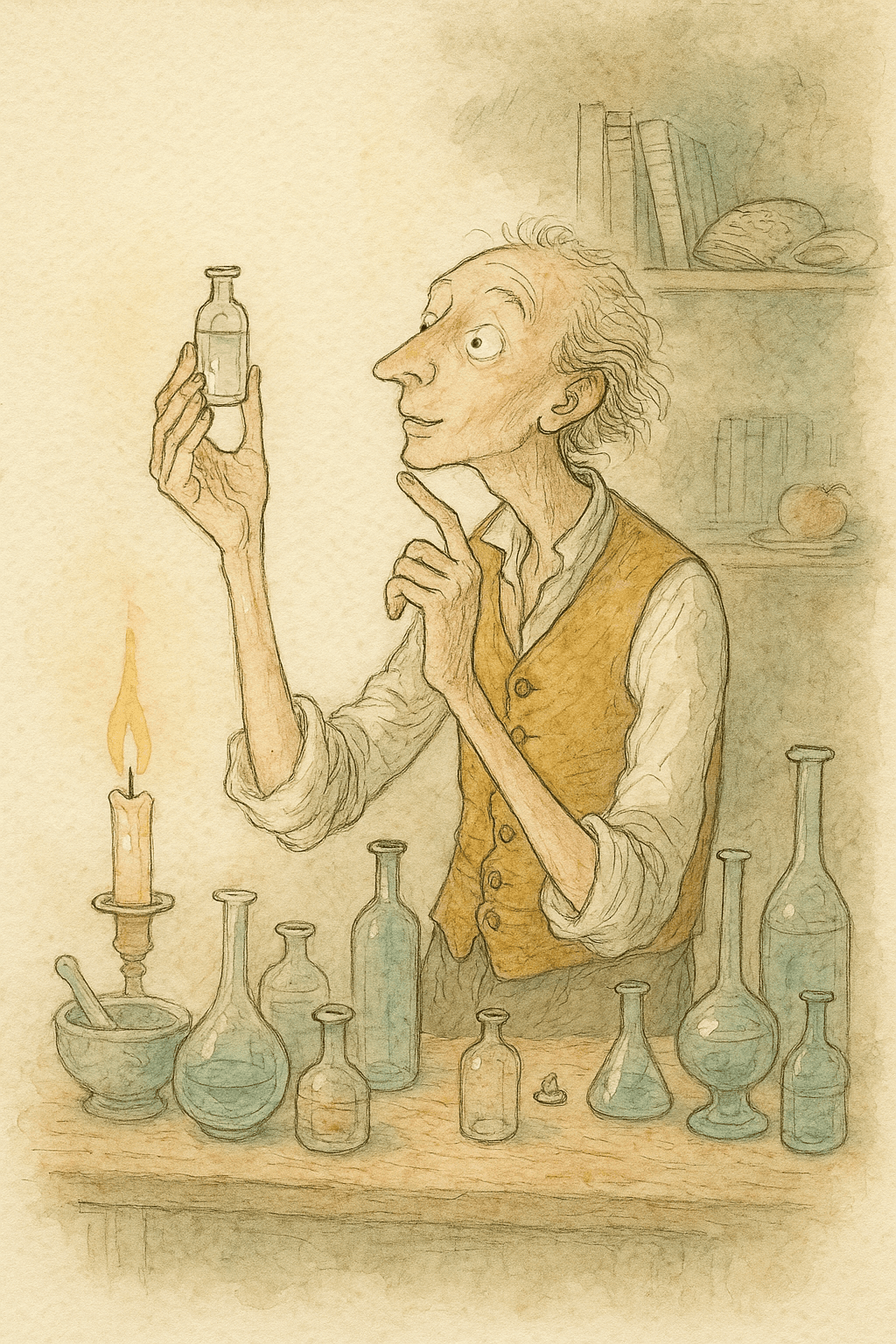
Carl Wilhelm Scheele discovered oxygen, chlorine, and more elements than almost anyone in the eighteenth century. Working alone in Swedish pharmacies, he identified each substance by tasting it. Mercury compounds. Arsenic. Hydrogen cyanide, which he found pleasantly sharp. His hands swelled. His joints ached. His body filled with what he'd catalogued. He died at forty-three, notebooks open, descriptions precise. The poisons tasted exactly as he said they would.
The Woman Who Practiced Madness in a Mirror
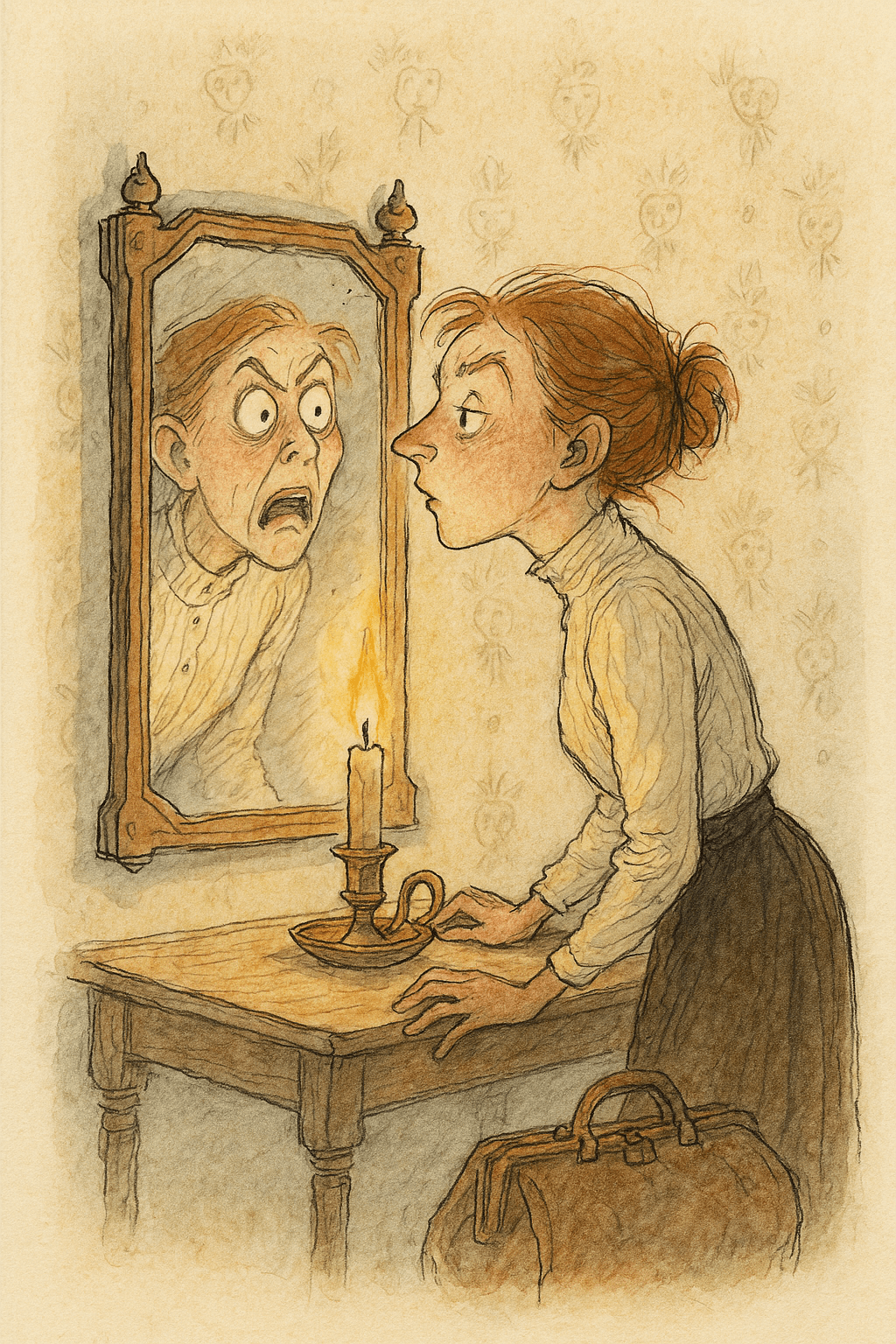
In 1887, Nellie Bly practiced deranged expressions in a mirror for one night, then got herself committed to a New York asylum. She spent ten days documenting rotten food, ice baths, and patients tied together with ropes. Her exposé triggered a grand jury investigation and forced the city to overhaul its asylum system. The doctors who had unanimously declared her insane never explained how a twenty-three-year-old reporter had fooled them all.
The Man No One Could Stop
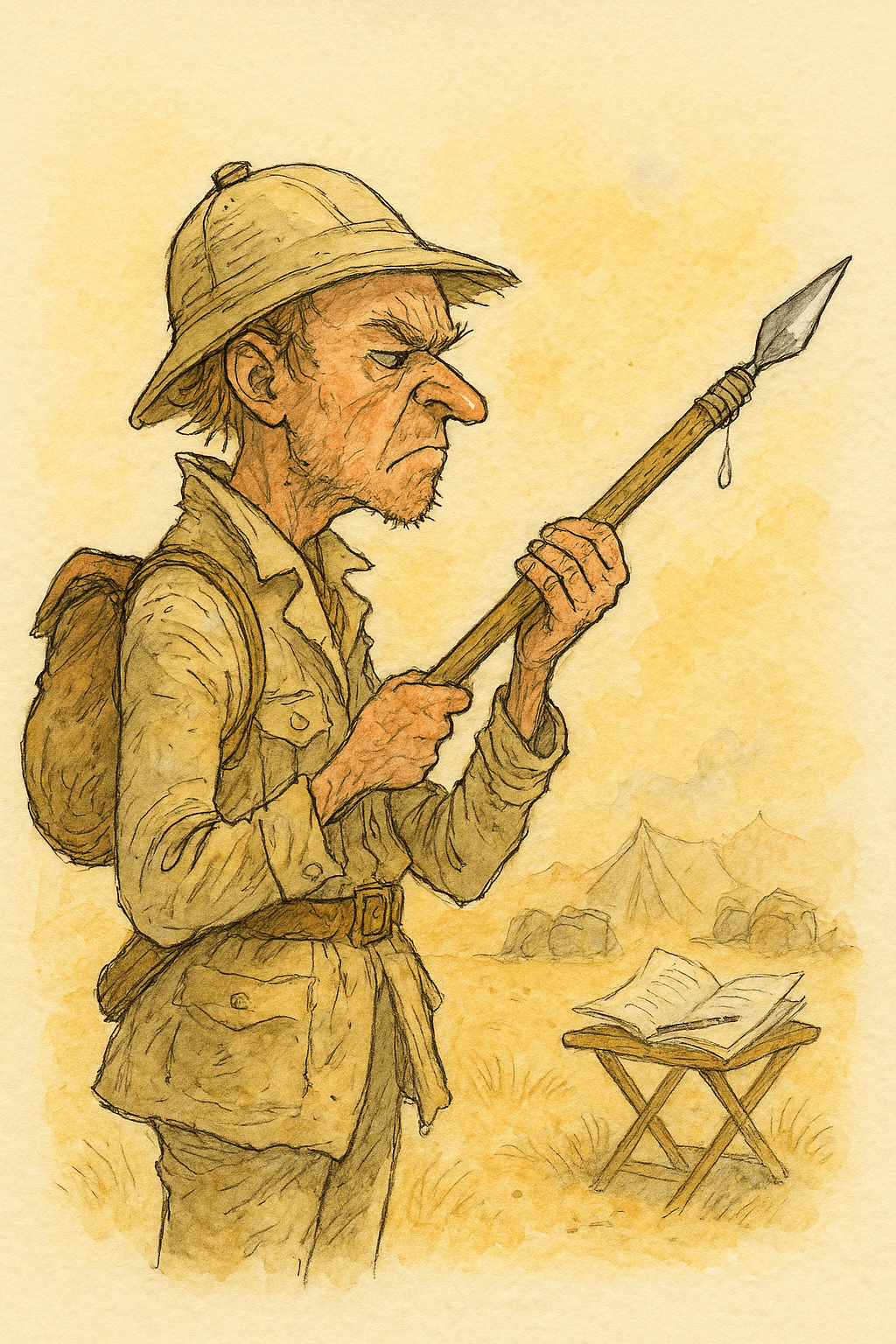
Sir Richard Francis Burton spoke twenty-nine languages, snuck into Mecca disguised as a merchant, translated the unexpurgated *Arabian Nights*, and pulled a javelin through his own face during a fight in Somaliland. He spent forty years filling journals with observations and translations no one else dared publish. When he died in 1890, his devoutly Catholic wife burned them all — convinced she was saving his soul.
Wonder, delivered.
A fresh oddlet in your inbox every morning — true, strange, and under a minute.
Free forever. Unsubscribe anytime.