Oddlet · 2 min read
Feb 11, 2026 · Updated Feb 20, 2026
Oddlet · 2 min read
Feb 11, 2026 · Updated Feb 20, 2026
🇺🇸The Man Who Recorded Everything
After nearly walking into Lake Michigan in 1927, Buckminster Fuller decided instead to document his entire life in fifteen-minute intervals.
Buckminster Fuller was expelled from Harvard twice — once for blowing his tuition money entertaining an entire vaudeville troupe. He worked as a meat packer. He went bankrupt. In 1927, at thirty-two, standing at the edge of Lake Michigan after his daughter's death, he seriously considered walking in and not coming back.
He did not walk in. Instead, he made a decision that was far stranger.
He decided to turn his life into an experiment. Specifically: to find out what one broke, unknown, discredited person could accomplish if he committed every waking moment to benefiting humanity. He would be his own test subject. And like any good experiment, it would need documentation.
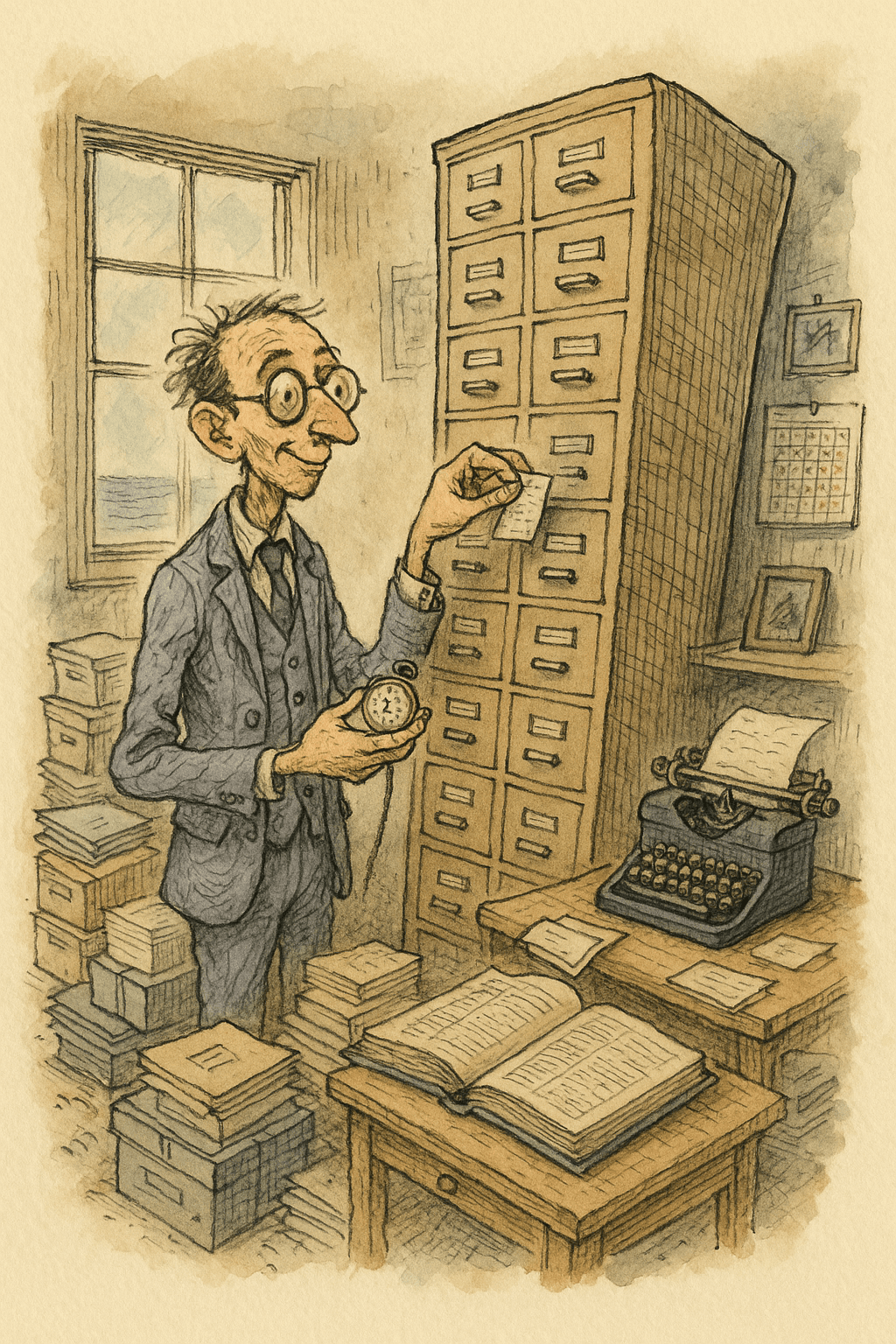
Fuller began recording his life in fifteen-minute intervals. Every letter he received, he kept. Every letter he sent, he carbon-copied. Every bill, every sketch, every scrap of thought — filed. He did this not for a week, or a year, or a decade. He did it from 1920 until his death in 1983.
Along the way, he picked up twenty-eight patents, invented the geodesic dome, coined the phrase "Spaceship Earth," and for two years in the 1930s slept only in thirty-minute naps every six hours, apparently just to see if he could.
The archive sits at Stanford University. It measures 270 linear feet. They call it the most documented human life in history.
It began the night he chose to stay.
Know someone who’d love this?
- Stanford Dymaxion Chronofile Collection — Confirms the Chronofile spans 1920–1983, measures 270 linear feet, and documents his life in extraordinary detail. Stanford holds the complete archive.
- Buckminster Fuller Institute Biography — Details his 1927 crisis, decision to make his life an experiment, and his philosophy of doing 'the most with the least.' Confirms he was 32 at this turning point.
- Wikipedia - Buckminster Fuller — Comprehensive overview confirming dates (1895–1983), Harvard expulsions, 28 patents, geodesic dome invention, and polyphasic sleep experiment. Multiple citations to primary sources.
- Smithsonian Magazine on Fuller's Chronofile — Describes the 15-minute documentation practice and characterizes it as 'the most documented human life in history.' Details his systematic self-tracking.
The Chemist Who Tasted Everything
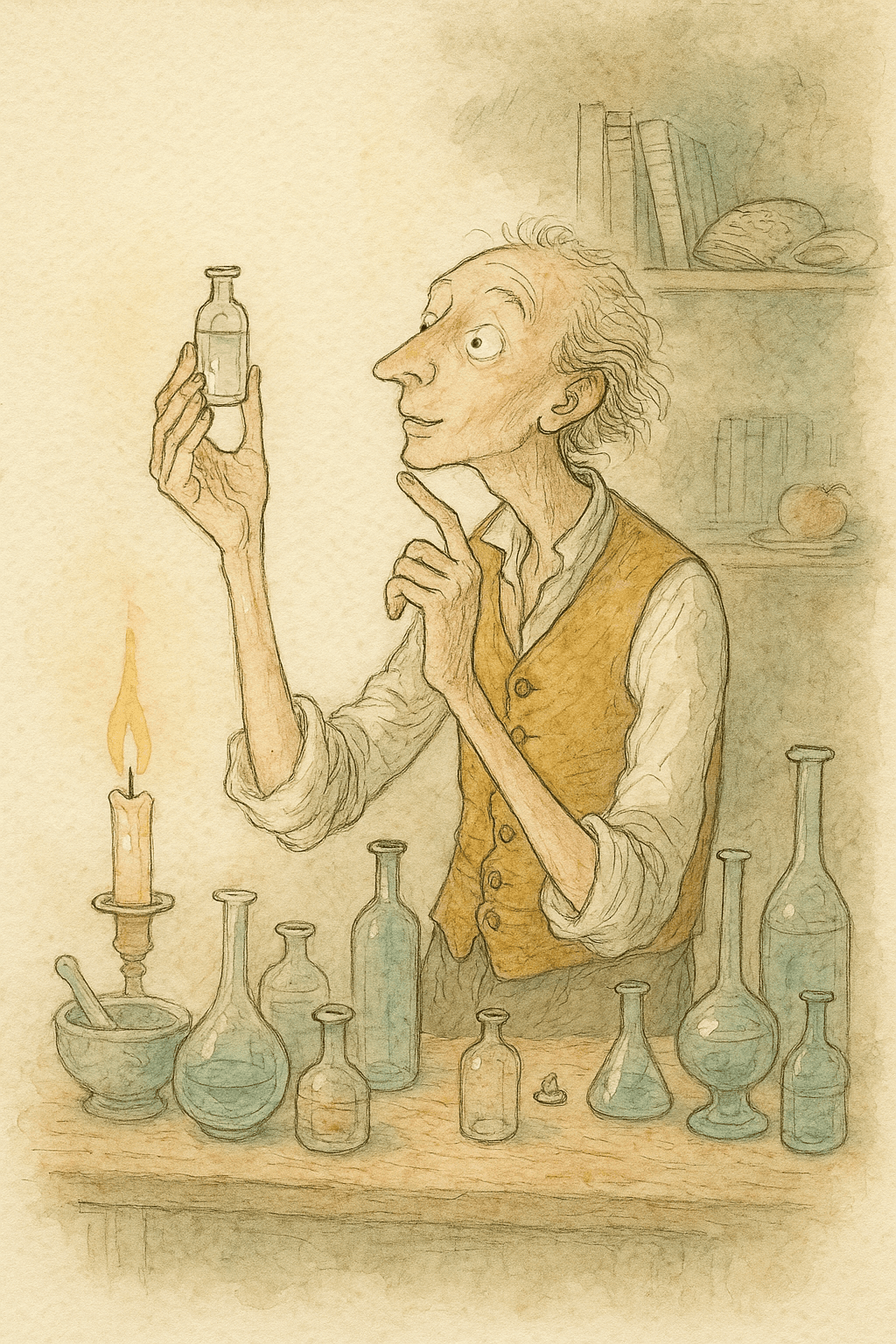
Carl Wilhelm Scheele discovered oxygen, chlorine, and more elements than almost anyone in the eighteenth century. Working alone in Swedish pharmacies, he identified each substance by tasting it. Mercury compounds. Arsenic. Hydrogen cyanide, which he found pleasantly sharp. His hands swelled. His joints ached. His body filled with what he'd catalogued. He died at forty-three, notebooks open, descriptions precise. The poisons tasted exactly as he said they would.
The Man Who Boiled His Own Urine and Found Light
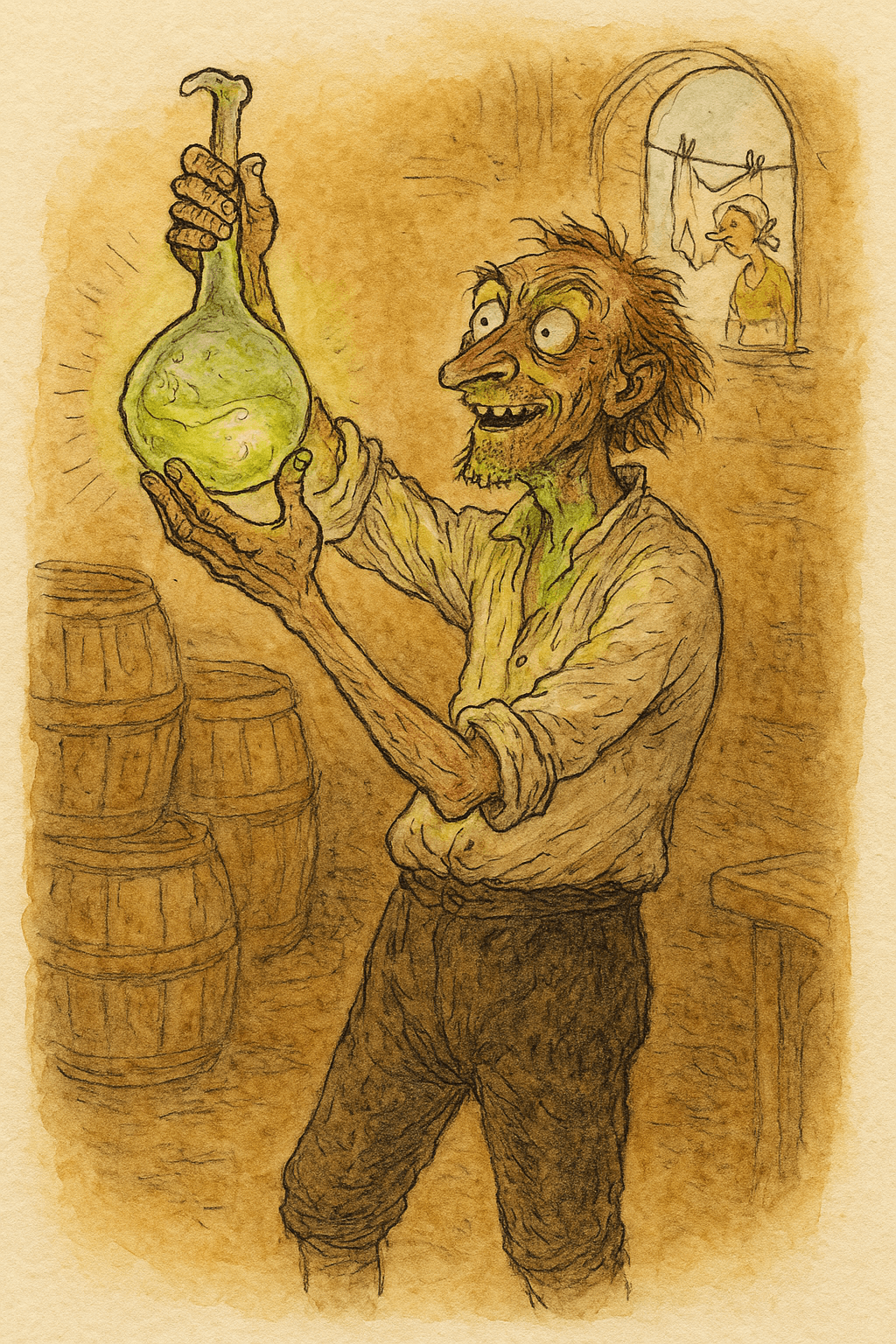
Hennig Brand was a 17th-century alchemist who spent both his wives' fortunes chasing gold. In 1669, he collected 1,500 gallons of urine, let it rot, then boiled it down and heated the paste for weeks. What came out wasn't gold — it was a waxy substance that glowed in the dark and burst into flames on its own. He'd discovered phosphorus, the first element ever isolated by a named individual. He went looking for gold in the most preposterous place imaginable and found light instead.
The Woman Who Practiced Madness in a Mirror
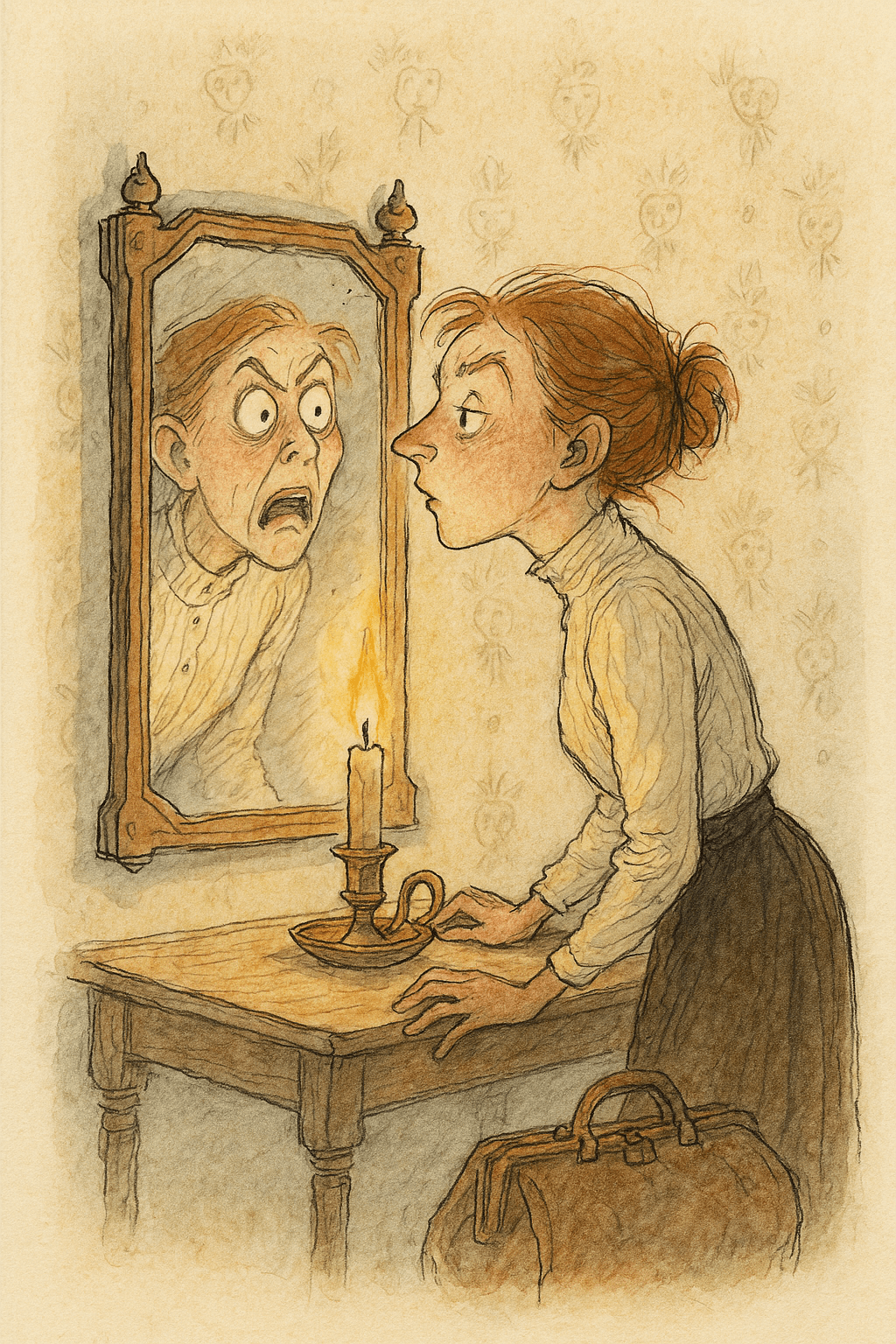
In 1887, Nellie Bly practiced deranged expressions in a mirror for one night, then got herself committed to a New York asylum. She spent ten days documenting rotten food, ice baths, and patients tied together with ropes. Her exposé triggered a grand jury investigation and forced the city to overhaul its asylum system. The doctors who had unanimously declared her insane never explained how a twenty-three-year-old reporter had fooled them all.
Wonder, delivered.
A fresh oddlet in your inbox every morning — true, strange, and under a minute.
Free forever. Unsubscribe anytime.