Oddlet · 2 min read
Feb 14, 2026 · Updated Feb 20, 2026
Oddlet · 2 min read
Feb 14, 2026 · Updated Feb 20, 2026
🇮🇳The Mathematician Who Dreamed in Equations
A goddess wrote equations on his tongue in dreams, and when mathematicians finally checked his work, he was right.
In January 1913, G.H. Hardy — one of the finest mathematicians in England — received a letter from an unknown clerk in Madras. It contained 120 theorems. Hardy assumed it was a prank. Then he sat down and actually read them.
Some of the formulas he recognized. Some he could prove with effort. Some, he later wrote, "defeated me completely; I had never seen anything in the least like them before." The clerk had no degree. He had failed out of college twice, both times because he refused to study anything other than mathematics. He had reinvented a century of European number theory alone, working in notebooks, while processing accounts at the Madras Port Trust.
Hardy brought Srinivasa Ramanujan to Cambridge. He later devised a personal scale for rating mathematical talent, with 100 as the ceiling. He gave himself 25. He gave Ramanujan 100.
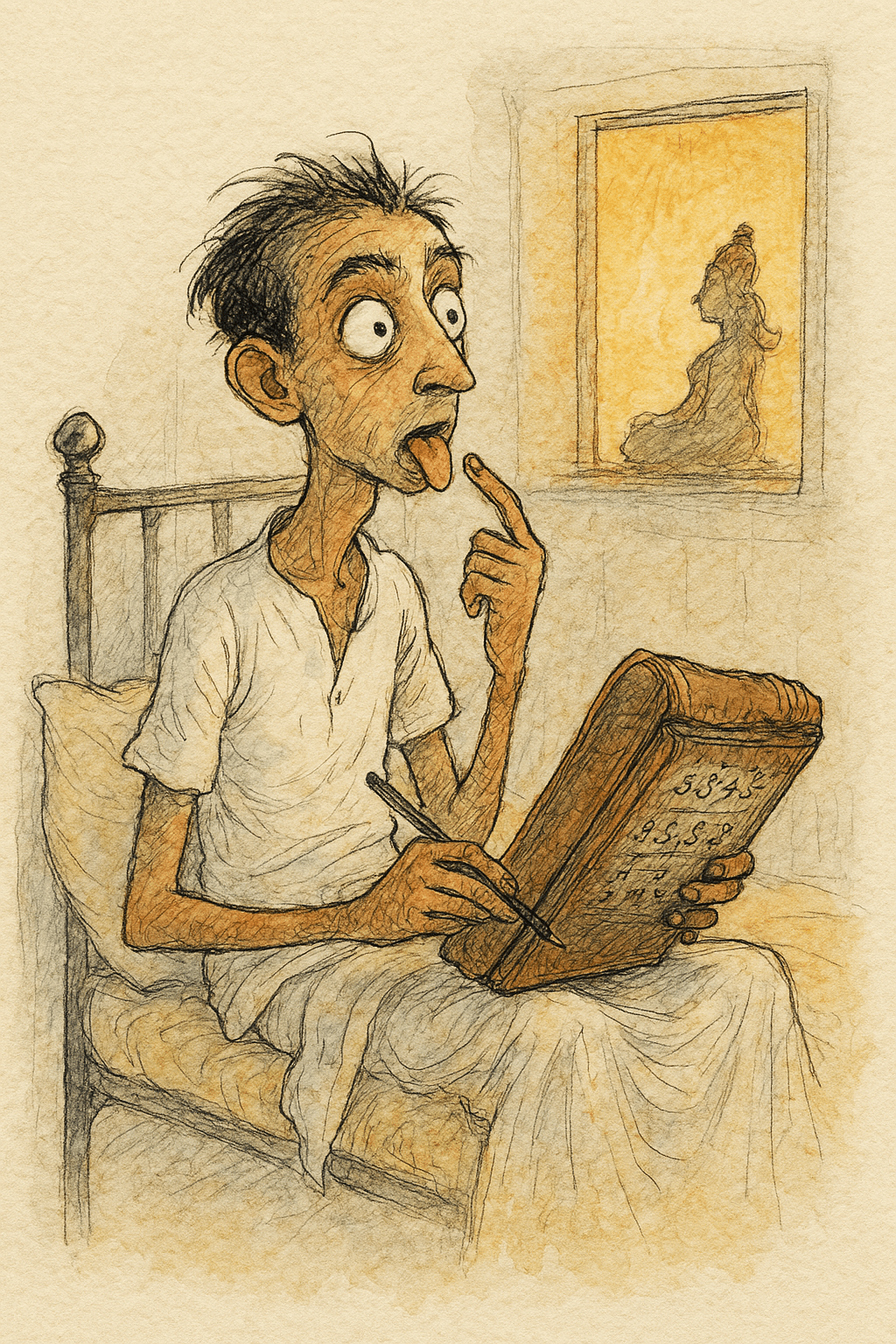
Ramanujan produced nearly 3,900 original results during his short life, many without formal proof. When colleagues asked how he arrived at formulas that seemed to come from nowhere, he had a consistent answer. The goddess Namagiri appeared to him in dreams, he said, and wrote equations on his tongue. He would wake and transcribe them.
He died at thirty-two. He left behind three notebooks. A fourth, lost for decades, was found in a box at Trinity College in 1976. Mathematicians are still proving him right.
Know someone who’d love this?
- Wikipedia: Srinivasa Ramanujan — Comprehensive biographical details, dates, and mathematical contributions verified. Notes Hardy's initial reaction and the scale rating anecdote.
- MacTutor History of Mathematics — Confirms college failures, poverty, and the 1913 letter details. Provides context on his self-taught background and work conditions.
- The Man Who Knew Infinity (book basis) — Britannica entry confirms key dates, Hardy collaboration, and the extraordinary nature of his mathematical intuition. Notes his death at 32 from illness.
- Trinity College Cambridge — Confirms his fellowship at Trinity (1918) and collaboration with Hardy. Notes the 'lost notebook' discovered in 1976.
The Chemist Who Tasted Everything
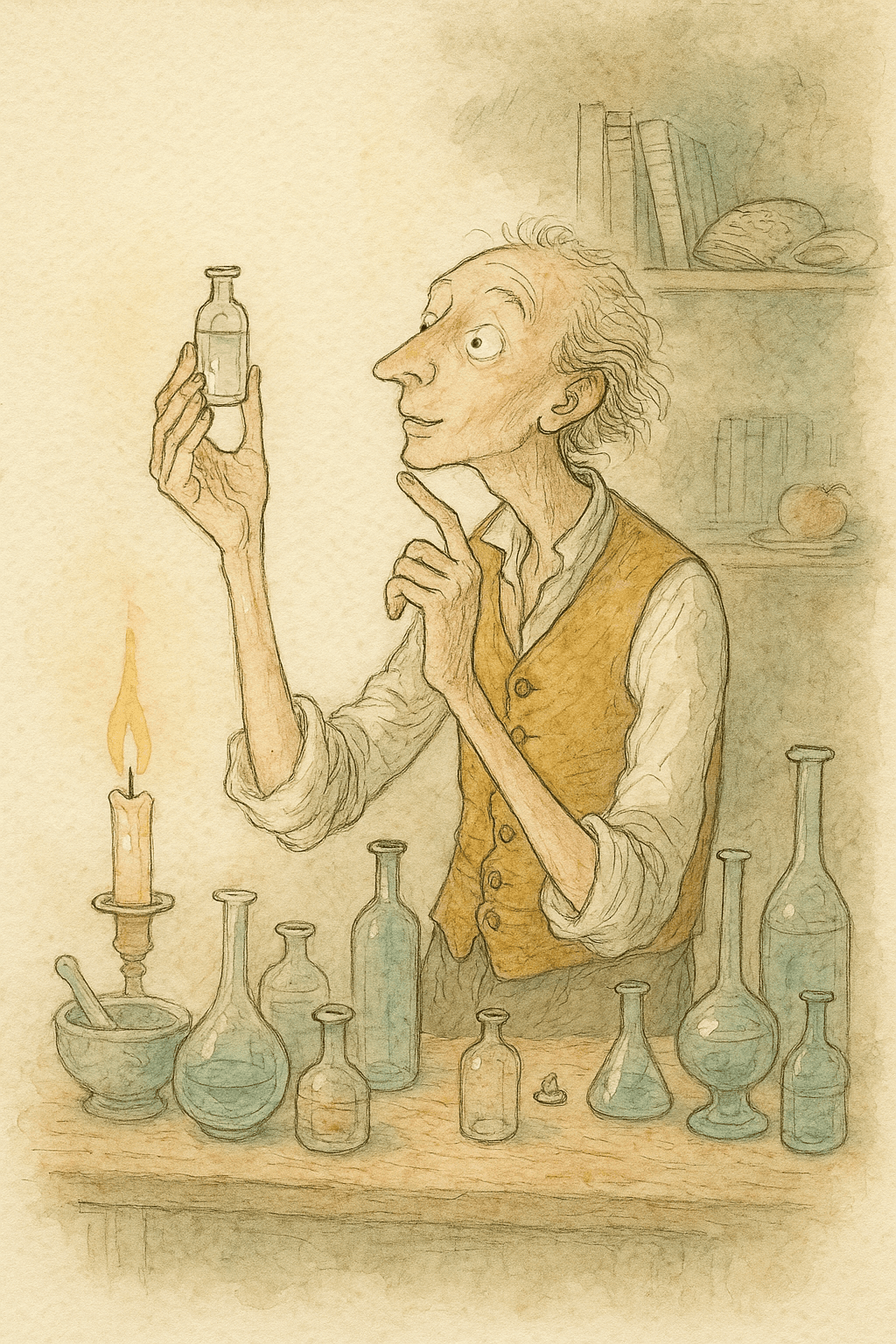
Carl Wilhelm Scheele discovered oxygen, chlorine, and more elements than almost anyone in the eighteenth century. Working alone in Swedish pharmacies, he identified each substance by tasting it. Mercury compounds. Arsenic. Hydrogen cyanide, which he found pleasantly sharp. His hands swelled. His joints ached. His body filled with what he'd catalogued. He died at forty-three, notebooks open, descriptions precise. The poisons tasted exactly as he said they would.
The Man Who Boiled His Own Urine and Found Light
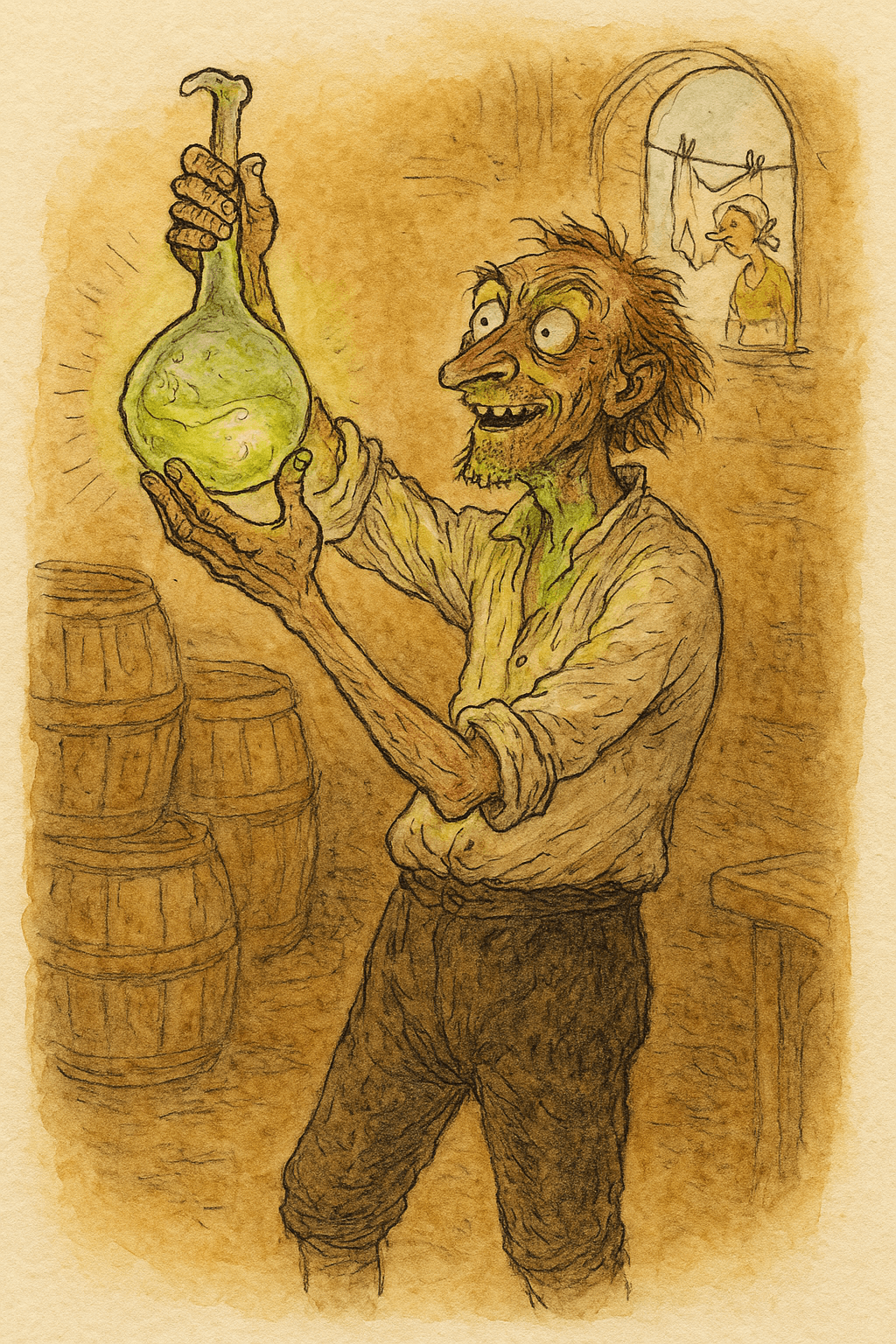
Hennig Brand was a 17th-century alchemist who spent both his wives' fortunes chasing gold. In 1669, he collected 1,500 gallons of urine, let it rot, then boiled it down and heated the paste for weeks. What came out wasn't gold — it was a waxy substance that glowed in the dark and burst into flames on its own. He'd discovered phosphorus, the first element ever isolated by a named individual. He went looking for gold in the most preposterous place imaginable and found light instead.
The Woman Who Practiced Madness in a Mirror
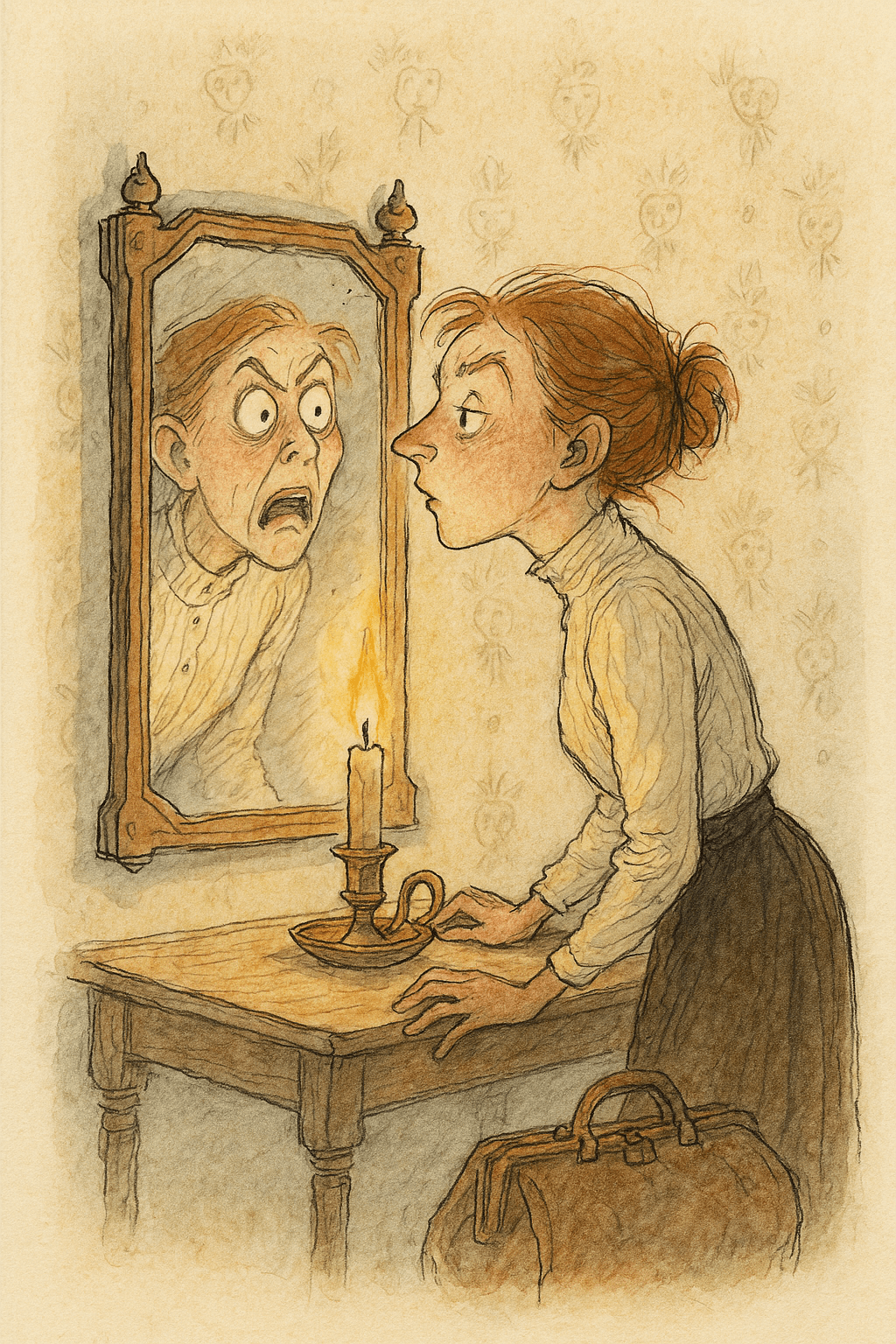
In 1887, Nellie Bly practiced deranged expressions in a mirror for one night, then got herself committed to a New York asylum. She spent ten days documenting rotten food, ice baths, and patients tied together with ropes. Her exposé triggered a grand jury investigation and forced the city to overhaul its asylum system. The doctors who had unanimously declared her insane never explained how a twenty-three-year-old reporter had fooled them all.
Wonder, delivered.
A fresh oddlet in your inbox every morning — true, strange, and under a minute.
Free forever. Unsubscribe anytime.