Oddlet · 2 min read
Feb 14, 2026 · Updated Feb 20, 2026
Oddlet · 2 min read
Feb 14, 2026 · Updated Feb 20, 2026
🇺🇸The Woman Who Discovered Climate Change from Her Seat
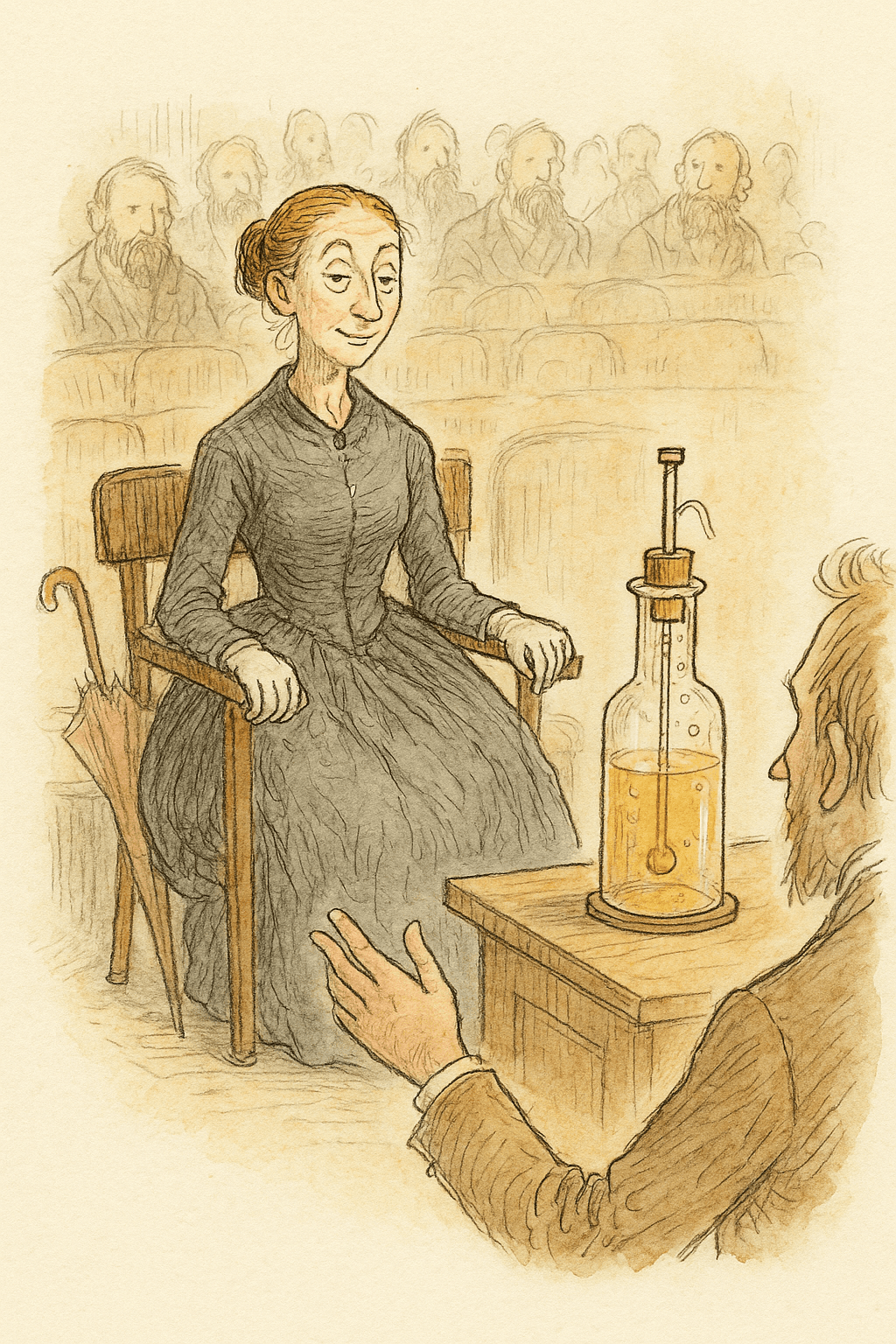
She discovered the greenhouse effect in 1856, then sat in the audience while a man read her paper aloud because women weren't allowed to present their own work.
In 1856, Eunice Newton Foote filled glass cylinders with different gases, placed thermometers inside them, and set them in the sun. The cylinder filled with carbon dioxide got hotter than the others and stayed hot far longer. She wrote it up plainly: an atmosphere heavy with CO₂ would give the Earth a higher temperature. It was the first time anyone had demonstrated the greenhouse effect.
Three years later, the Irish physicist John Tyndall published similar findings with more sophisticated equipment. He became the father of climate science. Foote became a footnote — and then not even that.
The details are almost too neat. Foote was no amateur dabbler. She had signed the Declaration of Sentiments at Seneca Falls in 1848, standing alongside Elizabeth Cady Stanton to demand that women be treated as full human beings. Eight years later, she produced a discovery that would define the central crisis of the coming centuries. And when it was time to present her paper, Professor Joseph Henry introduced it by noting that science was "of no country and of no sex."
Then the association's own rules prevented her from reading it aloud, because she was a woman.
So she sat in the audience and listened to a man explain her work to a room full of men, who then forgot about it for a hundred and fifty-four years.
Know someone who’d love this?
- Wikipedia: Eunice Newton Foote — Comprehensive overview with dates, biographical details, and rediscovery timeline. Confirms 1856 publication and 2010 rediscovery by Sorenson.
- Smithsonian Magazine: This Lady Scientist Defined the Greenhouse Effect — Details of her experimental method and the circumstances of presentation. Notes Joseph Henry introduced her paper with faint praise about women in science.
- NOAA Climate.gov: Happy 200th birthday, Eunice Foote! — Confirms birth year 1819, experimental details, and her connection to Seneca Falls women's rights movement.
- Physics Today: Eunice Foote's pioneering research on CO₂ — Technical analysis of her experimental apparatus and methodology. Confirms she used glass cylinders, thermometers, and an air pump to test different gases.
The Chemist Who Tasted Everything
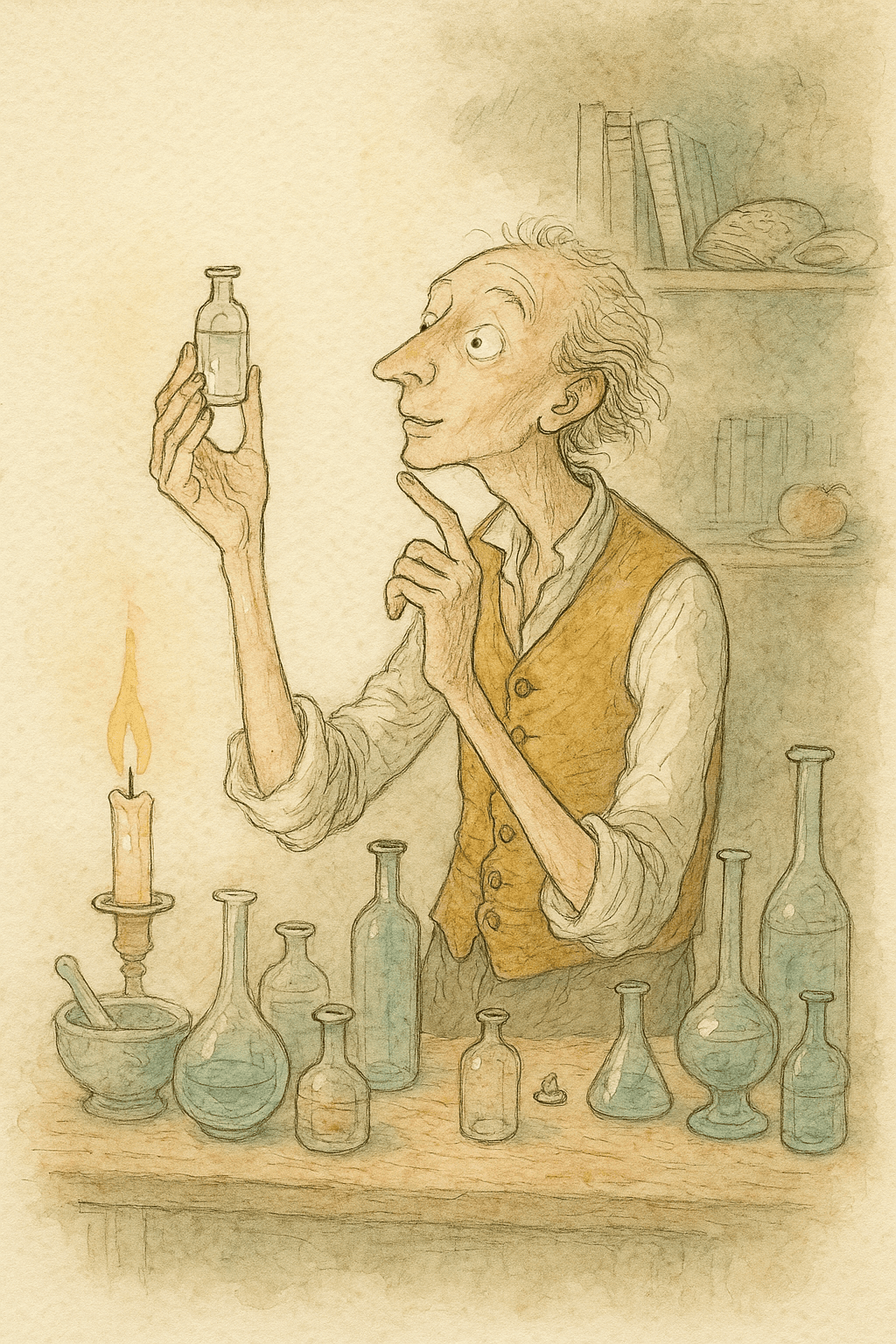
Carl Wilhelm Scheele discovered oxygen, chlorine, and more elements than almost anyone in the eighteenth century. Working alone in Swedish pharmacies, he identified each substance by tasting it. Mercury compounds. Arsenic. Hydrogen cyanide, which he found pleasantly sharp. His hands swelled. His joints ached. His body filled with what he'd catalogued. He died at forty-three, notebooks open, descriptions precise. The poisons tasted exactly as he said they would.
The Man Who Boiled His Own Urine and Found Light
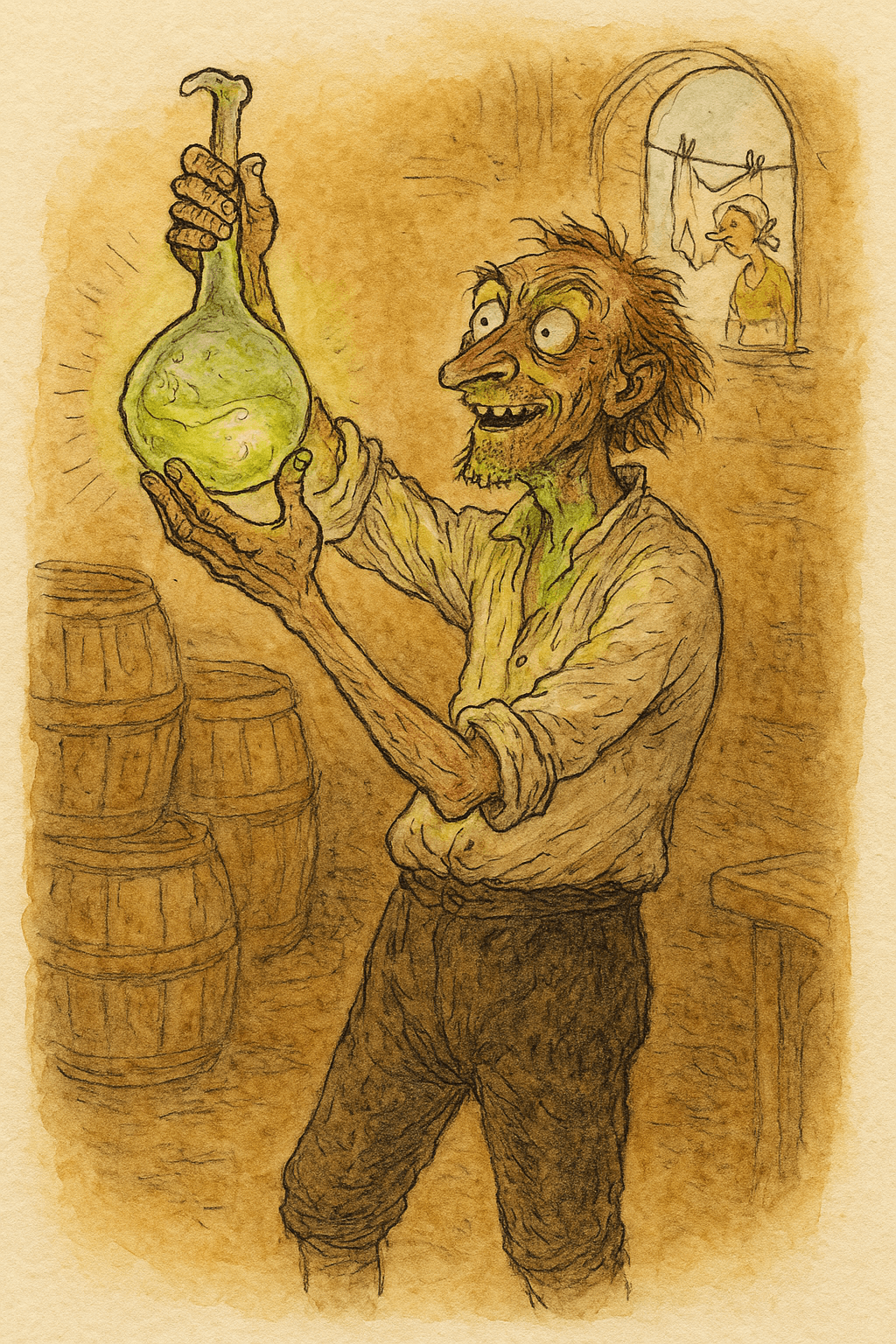
Hennig Brand was a 17th-century alchemist who spent both his wives' fortunes chasing gold. In 1669, he collected 1,500 gallons of urine, let it rot, then boiled it down and heated the paste for weeks. What came out wasn't gold — it was a waxy substance that glowed in the dark and burst into flames on its own. He'd discovered phosphorus, the first element ever isolated by a named individual. He went looking for gold in the most preposterous place imaginable and found light instead.
The Woman Who Practiced Madness in a Mirror
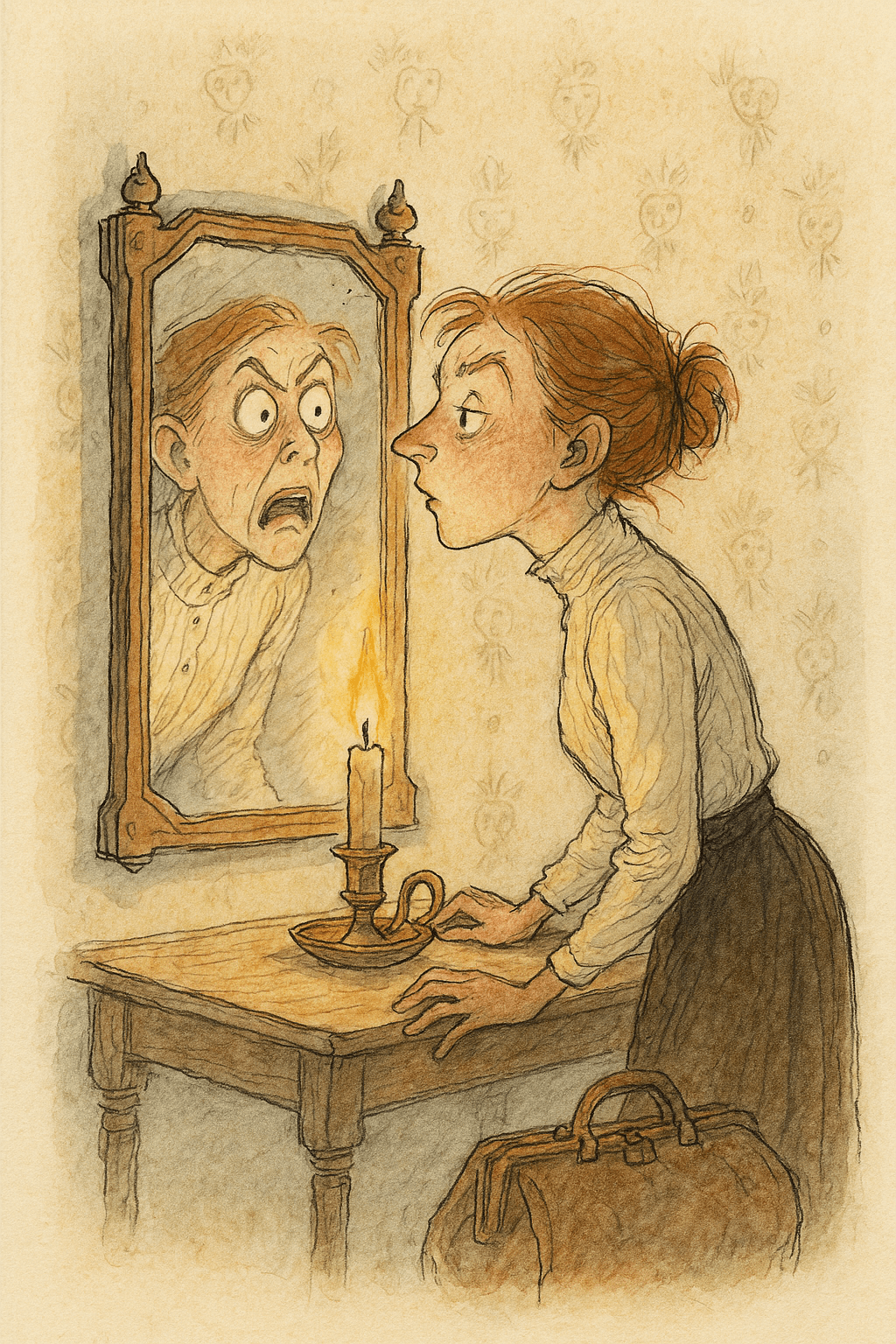
In 1887, Nellie Bly practiced deranged expressions in a mirror for one night, then got herself committed to a New York asylum. She spent ten days documenting rotten food, ice baths, and patients tied together with ropes. Her exposé triggered a grand jury investigation and forced the city to overhaul its asylum system. The doctors who had unanimously declared her insane never explained how a twenty-three-year-old reporter had fooled them all.
Wonder, delivered.
A fresh oddlet in your inbox every morning — true, strange, and under a minute.
Free forever. Unsubscribe anytime.