Oddlet: Hokusai · 1 min read
Mar 15, 2026
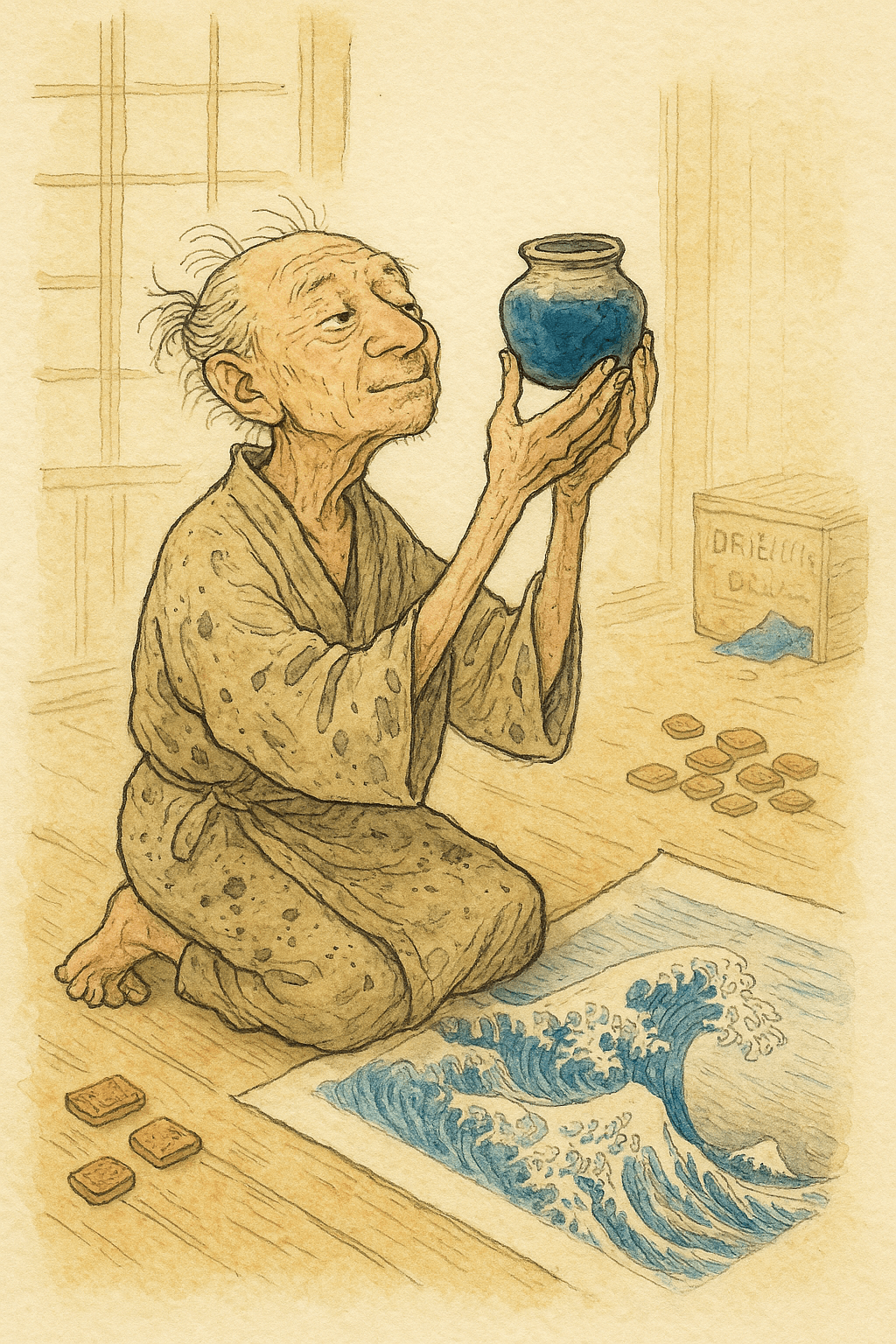
The Old Man Mad About Painting
The most quintessentially Japanese artwork ever made was painted with a color Japan had banned.
Katsushika Hokusai produced roughly thirty thousand works of art across a career spanning seven decades. He painted with brushes, with fingers, with brooms. During a festival in 1804, he created a portrait of a Buddhist priest said to be six hundred feet long, using buckets of ink. He once dipped a chicken's feet in red paint and chased it across a blue wash, then presented the result to the shōgun as a landscape of the Tatsuta River with autumn leaves.
He also moved house ninety-three times — once, three times in a single day — and changed his name at least thirty.
But the detail that matters most is a color. The blue that defines The Great Wave off Kanagawa, the image now considered perhaps the most quintessentially Japanese artwork ever made, was not Japanese. It was Prussian blue — a pigment invented by accident in a Berlin laboratory, reverse-engineered by a manufacturer in Guangzhou, and smuggled into Japan as contraband under the shogunate's strict import ban. Printmakers in Osaka called it bero, a corruption of the Dutch for "Berlin blue." Hokusai was among the first to use it boldly, flooding his Thirty-Six Views of Mount Fuji with a color he was technically not supposed to have.
He died at eighty-eight. His tombstone bore his final name: Gakyōrōjin Manji. Old Man Mad About Painting.
His last words were a request for ten more years.
Know someone who’d love this?
Wonder, delivered.
A fresh, full oddlet in your inbox every morning — true, strange, and under a minute.
Free forever. Unsubscribe anytime.