Oddlet: Edith Sitwell · 1 min read
Mar 14, 2026
The Woman Who Dressed Like a Cathedral
She had a coffin she liked to lie in before writing each morning, to focus her mind.
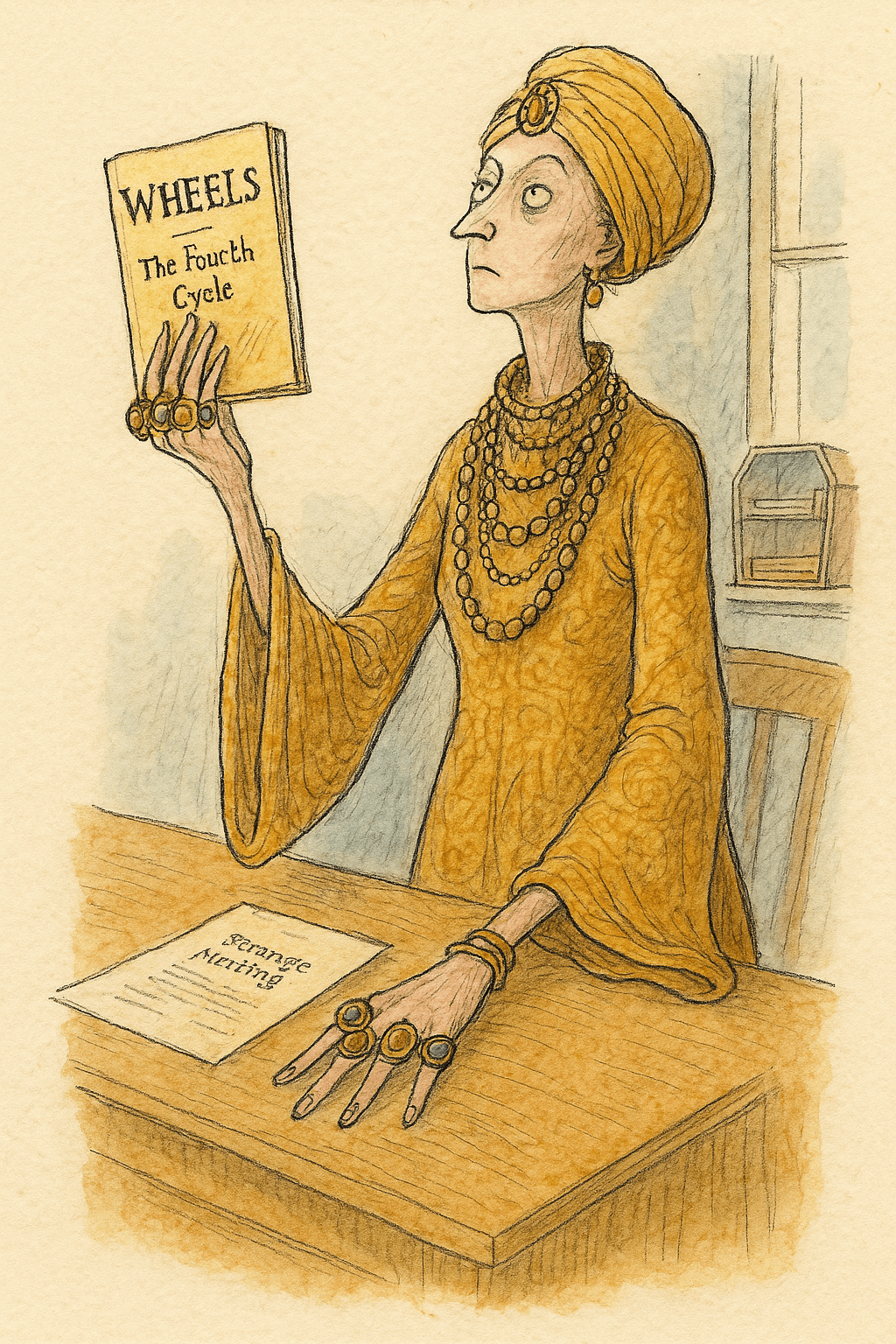
Dame Edith Sitwell stood six feet tall, wrote poetry that helped reshape English modernism, and dressed in floor-length brocade gowns, gold turbans, and so many enormous rings that her jewelry now occupies its own cases in the Victoria and Albert Museum.
She also had a coffin she liked to lie in before writing each morning, to focus her mind.
When her avant-garde poetry performance Façade debuted in London in 1923, the audience was so outraged that she had to hide backstage. An old woman waited outside with an umbrella to beat her. Guests visiting her family home were handed a questionnaire asking whether any relative had ever been confined to a mental institution, with the supplementary question: "If not, why not?" She once explained her wardrobe by saying that if she wore ordinary coats and skirts, people would "doubt the existence of the Almighty." She described the critic F.R. Leavis as "a tiresome, whining, pettyfogging little pipsqueak." She launched Dylan Thomas's career with a single review she had to pester her editor to publish. She housed a young William Walton for fifteen years while he became one of Britain's greatest composers.
And in 1919, she edited an anthology called Wheels that printed seven poems by a dead soldier named Wilfred Owen — including Strange Meeting and Disabled — the first time his work had been gathered in one place. Only five of his poems had been published while he was alive.
Know someone who’d love this?
Wonder, delivered.
A fresh, full oddlet in your inbox every morning — true, strange, and under a minute.
Free forever. Unsubscribe anytime.