Oddlet · 1 min read
Feb 19, 2026
Oddlet · 1 min read
Feb 19, 2026
🇫🇷The Woman Who Calculated Everything
She funded her physics research by calculating card game odds and winning.
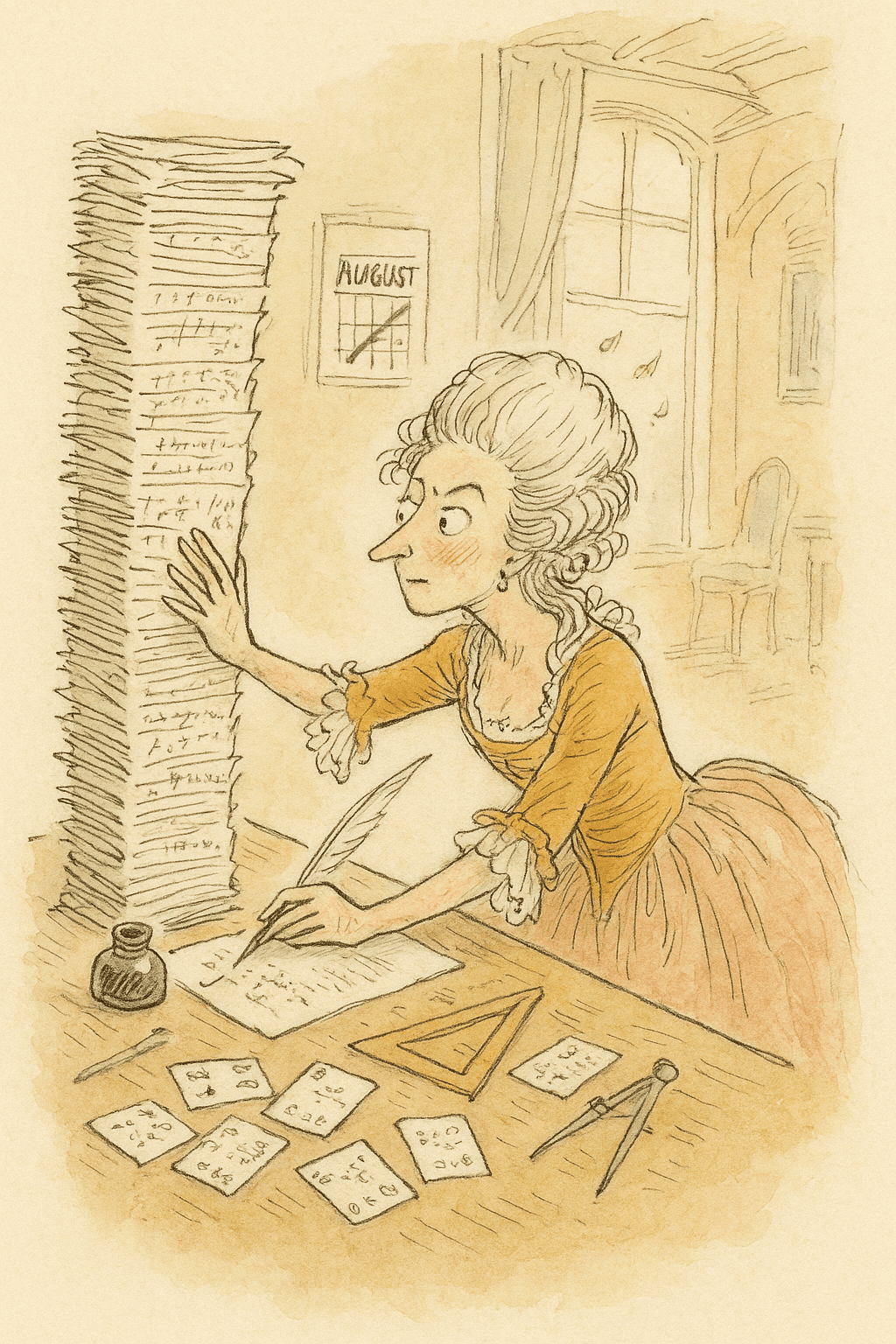
Émilie du Châtelet translated Newton's Principia Mathematica into French. Her version, completed in 1749, is still the standard French translation today — nearly three centuries later. She also conducted original research on energy and motion, proposing that energy is proportional to mass times velocity squared, a formulation the rest of physics would take decades to catch up to.
She funded all of this by gambling.
Du Châtelet applied probability theory to card games the way other people applied it to astronomy. She calculated odds, exploited them, and used her winnings to buy books, laboratory equipment, and time. Voltaire, her partner of fifteen years, called her "a great man whose only fault was being a woman." She seems not to have regarded it as a fault at all.
In the spring of 1749, at forty-two, she discovered she was pregnant. She knew the odds. She had always known the odds. She calculated that the baby would arrive in September. She calculated that the translation could be finished by August.
So she worked. Through the heat of summer, at her desk, she raced the one deadline that could not be negotiated. The manuscript was complete when she went into labor.
She died six days later.
The translation outlived her by centuries. She had bet on the right thing.
Know someone who’d love this?
- Physics Today article — Details her scientific work and the circumstances of completing her translation while pregnant, knowing the risks at her age.
- Wikipedia biography — Comprehensive overview of life, work, and death. Confirms gambling activities, Voltaire relationship, pregnancy circumstances, and Newton translation as standard French version.
- Stanford Encyclopedia of Philosophy — Detailed analysis of her scientific contributions, particularly her work on vis viva (living force) and energy conservation. Confirms mv² formulation and its significance.
- Britannica entry — Confirms key biographical details including birth/death dates, Newton translation completion during pregnancy, and death from childbirth complications.
The Chemist Who Tasted Everything
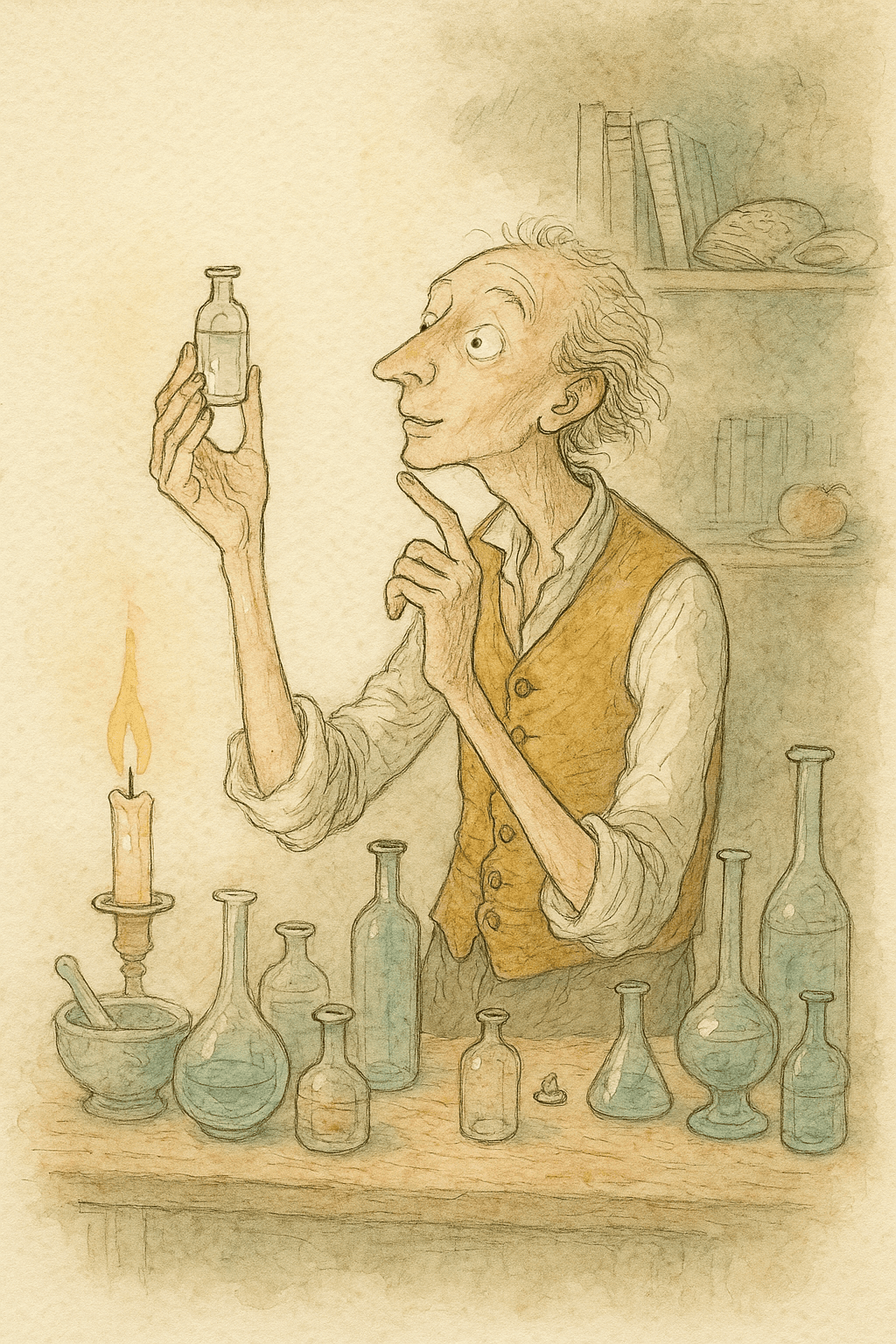
Carl Wilhelm Scheele discovered oxygen, chlorine, and more elements than almost anyone in the eighteenth century. Working alone in Swedish pharmacies, he identified each substance by tasting it. Mercury compounds. Arsenic. Hydrogen cyanide, which he found pleasantly sharp. His hands swelled. His joints ached. His body filled with what he'd catalogued. He died at forty-three, notebooks open, descriptions precise. The poisons tasted exactly as he said they would.
The Man Who Boiled His Own Urine and Found Light
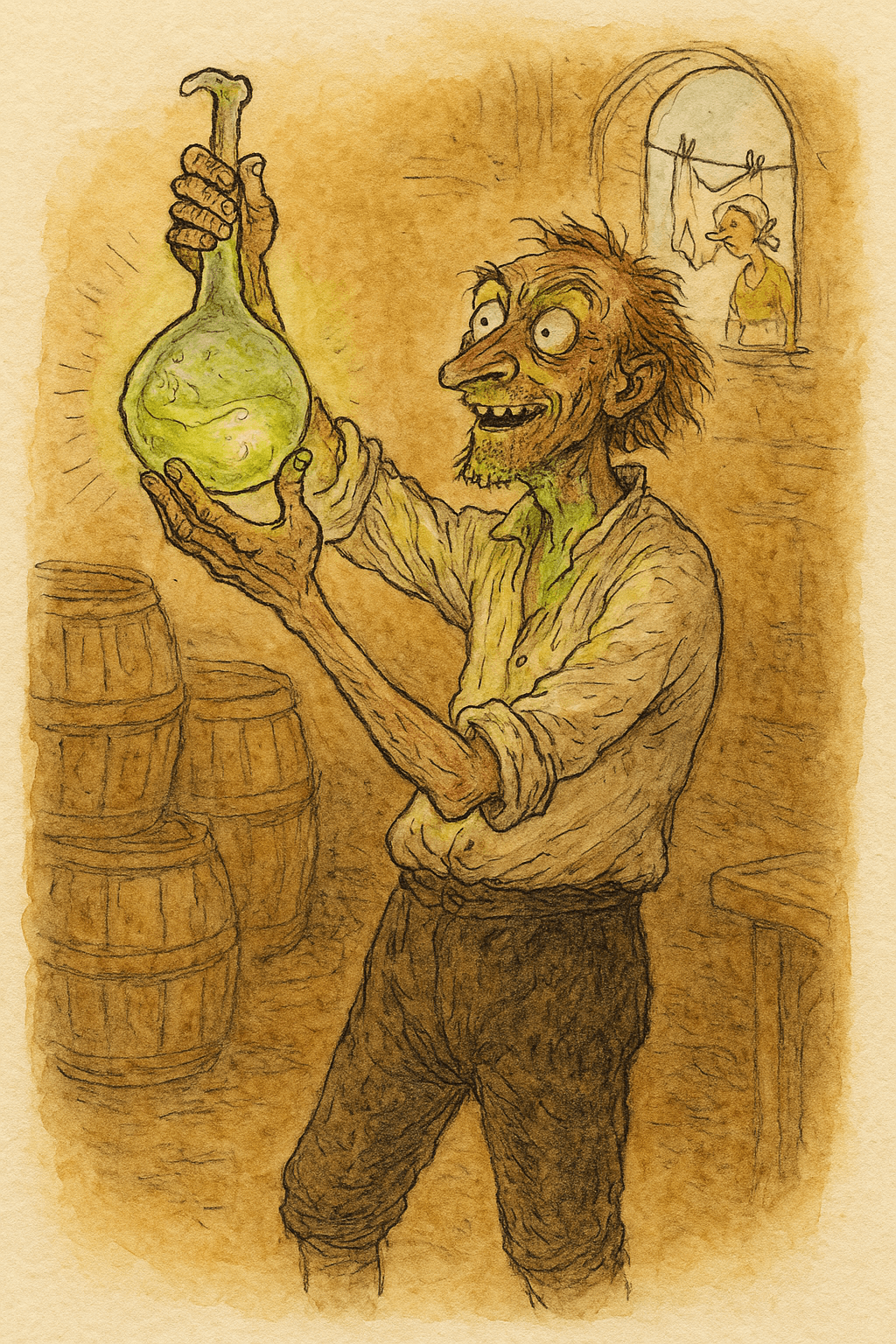
Hennig Brand was a 17th-century alchemist who spent both his wives' fortunes chasing gold. In 1669, he collected 1,500 gallons of urine, let it rot, then boiled it down and heated the paste for weeks. What came out wasn't gold — it was a waxy substance that glowed in the dark and burst into flames on its own. He'd discovered phosphorus, the first element ever isolated by a named individual. He went looking for gold in the most preposterous place imaginable and found light instead.

The Woman Who Practiced Madness in a Mirror
In 1887, Nellie Bly practiced deranged expressions in a mirror for one night, then got herself committed to a New York asylum. She spent ten days documenting rotten food, ice baths, and patients tied together with ropes. Her exposé triggered a grand jury investigation and forced the city to overhaul its asylum system. The doctors who had unanimously declared her insane never explained how a twenty-three-year-old reporter had fooled them all.
Wonder, delivered.
A fresh oddlet in your inbox every weekday morning — true, strange, and under a minute.
Free forever. Unsubscribe anytime.