Oddlet · 2 min read
Feb 10, 2026 · Updated Feb 20, 2026
Oddlet · 2 min read
Feb 10, 2026 · Updated Feb 20, 2026
🇷🇸The Man Who Loved a Pigeon
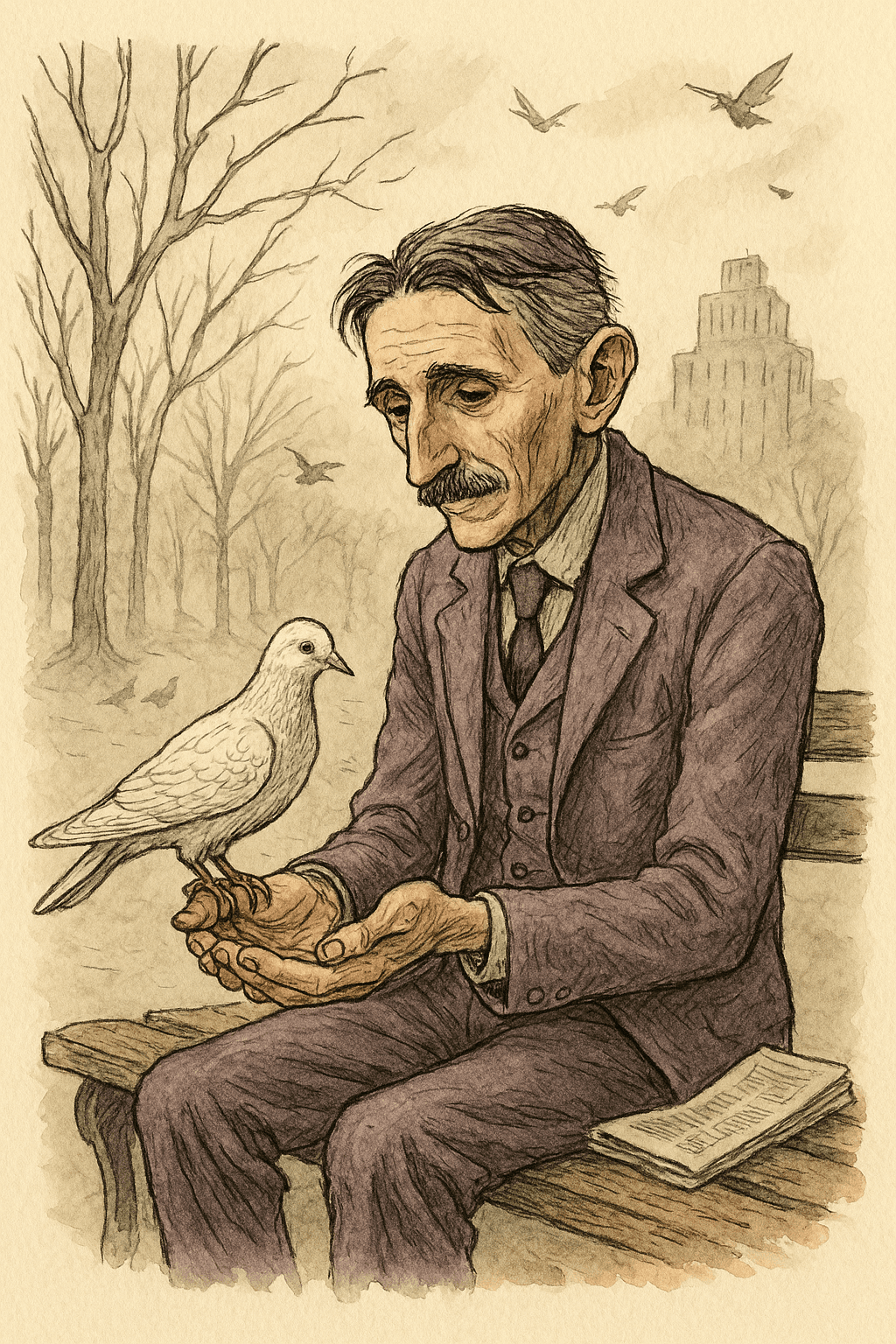
Nikola Tesla loved a pigeon as a man loves a woman. When she died, he said his life's work was finished.
Nikola Tesla held roughly three hundred patents. He invented the alternating current motor, designed the power system that electrified the modern world, and demonstrated wireless communication before Marconi got the credit. He could visualize an entire machine in his head, rotate it, test it, and build it — often without a single revision to the original design. He was, by most accounts, one of the most gifted minds of the nineteenth or twentieth century.
He also required exactly eighteen napkins at every meal.
Tesla's life was governed by the number three. He would walk around a block three times before entering a building. He calculated the cubic volume of his food before eating it. His hotel rooms had to have numbers divisible by three. He could not touch round objects, could not be near pearls, and could not shake hands without afterwards counting something to restore order.
He slept two hours a night. He suffered a nervous breakdown in 1905. He gave away his fortune. By the end of his life, he was living alone in room 3327 of the New Yorker Hotel, feeding pigeons at the park every day and bringing the injured ones back to his room.
One pigeon in particular — a white one — he loved above all others. "I loved that pigeon as a man loves a woman," he said. "And she loved me."
When she died, Tesla said he knew his life's work was finished.
He was right.
Know someone who’d love this?
- Pigeon relationship — Multiple biographies document Tesla's statement about loving a white pigeon 'as a man loves a woman.' This is recorded in accounts from his later years in New York. The pigeon's death around 1922 reportedly devastated him.
- Sleep patterns — Tesla's minimal sleep schedule (2 hours per night) is widely reported in biographical sources, though exact verification is difficult. He did suffer a nervous breakdown in 1905, possibly related to overwork.
- Number three obsession — Tesla's compulsive behaviors involving the number three are documented in multiple biographical accounts. He also had germaphobia and other obsessive-compulsive tendencies, including an aversion to pearls and round objects.
- Patents and AC system — Tesla's patent count varies by source (between 278-300) depending on whether international patents are counted separately. His AC polyphase system was demonstrated at the 1893 World's Columbian Exposition in Chicago.
The Chemist Who Tasted Everything
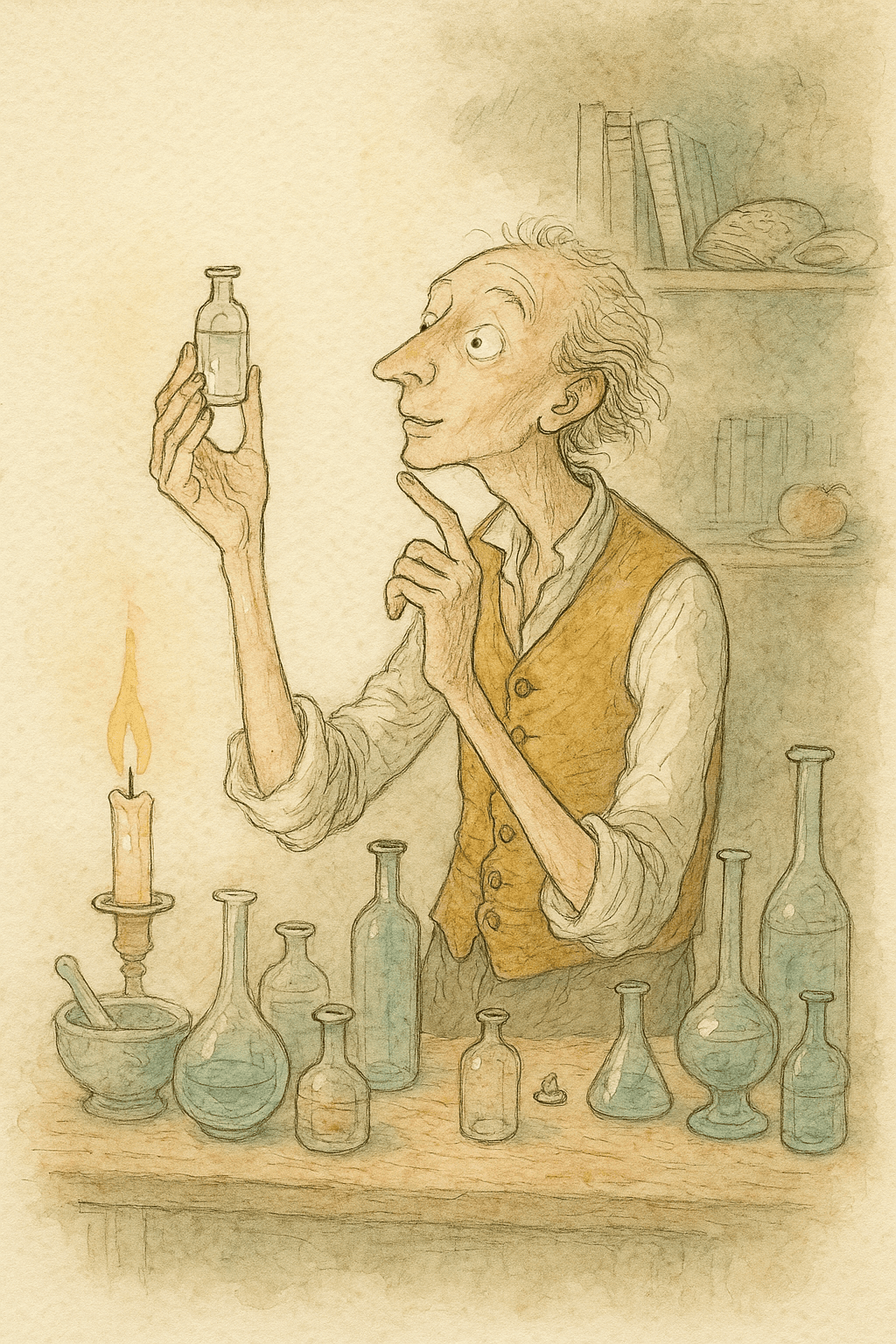
Carl Wilhelm Scheele discovered oxygen, chlorine, and more elements than almost anyone in the eighteenth century. Working alone in Swedish pharmacies, he identified each substance by tasting it. Mercury compounds. Arsenic. Hydrogen cyanide, which he found pleasantly sharp. His hands swelled. His joints ached. His body filled with what he'd catalogued. He died at forty-three, notebooks open, descriptions precise. The poisons tasted exactly as he said they would.
The Man Who Boiled His Own Urine and Found Light
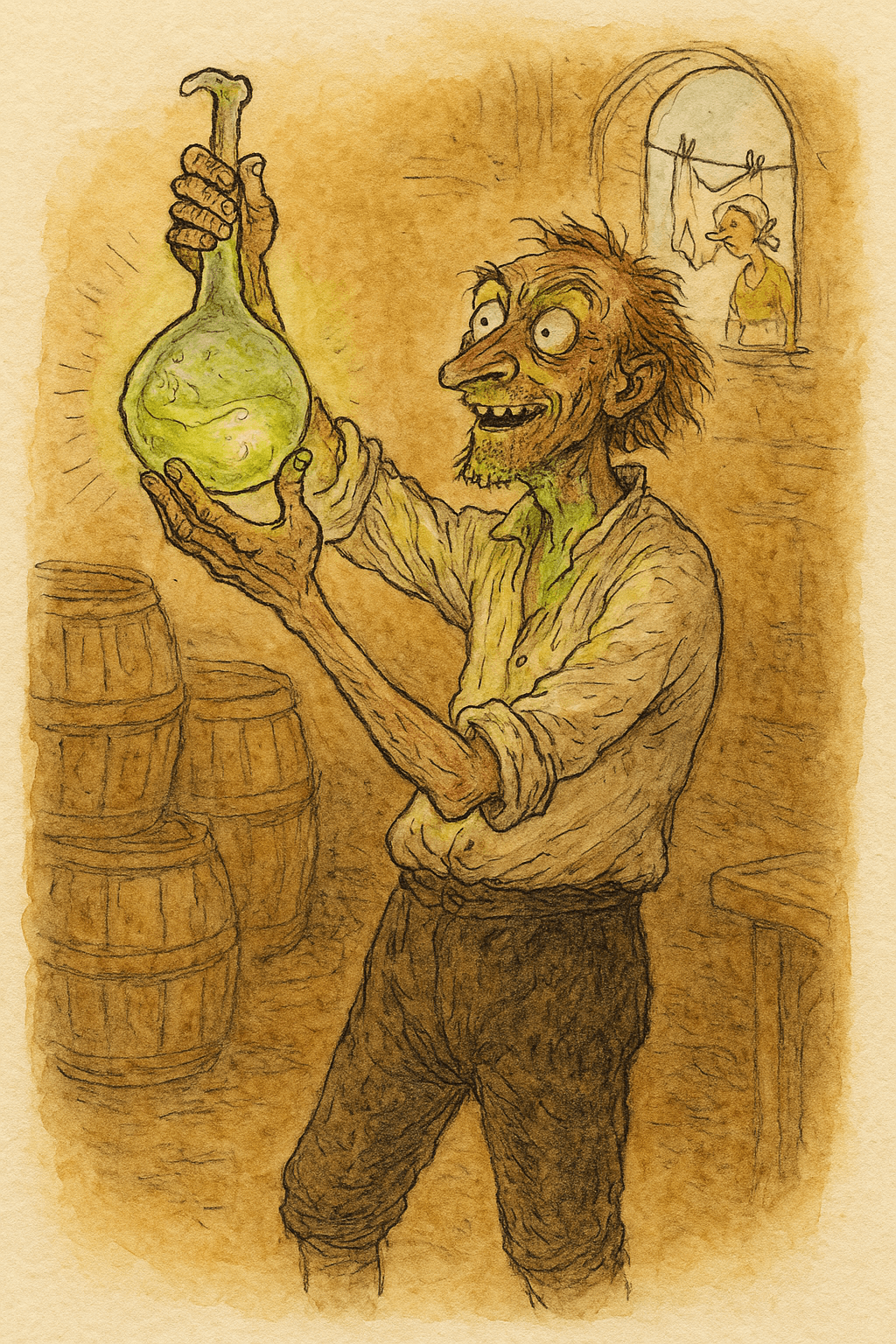
Hennig Brand was a 17th-century alchemist who spent both his wives' fortunes chasing gold. In 1669, he collected 1,500 gallons of urine, let it rot, then boiled it down and heated the paste for weeks. What came out wasn't gold — it was a waxy substance that glowed in the dark and burst into flames on its own. He'd discovered phosphorus, the first element ever isolated by a named individual. He went looking for gold in the most preposterous place imaginable and found light instead.
The Woman Who Practiced Madness in a Mirror
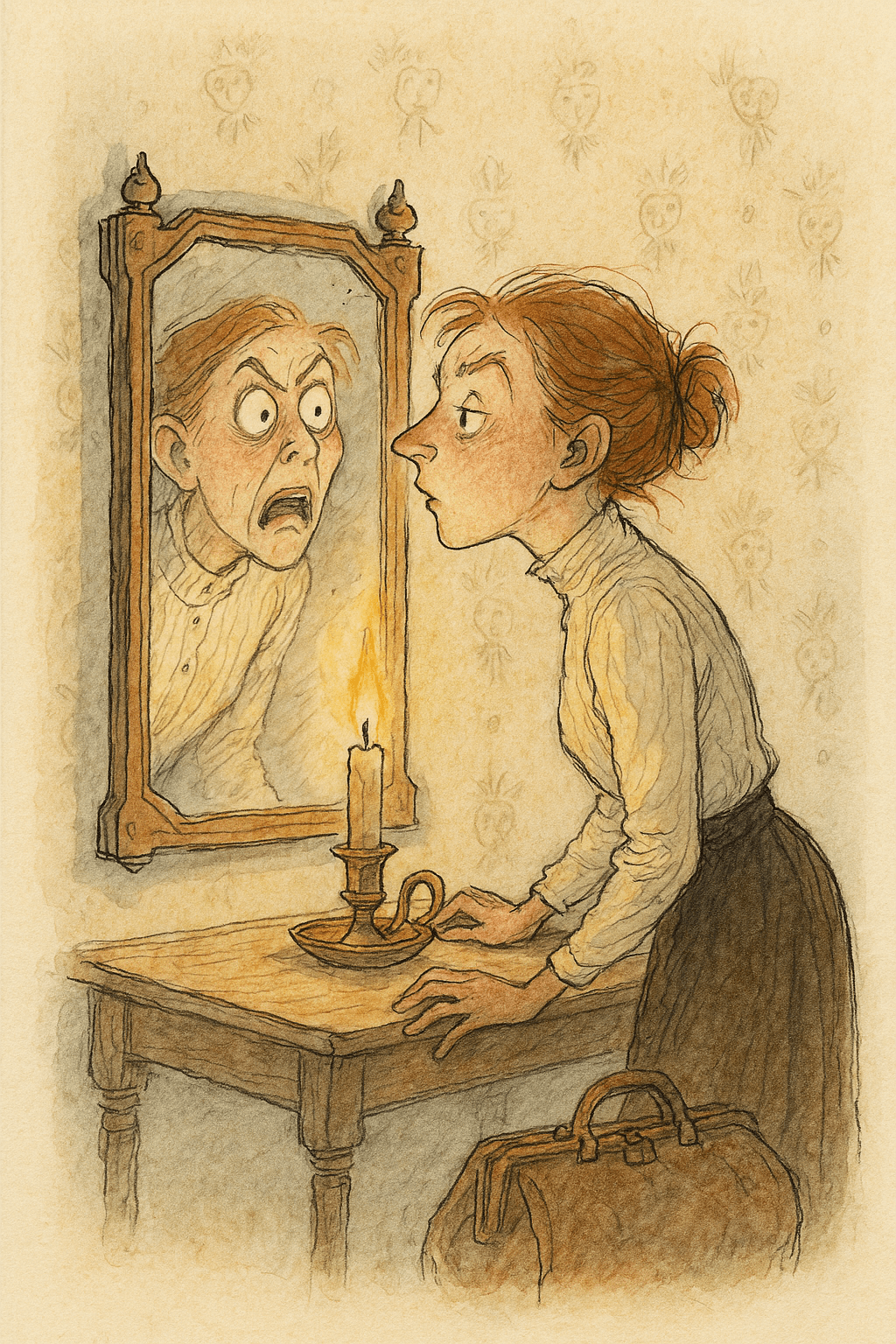
In 1887, Nellie Bly practiced deranged expressions in a mirror for one night, then got herself committed to a New York asylum. She spent ten days documenting rotten food, ice baths, and patients tied together with ropes. Her exposé triggered a grand jury investigation and forced the city to overhaul its asylum system. The doctors who had unanimously declared her insane never explained how a twenty-three-year-old reporter had fooled them all.
Wonder, delivered.
A fresh oddlet in your inbox every weekday morning — true, strange, and under a minute.
Free forever. Unsubscribe anytime.