Oddlet: Hector Berlioz · 1 min read
Oct 3, 2026
The Return to Life
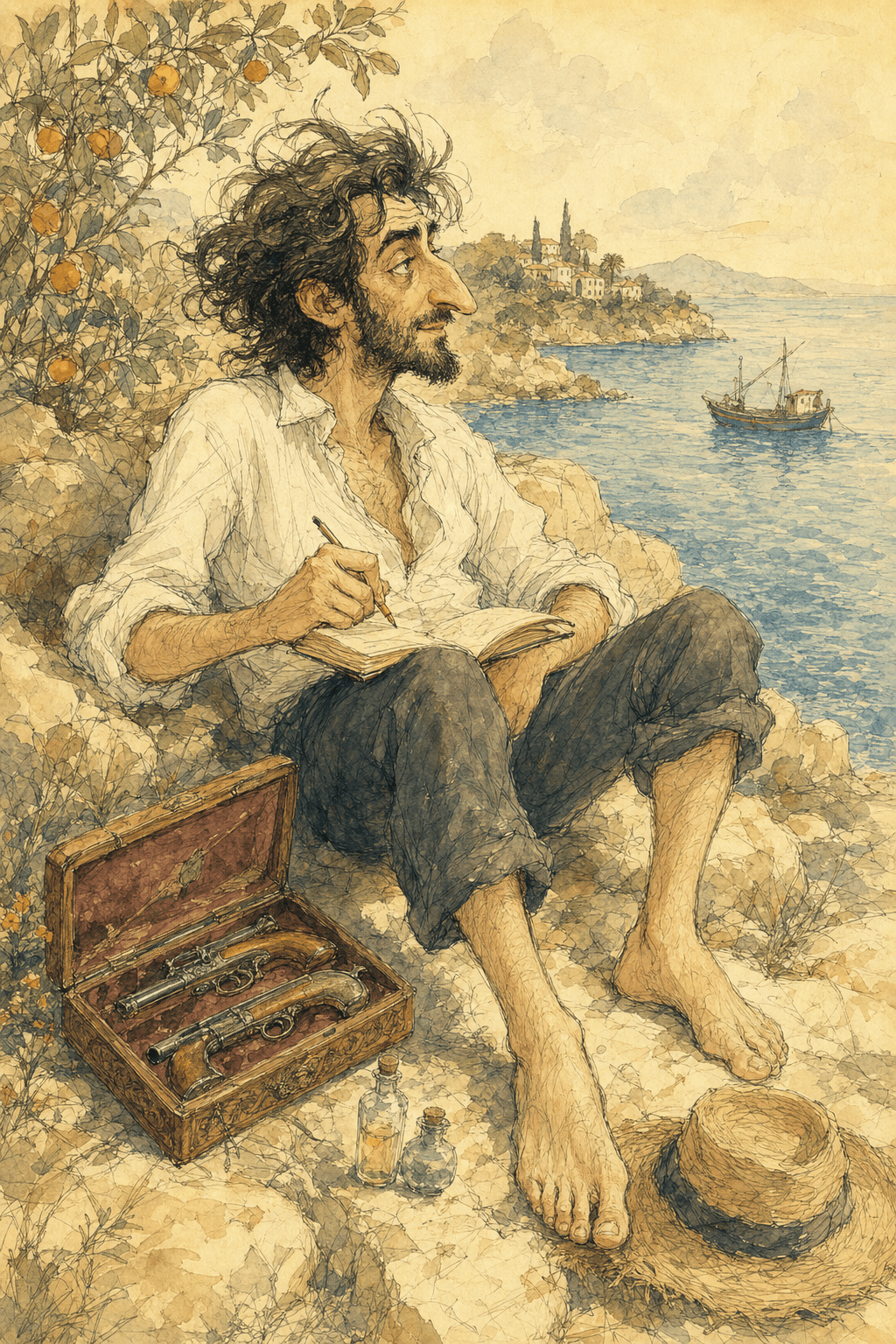
In 1831, a jilted composer sketched a two-minute plan involving a lady's maid disguise, a pair of double-barrelled pistols, and two vials of poison in case the pistols failed.
In April 1831, Hector Berlioz, twenty-seven and freshly crowned with the Prix de Rome, opened a letter in Florence and learned that his fiancée Camille Moke was marrying a piano manufacturer instead.
In two minutes his plans were laid. He would race to Paris disguised as a lady's maid, enter at nine o'clock when the happy trio would be at tea, shoot the mother and the piano manufacturer, reveal himself to Camille, and swallow poison. He assembled the disguise piece by piece at a Florence dressmaker's: dress, hat, green veil. He packed a pair of double-barrelled pistols and, in case the pistols misfired, two vials, one of laudanum and one of strychnine. A Romantic composer does not leave these things to chance.
At Pietrasanta, changing coaches, he forgot the parcel with the disguise in the door pocket of the mail coach. He bought another in Genoa. Then he threw himself from the ramparts into the sea, was fished out by a boatman, coughed up salt water on the rocks for an hour, and went to dinner.
The Sardinian police refused him a Turin visa and sent him south to Nice. There the fury left him. He swam. He walked in orange groves. He composed the King Lear overture, called it the twenty happiest days of his life, and had to be politely asked to move along by policemen who were sure he was a spy.
On the road home he began a sequel. He called it The Return to Life.
Know someone who’d love this?
- The Hector Berlioz Website — Berlioz in Italy: Genoa — Scholarly Berlioz reference (Michel Austin / Monir Tayeb) with primary-source references: the 'Épisode bouffon,' the 18 April 1831 letter to Horace Vernet documenting the suicide attempt at Genoa, the lost costume, the Pietrasanta route, and the 20 April arrival at Nice.
- Classical-Music.com — Berlioz and Camille Moke: love that nearly ended in murder — BBC Music Magazine feature giving the double-barrelled pistols, the 'hippopotamus mother' epithet, the 'two guilty women and one innocent man' quote, the 'twenty happiest days' quote at Nice, and the King Lear overture composed there.
- Wikipedia — Hector Berlioz — Cross-check for biographical dates (11 Dec 1803 – 8 Mar 1869), Prix de Rome 1830, Villa Medici context, description of the plot ('acquired poisons, pistols and a disguise for the purpose'), and abandonment at Nice.
- Wikipedia — Lélio — Confirms Lélio, ou Le Retour à la vie was composed in Italy in 1831 as a direct response to Moke's rejection and first performed 9 December 1832 at the Conservatoire de Paris.
- Interlude.hk — Camille Marie Pleyel: The Great Pianist Berlioz Almost Murdered
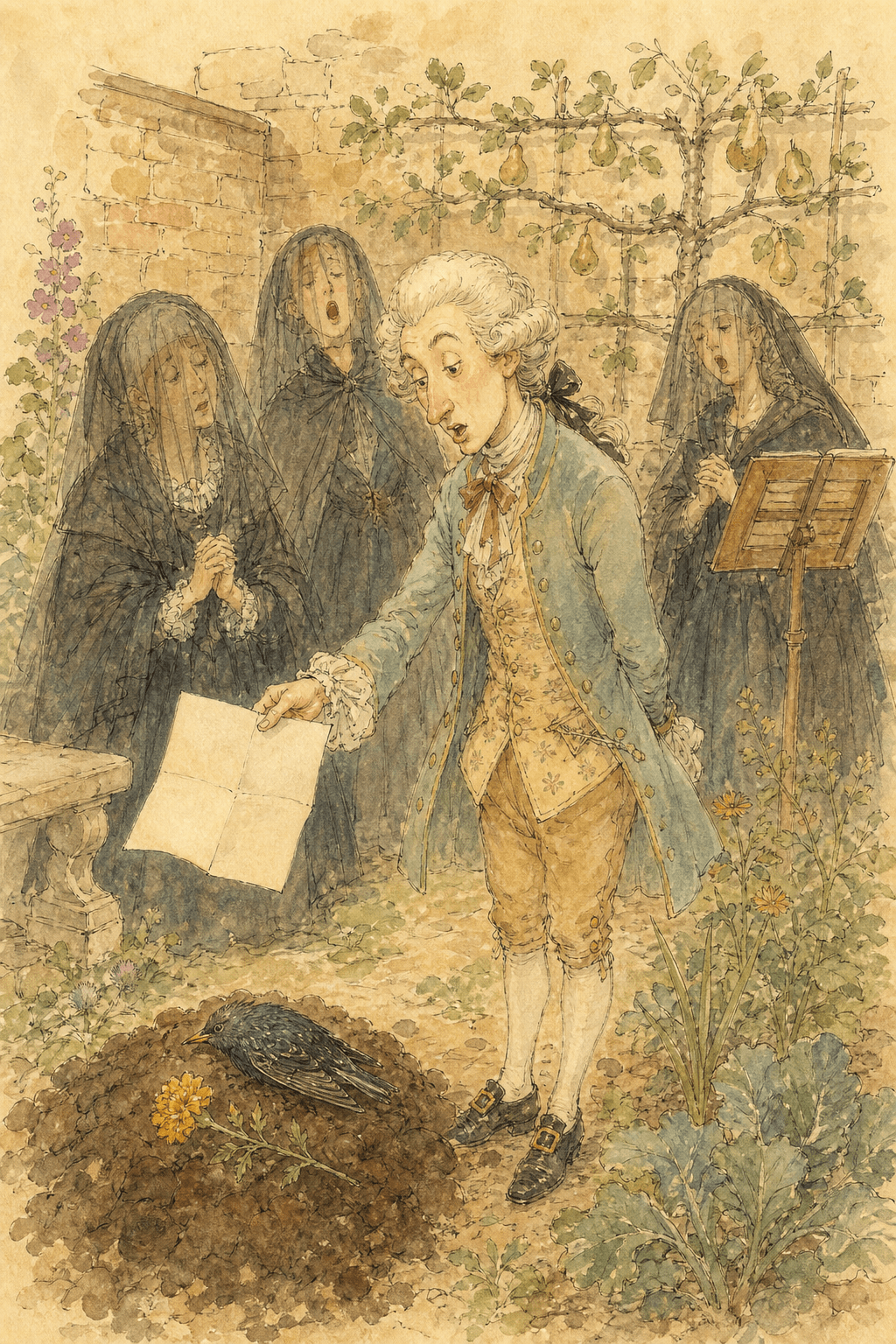
Vogel Stahrl, 34 Kreuzer
What does a composer owe a shop bird that whistles his six-week-old concerto back at him, holds a fermata he never wrote, and sharpens a single G?
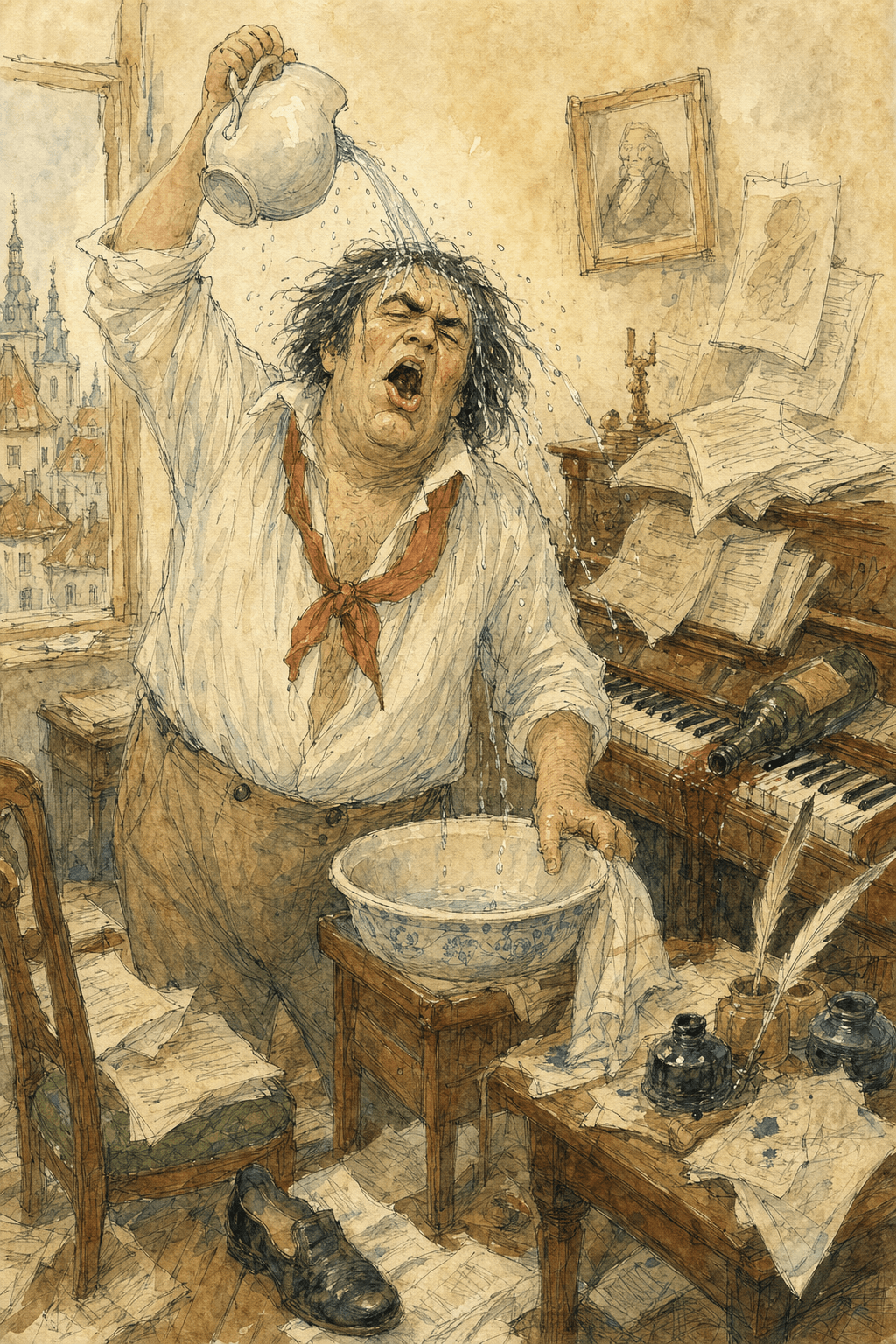
The Composer Who Flooded His Neighbors
What was the greatest composer in Europe doing upstairs that kept soaking the ceiling below?
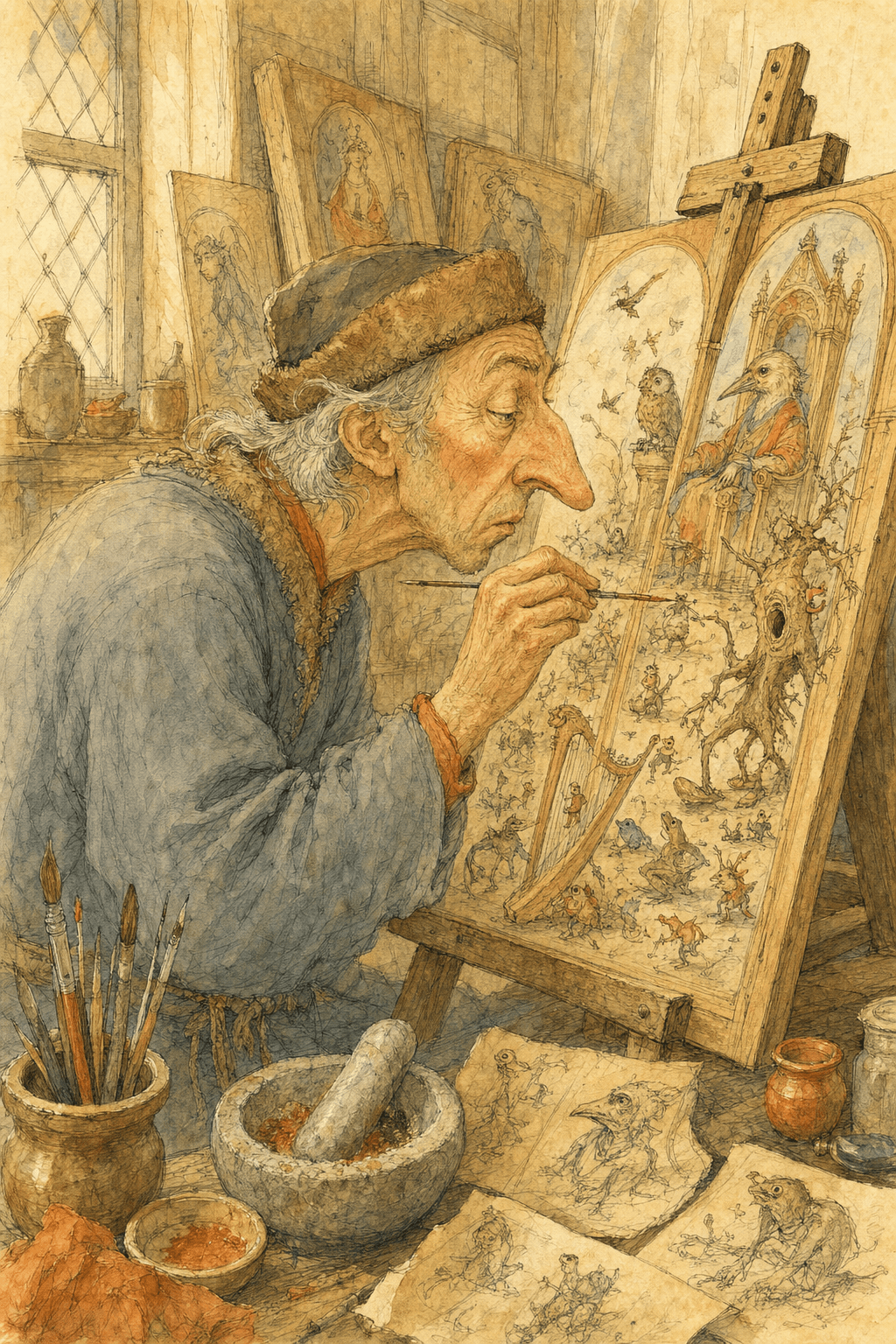
The Notation on the Buttocks
What if the sheet music tattooed across a damned soul's buttocks in a 500-year-old painting of Hell turns out to be... actually playable?
Wonder, delivered.
A fresh Oddlet in your inbox every morning, a full day before everyone else. True, strange and under a minute.
Free forever. Unsubscribe anytime.