Oddlet: Hokusai · 1 min read
Mar 15, 2026
The Old Man Mad About Painting
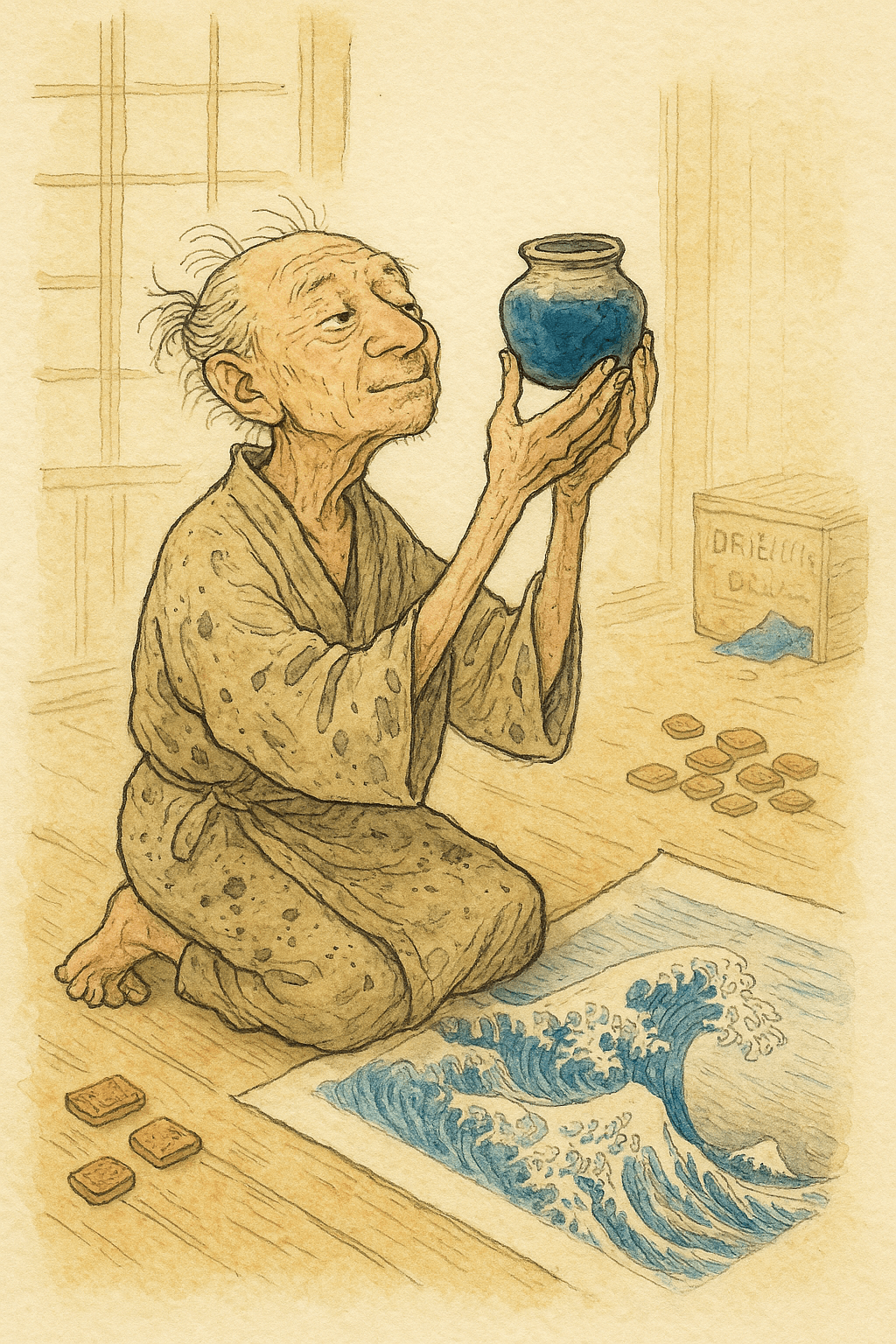
The most quintessentially Japanese artwork ever made was painted with a color Japan had banned.
Katsushika Hokusai produced roughly thirty thousand works of art across a career spanning seven decades. He painted with brushes, with fingers, with brooms. During a festival in 1804, he created a portrait of a Buddhist priest said to be six hundred feet long, using buckets of ink. He once dipped a chicken's feet in red paint and chased it across a blue wash, then presented the result to the shōgun as a landscape of the Tatsuta River with autumn leaves.
He also moved house ninety-three times — once, three times in a single day — and changed his name at least thirty.
But the detail that matters most is a color. The blue that defines The Great Wave off Kanagawa, the image now considered perhaps the most quintessentially Japanese artwork ever made, was not Japanese. It was Prussian blue — a pigment invented by accident in a Berlin laboratory, reverse-engineered by a manufacturer in Guangzhou, and smuggled into Japan as contraband under the shogunate's strict import ban. Printmakers in Osaka called it bero, a corruption of the Dutch for "Berlin blue." Hokusai was among the first to use it boldly, flooding his Thirty-Six Views of Mount Fuji with a color he was technically not supposed to have.
He died at eighty-eight. His tombstone bore his final name: Gakyōrōjin Manji. Old Man Mad About Painting.
His last words were a request for ten more years.
Know someone who’d love this?
- Wikipedia — Hokusai — Comprehensive, well-cited overview; cross-referenced against specialist sources throughout. Good for dates and name chronology.
- Britannica — Hokusai — Written by a Research Associate at the Honolulu Academy of Arts and author of *Hokusai: Life and Work*. High reliability for biographical claims.
- Sotheby's — 21 Facts About Katsushika Hokusai — Auction house editorial; reliable for well-established facts, updated January 2026.
- The Metropolitan Museum of Art — *The Great Wave: Anatomy of an Icon* — Primary scientific analysis of the print's pigments; highly authoritative.
- The Metropolitan Museum of Art — *Hokusai and Debussy's Evocations of the Sea* — Scholarly editorial on the Debussy–Hokusai connection; reliable.
- The Conversation — *From the Great Wave to Starry Night, how a blue pigment changed the world*
The Baron in the Bath
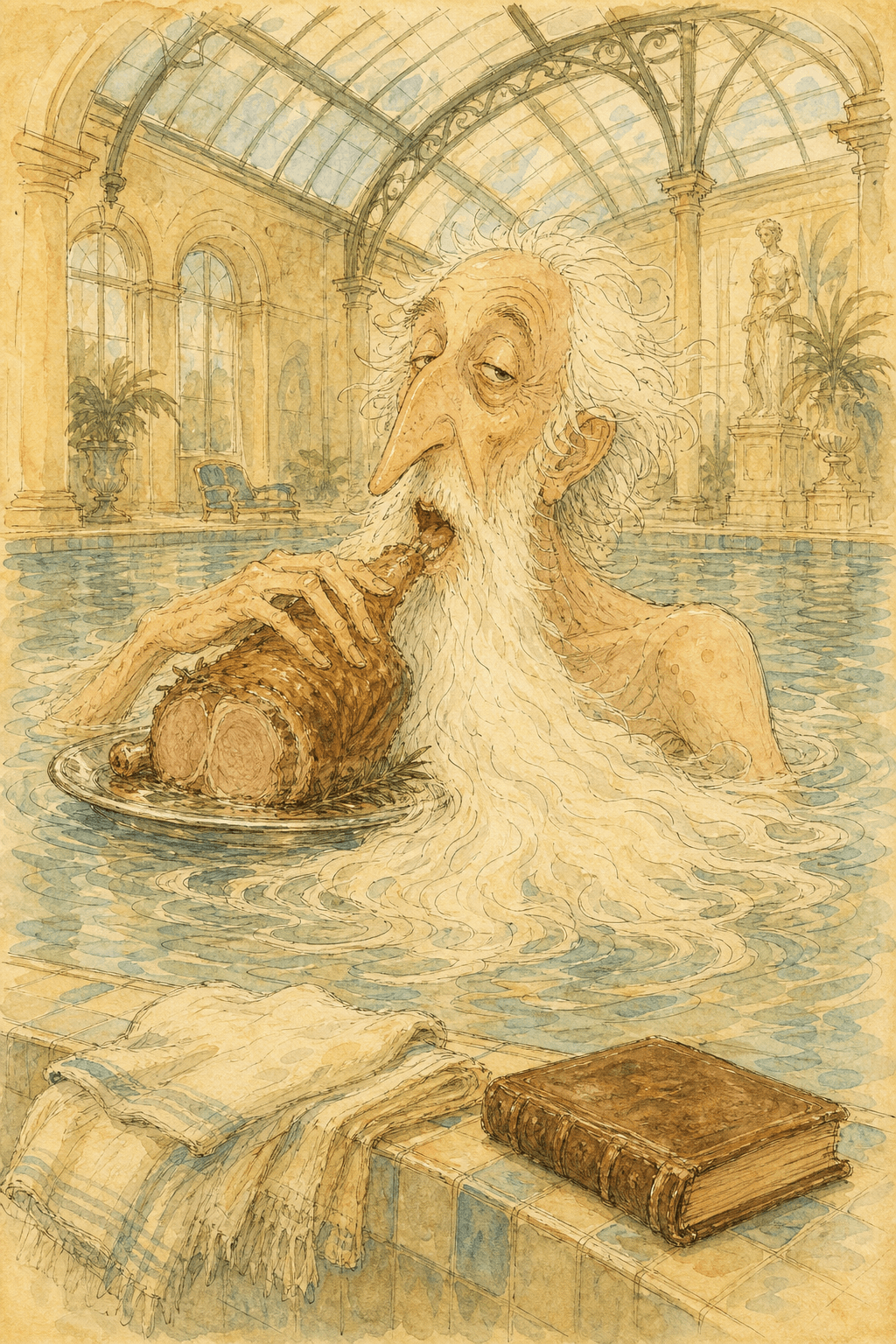
On rainy mornings, a Georgian peer walked miles to the sea to swim while his liveried footman, on the peer's orders, rode dry in the empty carriage behind him.
The Man Who Counted the Posts
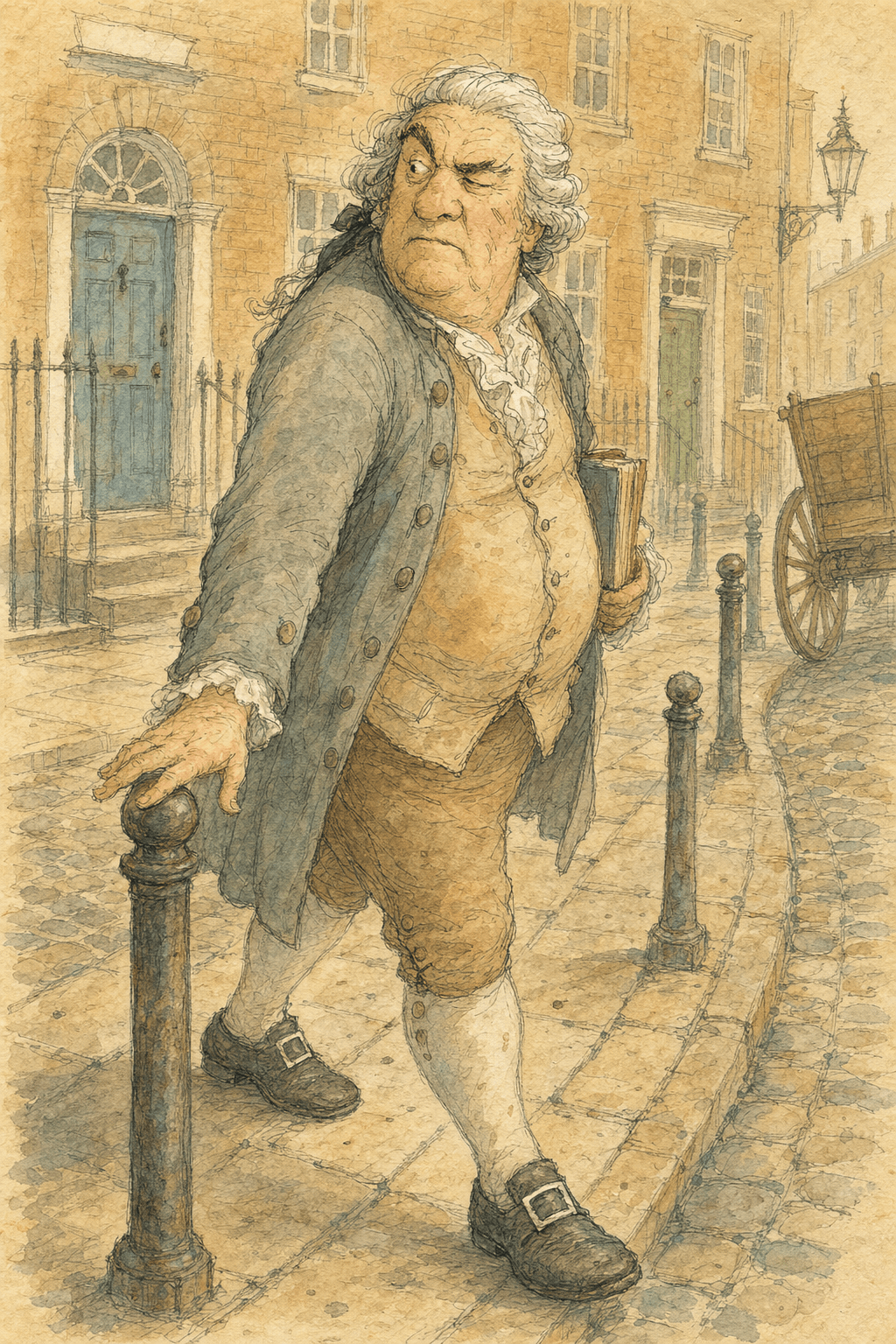
The man who single-handedly disciplined the English language could not walk past a post without touching it.
The Emperor Made of Vegetables
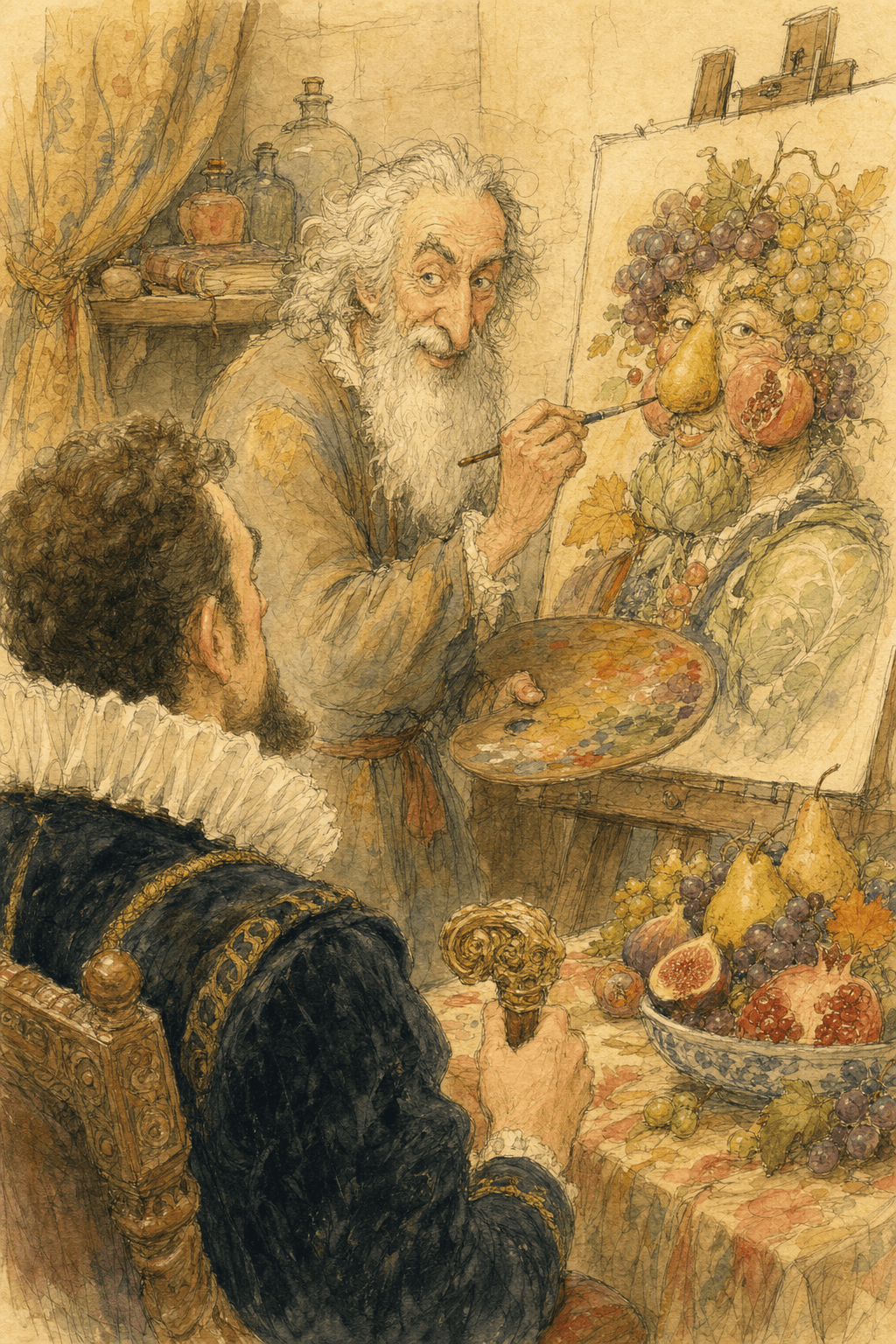
What do you do when your court painter, a decorated cathedral man, starts rendering your jurist as a heap of raw poultry pinned around a syphilitic face?
Wonder, delivered.
A fresh Oddlet in your inbox every morning, a full day before everyone else. True, strange and under a minute.
Free forever. Unsubscribe anytime.