Oddlet: Carl Linnaeus · 1 min read
Nov 18, 2026
The Ungrateful Cuckoo
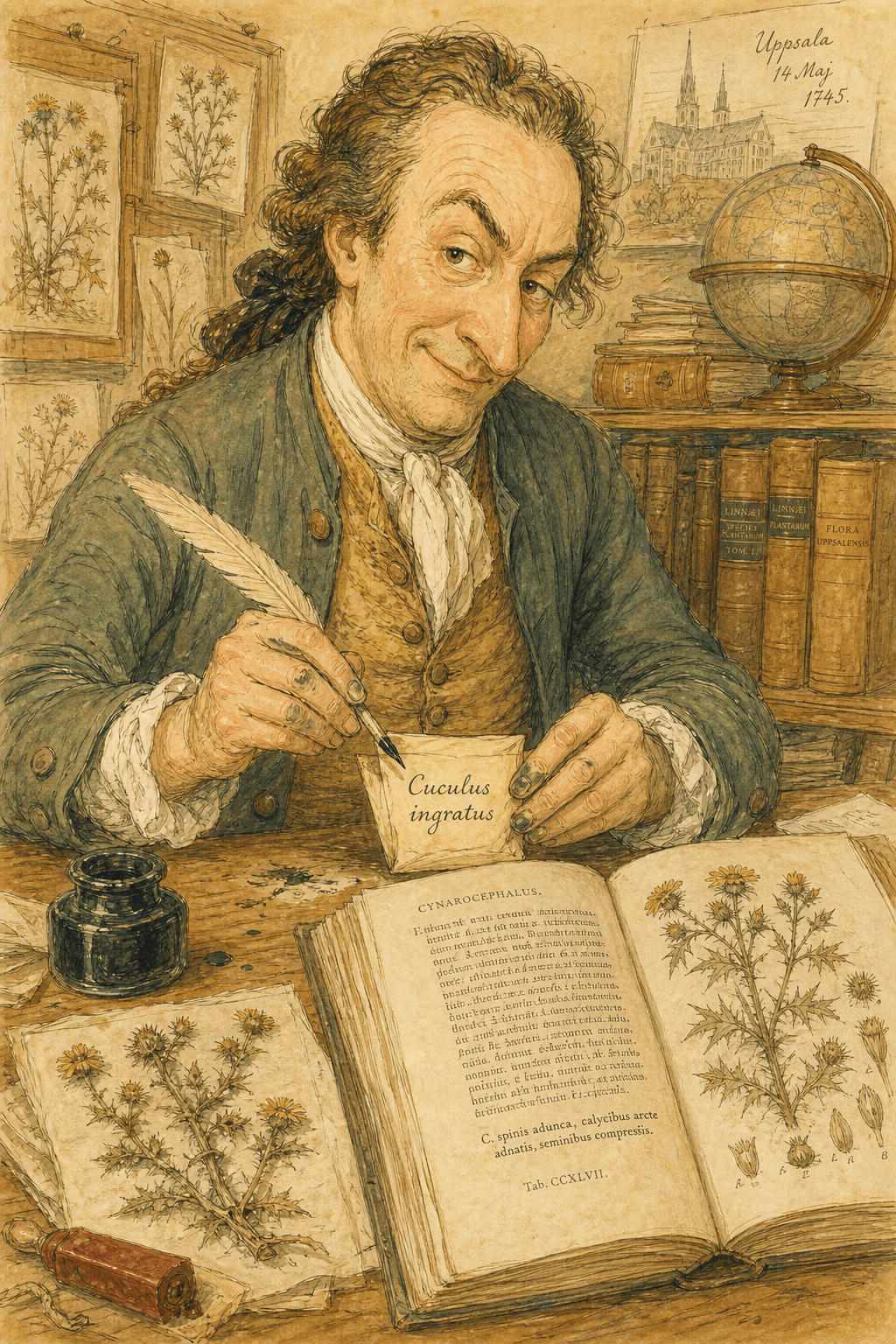
The man who named Homo sapiens once mailed a hostile critic a packet of foul-smelling seeds he had labeled Cuculus ingratus — the ungrateful cuckoo.
Carl Linnaeus believed himself the second Adam. God had made the creatures; Linnaeus was there to tidy them into Latin. He named the plants. He named the animals. He named the minerals. He named us. He began at twenty-eight with an 11-page pamphlet; by the end of his life he had labeled some 12,000 species, Homo sapiens included. His motto was Deus creavit, Linnaeus disposuit. God created, Linnaeus organized.
He named plants after botanists he liked. The Bauhin brothers, being two, got Bauhinia, a plant whose leaves come in two matching lobes. It was only proper, he explained in Critica Botanica, that a plant should reflect the character of the man behind the name. Which was fine, if he liked you.
Johann Siegesbeck had called Linnaeus's sexual classification of plants "loathsome harlotry." Linnaeus named a small, sticky, foul-smelling weed of the daisy family Sigesbeckia orientalis. It is still, three centuries later, its accepted name.
Then he mailed Siegesbeck a packet of the seeds. He labeled them Cuculus ingratus. The ungrateful cuckoo.
Siegesbeck planted them.
Know someone who’d love this?
- Wikipedia — Carl Linnaeus — Comprehensive biography: dates, education, works, marriage, professorship, ennoblement, autobiographies, quotes from Rousseau and Goethe, sale of collections to J. E. Smith for 1,000 guineas.
- Wikipedia — Apostles of Linnaeus — Complete list of the 17 apostles with dates, destinations, and fates; documents which 7 apostles died.
- BBC Science Focus — How Carl Linnaeus used scientific naming to throw serious shade — Details the Siegesbeckia story: Siegesbeck's 'loathsome harlotry' attack, Linnaeus's retaliatory naming, and his principle that a plant should reflect the botanist it's named after.
- The Linnean Society — Linnaean Collections — Institutional description: 14,000 plants, 3,198 insects, 1,564 shells, 168 fish, ~1,600 books, ~3,000 letters, acquired from Linnaeus's widow in 1784 by James Edward Smith.
- Wikipedia — Sigesbeckia orientalis — Confirms the Cuculus ingratus seed-packet story and Linnaeus's later 'ingratissimus cuculus et nebulo' escalation.
- Smithsonian Magazine — Organization Man
A Bottle for Hampstead
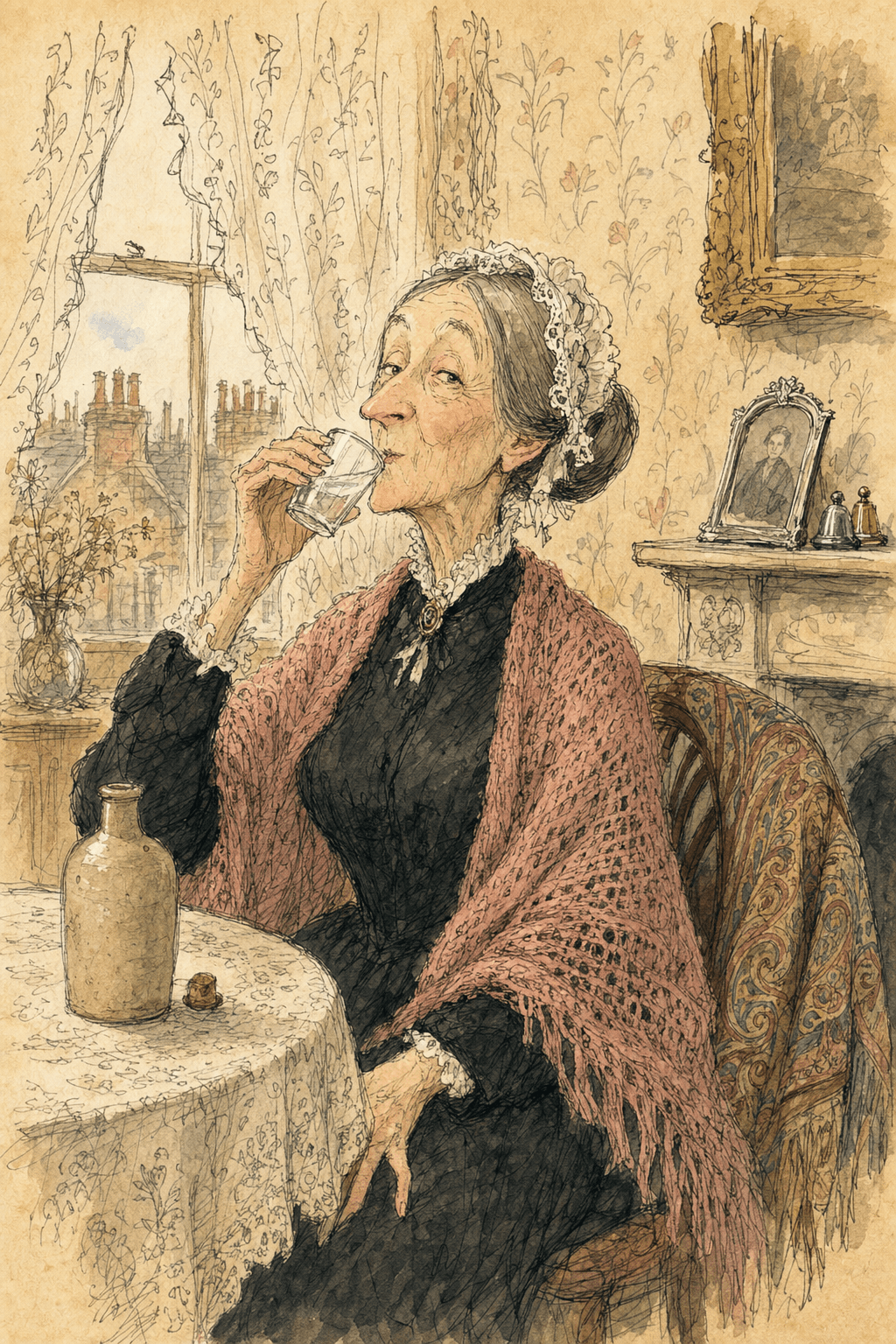
In September 1854, the only cholera death in Hampstead was a widow whose favourite drinking water was carted daily from a pump on Broad Street.
Mrs Guppy
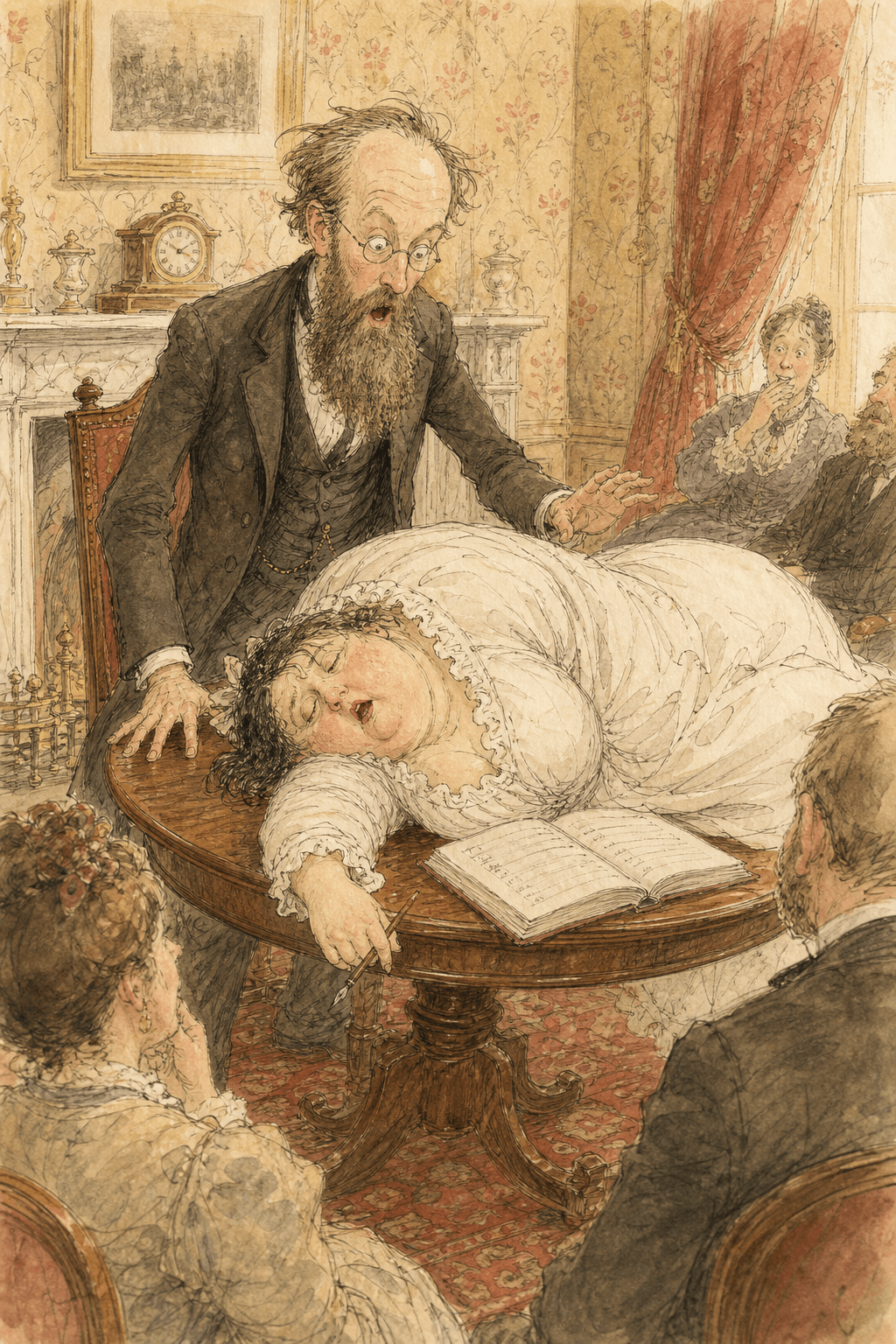
In February 1858, delirious with malaria on Ternate, Alfred Russel Wallace drafted natural selection in two evenings; thirteen years later, at a séance on Lamb's Conduit Street, he watched Mrs Guppy thump onto the table three miles from her accounts, unconscious in her nightdress, still holding her pen.
Montgomery's Ribs
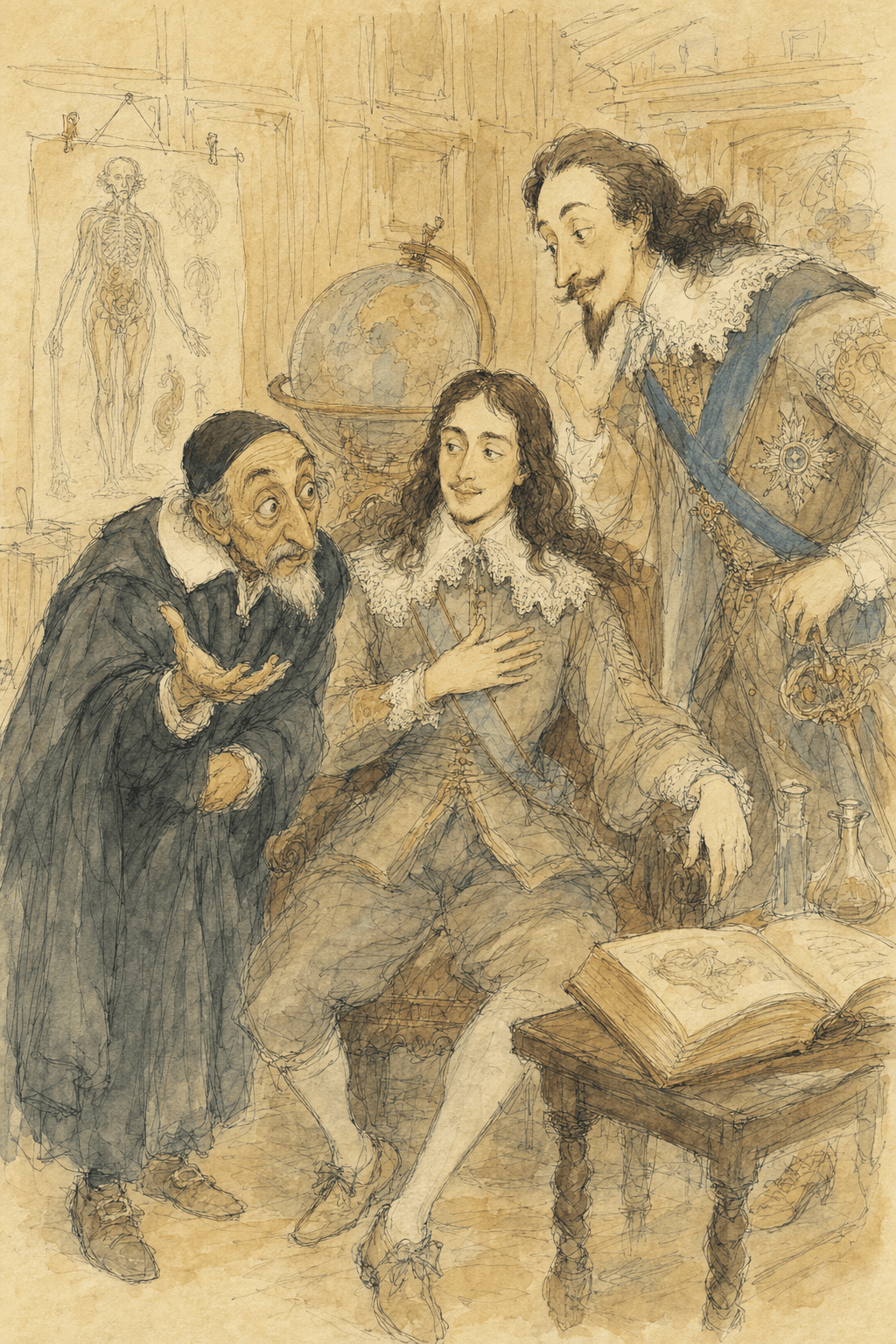
William Harvey, the physician who proved blood circulates, once reached through a hole in a young viscount's ribs and took hold of the beating heart.
Wonder, delivered.
A fresh Oddlet in your inbox every morning, a full day before everyone else. True, strange and under a minute.
Free forever. Unsubscribe anytime.