Oddlet: Albrecht Dürer · 1 min read
Nov 26, 2026
An Accurate Representation
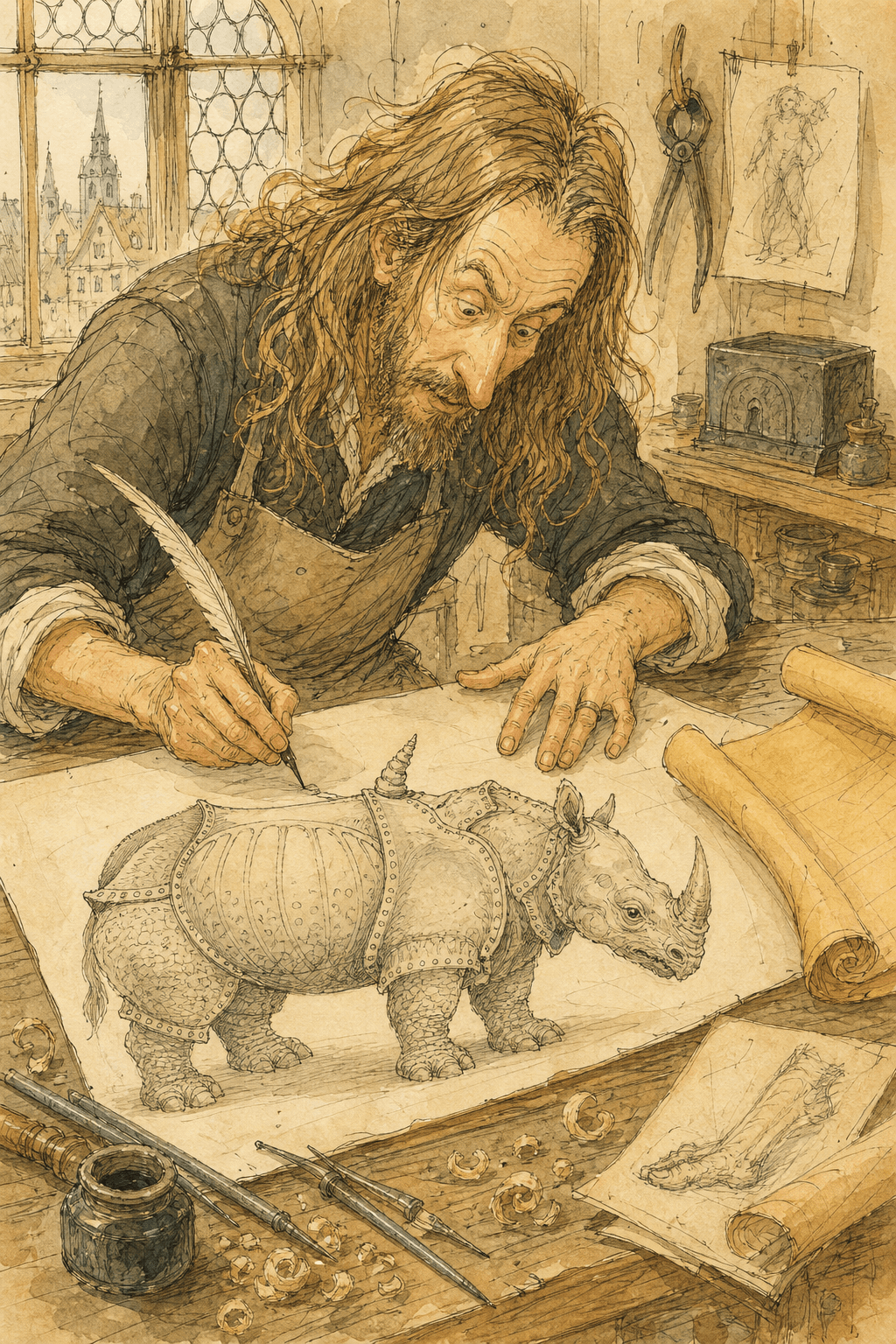
For four hundred years, European illustrators copied Albrecht Dürer's plate-armored, rivet-studded 1515 rhinoceros. Dürer had never seen a rhinoceros.
Albrecht Dürer, of Nuremberg, made the finest engravings in Europe. Adam and Eve. Knight, Death and the Devil. Melencolia I. In 1515 he added a rhinoceros.
He had never seen one. Nobody in Europe had, for a thousand years. A Moravian merchant in Lisbon wrote to Nuremberg about it. A sketch reached Dürer separately, by another hand. He worked from both.
He gave it plate armor. Rivets along every seam. Scales down the legs like a fish. Between the shoulder blades, a small twisted horn.
Across the top of the woodcut he wrote: "This is an accurate representation."
The real rhinoceros drowned that winter off the Ligurian coast, chained to the deck of a Portuguese ship bound for the Pope. The armored one on paper ran and ran. Conrad Gessner copied the rivets in 1551. Jan Jonston copied them a hundred years later. Even after live rhinos toured Europe, illustrators kept copying Dürer.
German schoolchildren were still being taught from it in the 1930s.
Know someone who’d love this?
- Wikipedia — Dürer's Rhinoceros — Comprehensive entry covering the rhino's origin as a gift from Sultan Muzaffar Shah II of Gujarat, Afonso de Albuquerque, 20 May 1515 Lisbon arrival, keeper Ocem, staged elephant fight, Valentim Fernandes's June 1515 letter, gift to Pope Leo X, shipwreck near Porto Venere, Dürer's inscription and drawings, edition history (eight editions), and centuries-long influence including textbook use into the 1930s.
- Wikipedia — Albrecht Dürer — Biographical details: birth 21 May 1471 Nuremberg, death 6 April 1528, father's Hungarian origin (Ajtós), apprenticeship 1486–1490 with Michael Wolgemut, 1494 marriage to Agnes Frey, Italian journeys 1494–95 and 1505–07, principal engravings, and theoretical publications.
- Cleveland Museum of Art — The Rhinoceros — Museum catalog entry giving physical details of the woodcut: dimensions 23.8 x 30.1 cm, Meder 273, inscription 'RHINOCERVS' with date and AD monogram, and confirmation that Dürer worked from a description and sketch after the 1515 Lisbon arrival.
- Encyclopaedia Britannica — Albrecht Dürer — Standard biographical reference: birth in the Imperial Free City of Nuremberg 21 May 1471, death 6 April 1528, training under his goldsmith father then Wolgemut, patronage by Frederick the Wise, Elector of Saxony, and status as the greatest German Renaissance artist.
- Princeton University Art Museum — The Rhinoceros
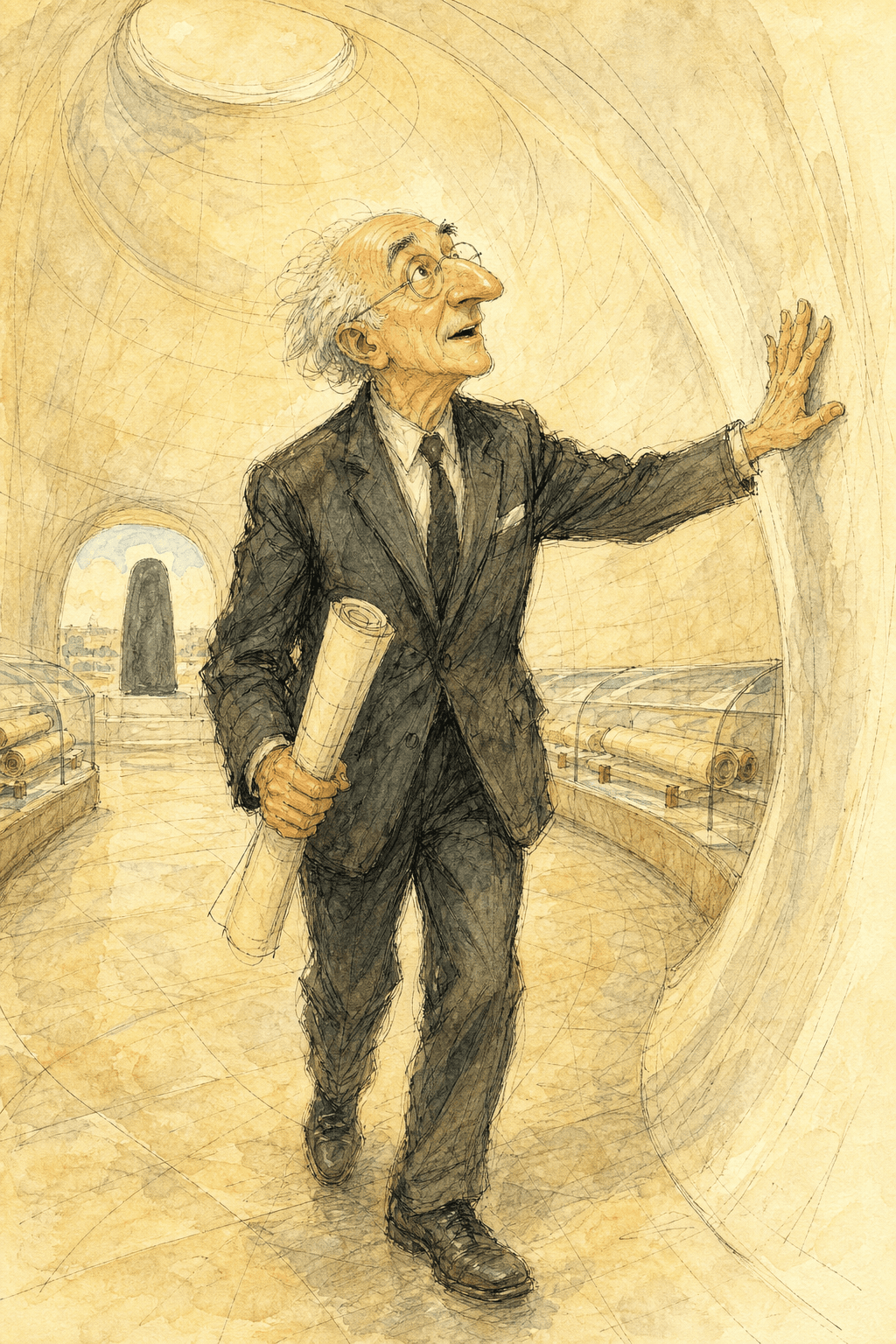
The Greatest Non-Building Architect
Frederick Kiesler mounted Peggy Guggenheim's paintings on sawn-off baseball bats and periodically plunged one gallery into darkness filled with the sound of an oncoming train.
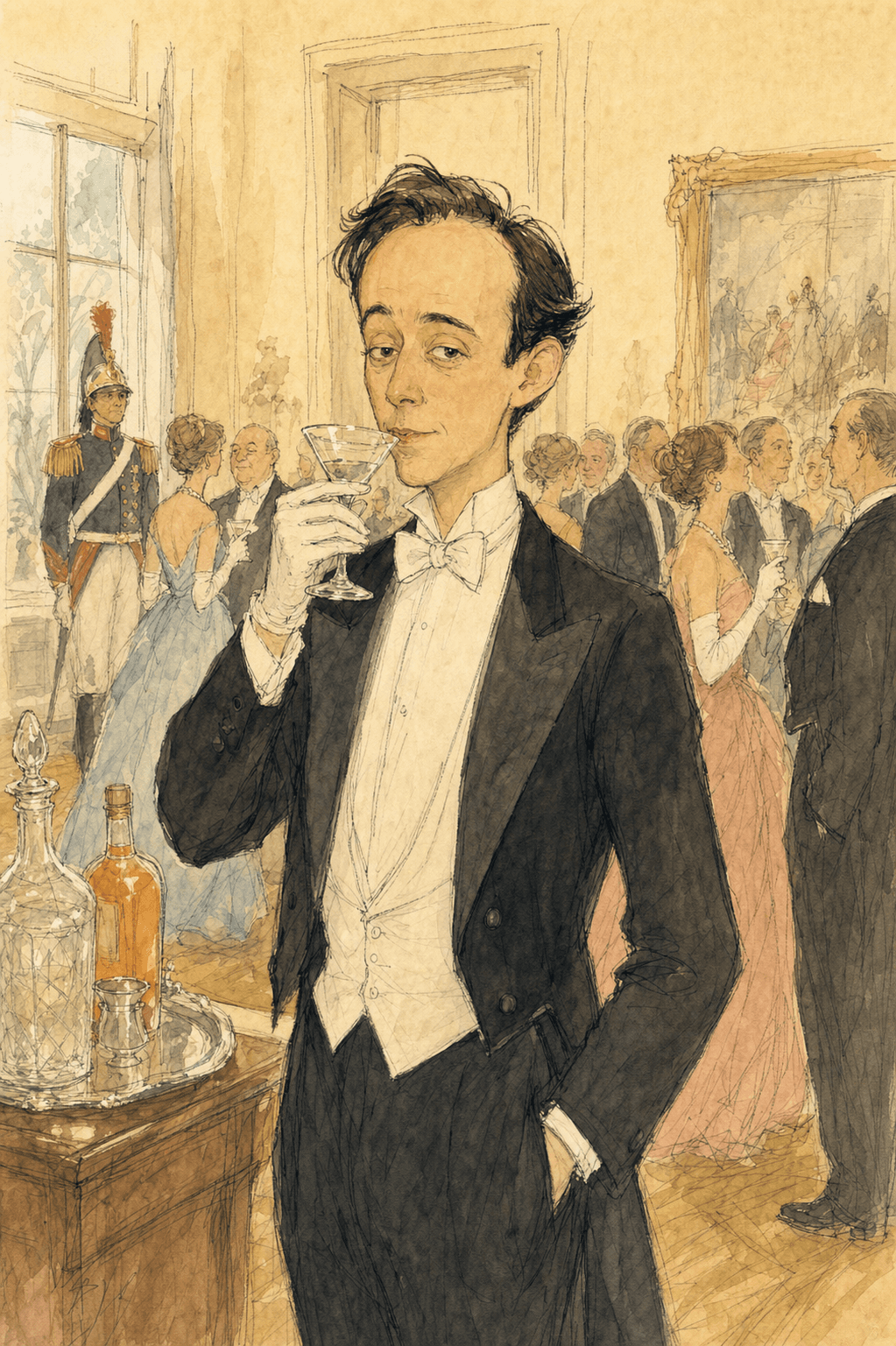
IKB
Yves Klein patented a shade of blue, then filled a Paris gallery with three thousand people, Republican Guards in dress uniform, and nothing at all.
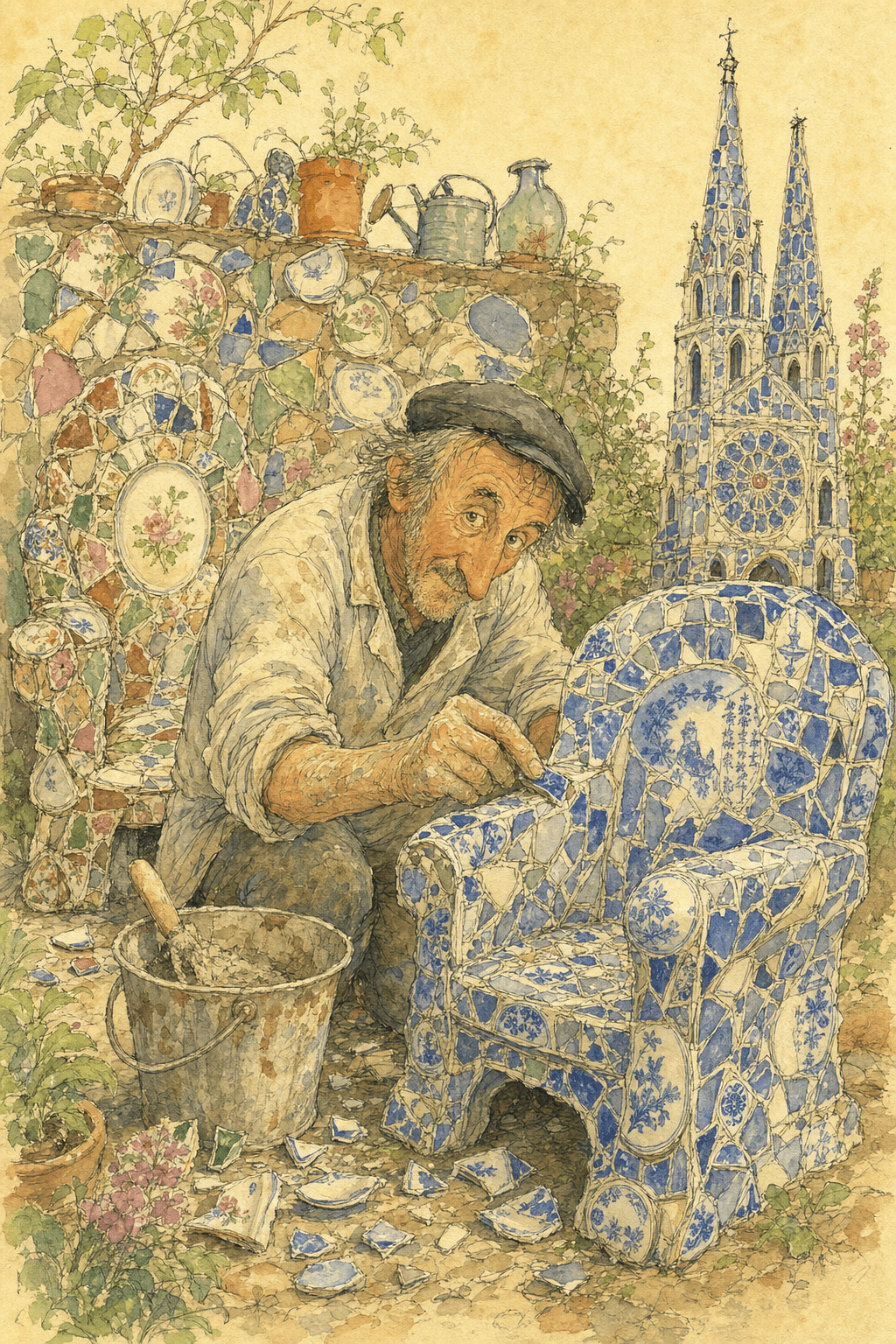
Room for God
By 1962, Raymond Isidore had covered every surface of his house in fifteen tonnes of broken crockery — the beds, the flower pots, the carriage clock, the radio, his wife's sewing machine — and she sighed that she had better be careful, or he would tile her too.
Wonder, delivered.
A fresh Oddlet in your inbox every morning, a full day before everyone else. True, strange and under a minute.
Free forever. Unsubscribe anytime.