Oddlet: Empedocles · 1 min read
Jun 5, 2026
The God Who Lost a Sandal
What kind of man flays donkeys to stop the wind, then climbs into a volcano to prove he's a god?
Empedocles of Acragas wrote in dactylic hexameter, founded the four-element theory that ran Western physics for two thousand years, and taught the young man who would invent rhetoric. Aristotle credited him with rhetoric itself. Galen credited him with medicine. Around 450 BCE, in his own city, he walked up to his fellow citizens and informed them, in verse, that he was an immortal god.
They seem to have taken it well.
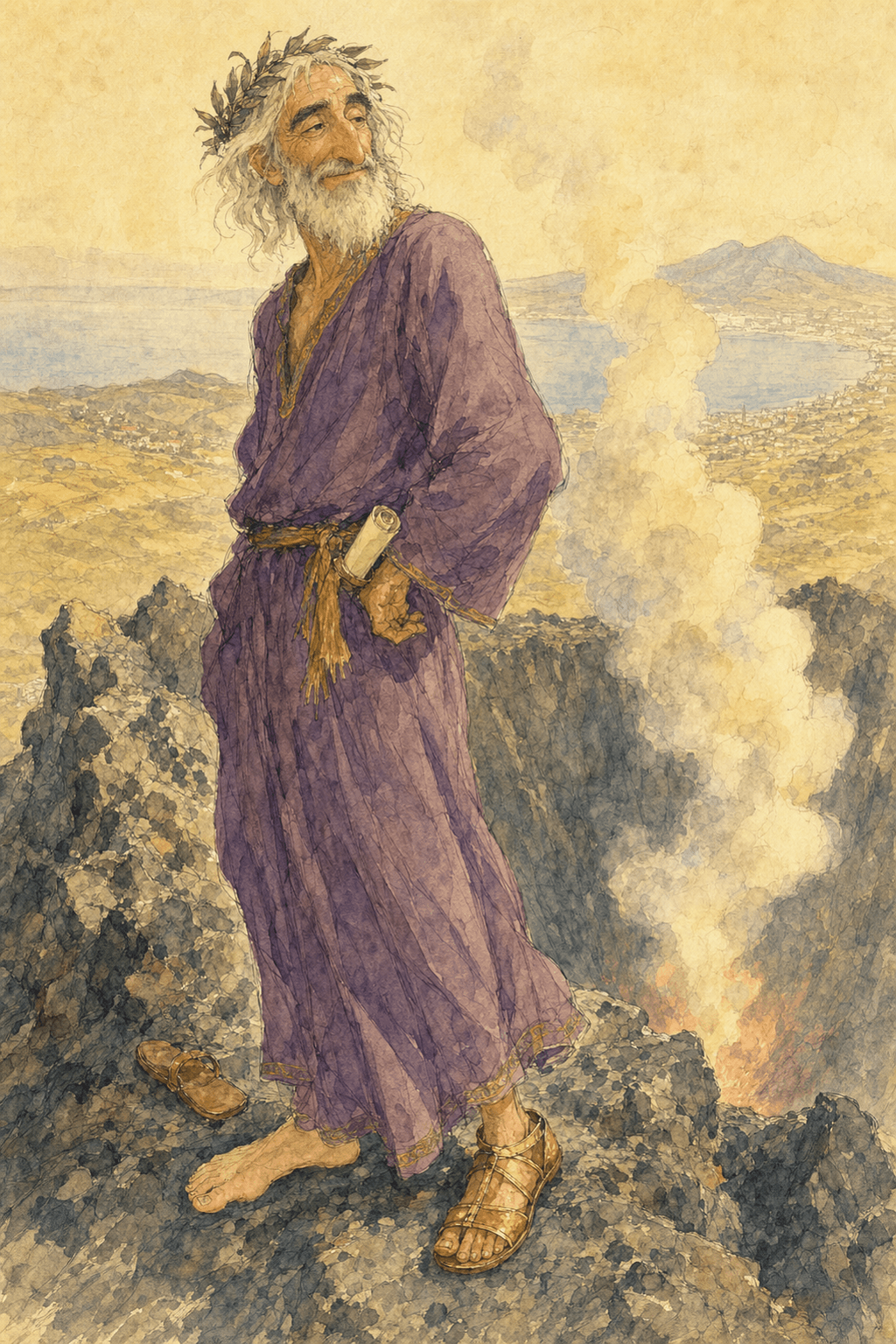
It helped that he dressed for the part: a purple robe, a golden girdle, a Delphic laurel wreath, bronze sandals, and a permanent retinue of boys. It helped more that he delivered. When the etesian winds flattened the harvest, he had donkeys flayed and the skins strung across the headlands to catch the wind. It worked. They called him kolysanemas, wind-stopper. At Selinus he paid from his own purse to redirect two rivers and end a plague; at the next festival the city fell down and worshipped him. Heraclides reports he once kept a woman without pulse or breath for thirty days. What the physicians made of this is not recorded.
In old age, to settle the matter, he climbed Mount Etna and jumped in.
The volcano gave back one sandal.
Know someone who’d love this?
- Stanford Encyclopedia of Philosophy: Empedocles — Authoritative scholarly entry on philosophy, the four roots, Love/Strife, the cosmic cycle, biography (born early 5th c. BCE, died age 60 per Aristotle), and explicit treatment of the Etna leap as legendary.
- Internet Encyclopedia of Philosophy: Empedocles — Dates c. 492–432 BCE, family (son of Meton, Olympic-winning grandfather), political activity, philosophical doctrines, fragments and DK numbering, the bronze sandal story.
- Britannica: Empedocles — Dates c. 490–430 BCE, both poems (Peri Physeos with 400 lines, Katharmoi with under 100), the 30,000-season transmigration doctrine, and the Mount Etna legend.
- Diogenes Laertius, Lives of Eminent Philosophers Book VIII (Hicks/Loeb, U Chicago) — Primary ancient source: the breathless woman 30 days (Heraclides §61), donkey-skin wind defense (Timaeus §60), bronze sandal at Etna (Hippobotus §69), the costume description (§73), and the competing death accounts.
- Wikipedia: Empedocles — Dates c. 494–c. 434 BCE, identification with Agrigento/Akragas, the four roots identified with Greek gods, the bronze sandal story, and overview of works and fragments.
The Horses and the Eels
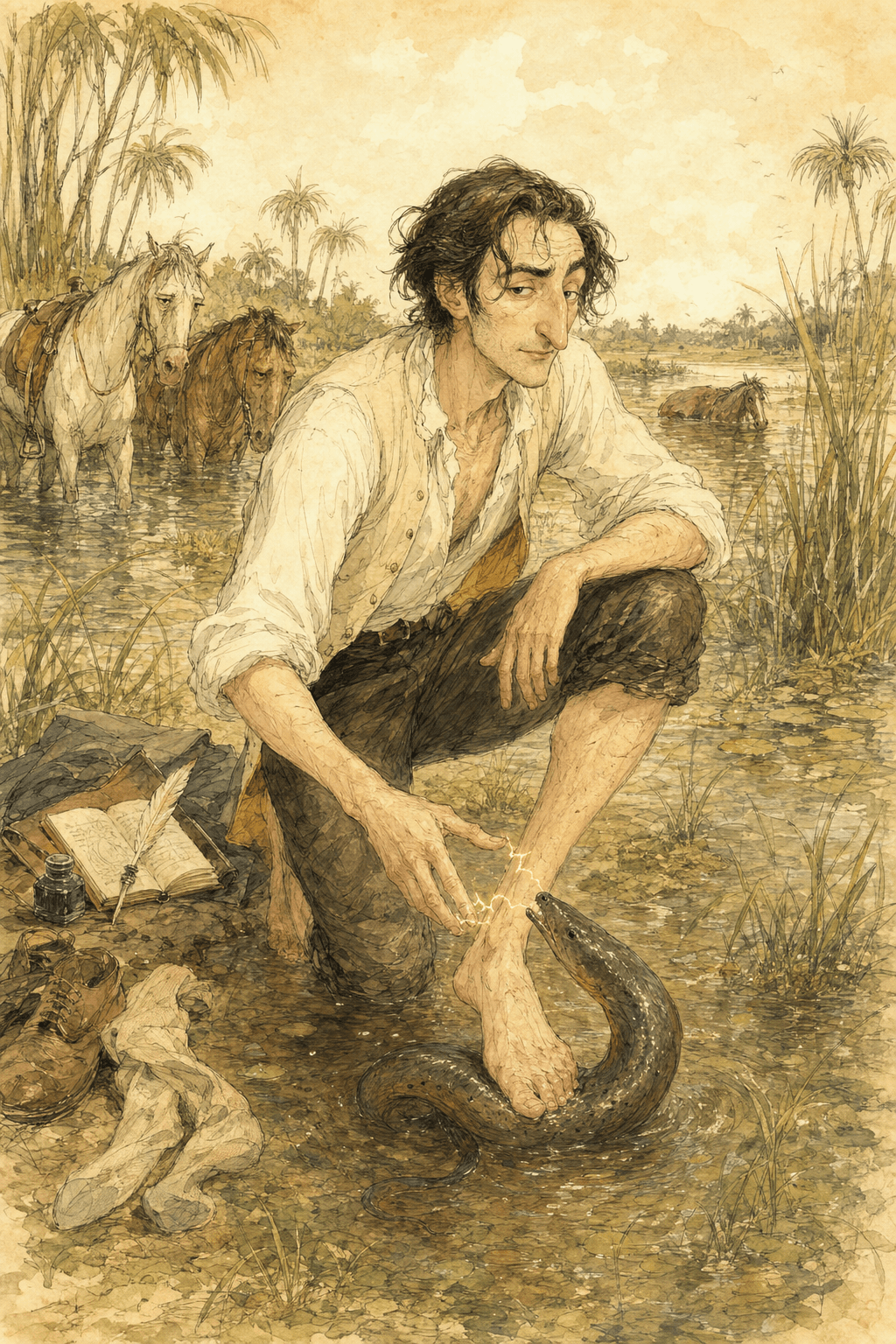
In March 1800, Alexander von Humboldt drove thirty wild horses into a Venezuelan pool to exhaust the electric eels, then waded in barefoot and dissected one while it kept shocking him.
The Bear Went First
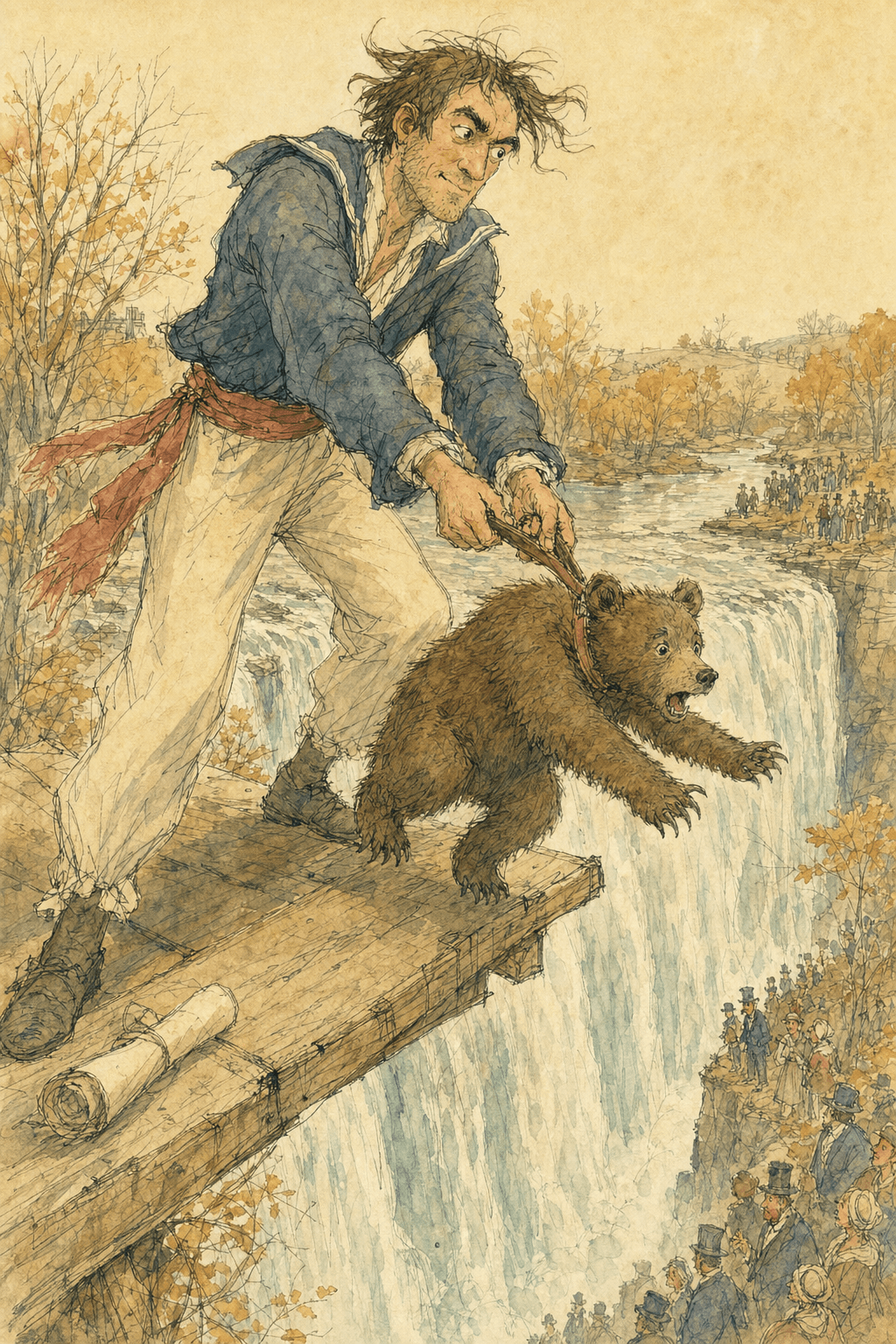
Sam Patch's final act opened with him shoving a bear cub off a hundred-foot waterfall in front of eight thousand people.

The Newt in Her Mouth
Eleanor Ormerod, the Royal Agricultural Society's consulting entomologist, kept live insect specimens in her pockets and produced them, unannounced, at meetings with farmers.
Wonder, delivered.
A fresh Oddlet in your inbox every morning, a full day before everyone else. True, strange and under a minute.
Free forever. Unsubscribe anytime.