Oddlet: Velimir Khlebnikov · 1 min read
Jun 22, 2026
The King of Time
A Russian poet did the math on every empire that ever fell, got an answer, and predicted the Russian Revolution five years early in a pamphlet nobody read.
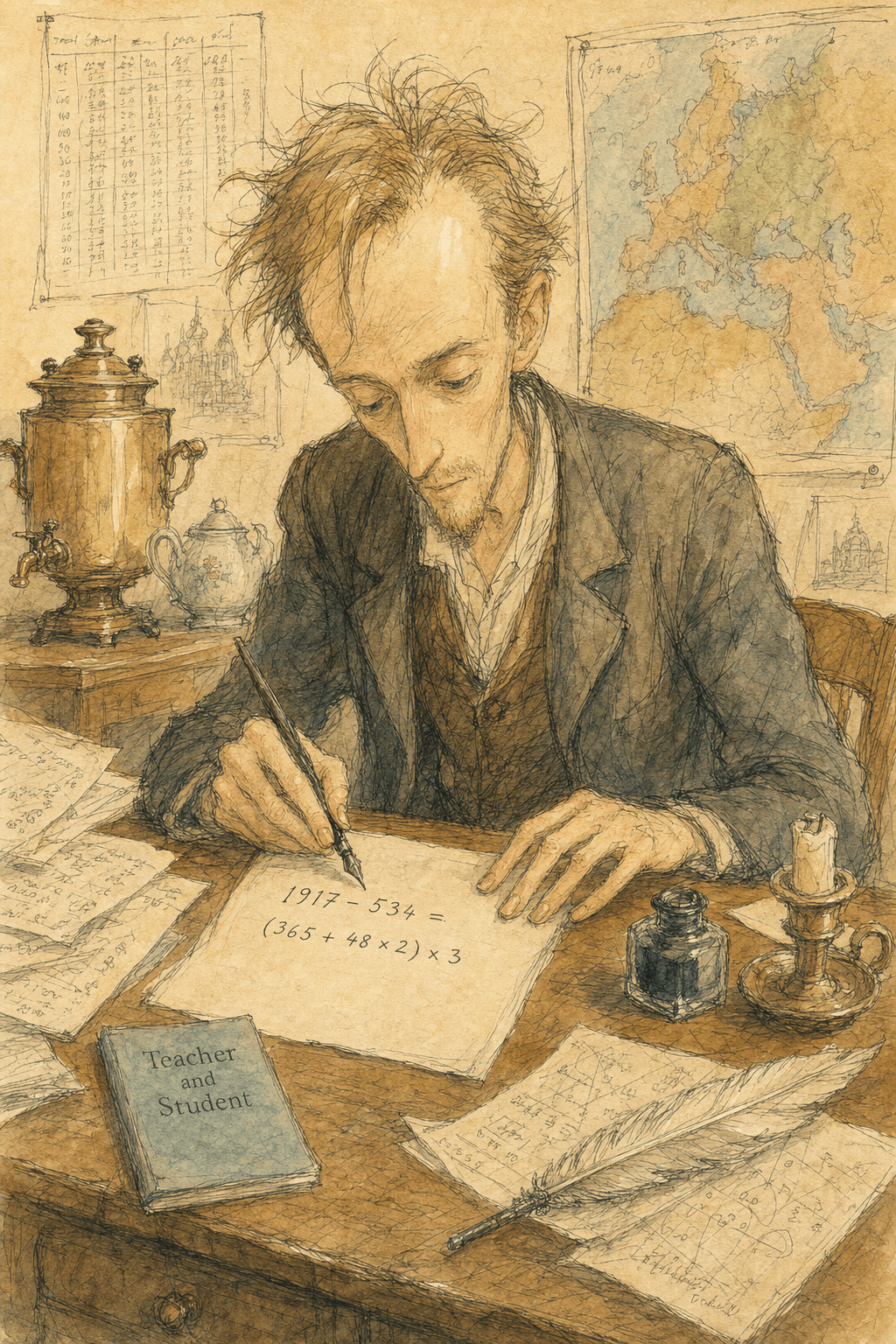
Velimir Khlebnikov believed history was arithmetic. Empires rose and fell on a schedule, and the schedule could be solved with a pencil. He worked it out from the Battle of Tsushima in 1905, traced it back through the centuries, and decided the fundamental constant of human affairs was the number 317.
This is a story about what you do once you believe that.
What you do first is publish. In 1912, in a small pamphlet called Teacher and Student, he set down a sum: 1917 − 534 = (365 + 48 × 2) × 3. The Vandal kingdom had fallen in 534. Therefore, he wrote, should we not expect some state to fall in 1917?
What you do next is found a government. In December 1915 he established the Society of 317 Chairmen of the Terrestrial Globe and began naming members. Mayakovsky. The Burliuks. Prokofiev. Reportedly Tagore. Together they would rule the future from inside the equation.
What you do after that, if humans are slow, is widen the audience. If people would not learn his Laws of Time, he announced, he would teach them to horses.
Then February came. The Tsar abdicated. The empire fell, on the year, in the pamphlet, written out five years early.
When he died, his friend Pyotr Miturich inscribed "Chairman of the Globe" onto his grave.
Know someone who’d love this?
- Britannica – Velimir Vladimirovich Khlebnikov — Confirms birth date October 28/November 9 1885, death June 28 1922 at age 36, his founding role in Russian Futurism, his name change from Viktor to Velimir (Slavophilism), meeting with Mayakovsky around 1912, his 'translogical language,' and later Soviet rehabilitation.
- Wikipedia – Velimir Khlebnikov — Detailed biographical timeline: birth in Malye Derbety; death near Kresttsy in Novgorod Oblast from gangrene and paralysis; Civil War wanderings to Kharkov, Baku, Persia (April 1921); 1912 prediction of 'collapse of an empire in 1917'; Jakobson hailing him 'the greatest world poet of our century'; pillowcase manuscripts edited into six posthumous volumes; Tables of Destiny in powers of 2 and 3.
- Encyclopedia.com – Khlebnikov, Viktor Vladimirovich — His university dates (Kazan 1903–08; St. Petersburg 1909–11 in Sanskrit, biology, Slavic), Tsarist army service 1916–17, Caucasus propaganda bureau in Baku 1920, lectures at Revolutionary army HQ Persia 1921, night-watchman job at Rosta in Pyatigorsk 1921; wandering poet carrying a pillowcase of manuscripts.
- Russkiy Mir – 'Velimir Khlebnikov: A Restless Wanderer' — Pillowcase manuscripts; tearing pages out of borrowed books; writing with eagle feathers or porcupine quills; Civil War wanderings through Kiev, Kharkov, Taganrog, Tsaritsyn, Astrakhan; Persian period; final illness and June 28 1922 death; Aseev's description 'a long-legged pensive bird.'
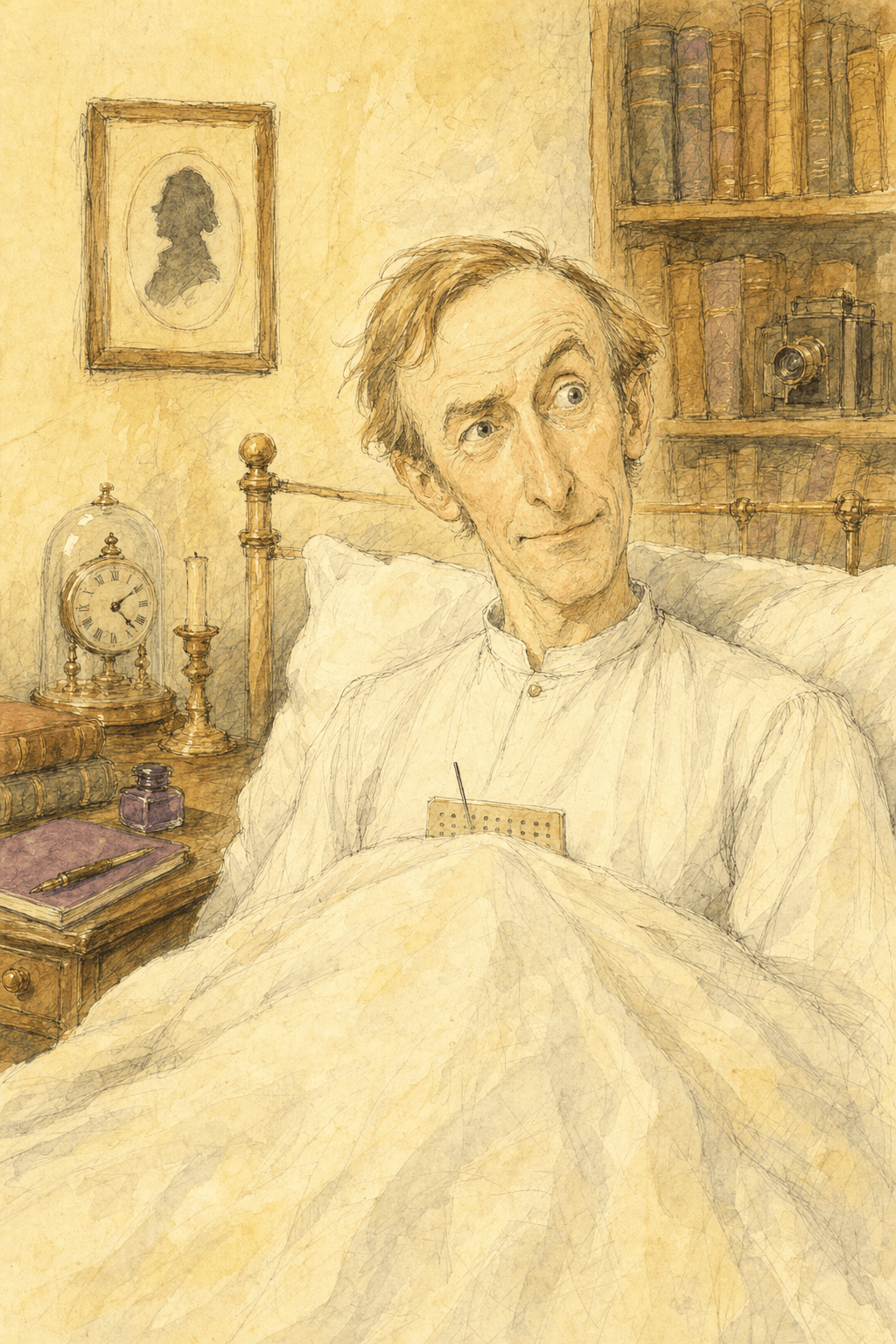
The Man Who Refused to Lose a Thought
What does a Victorian mathematician invent when he refuses to lose a single thought to the dark?
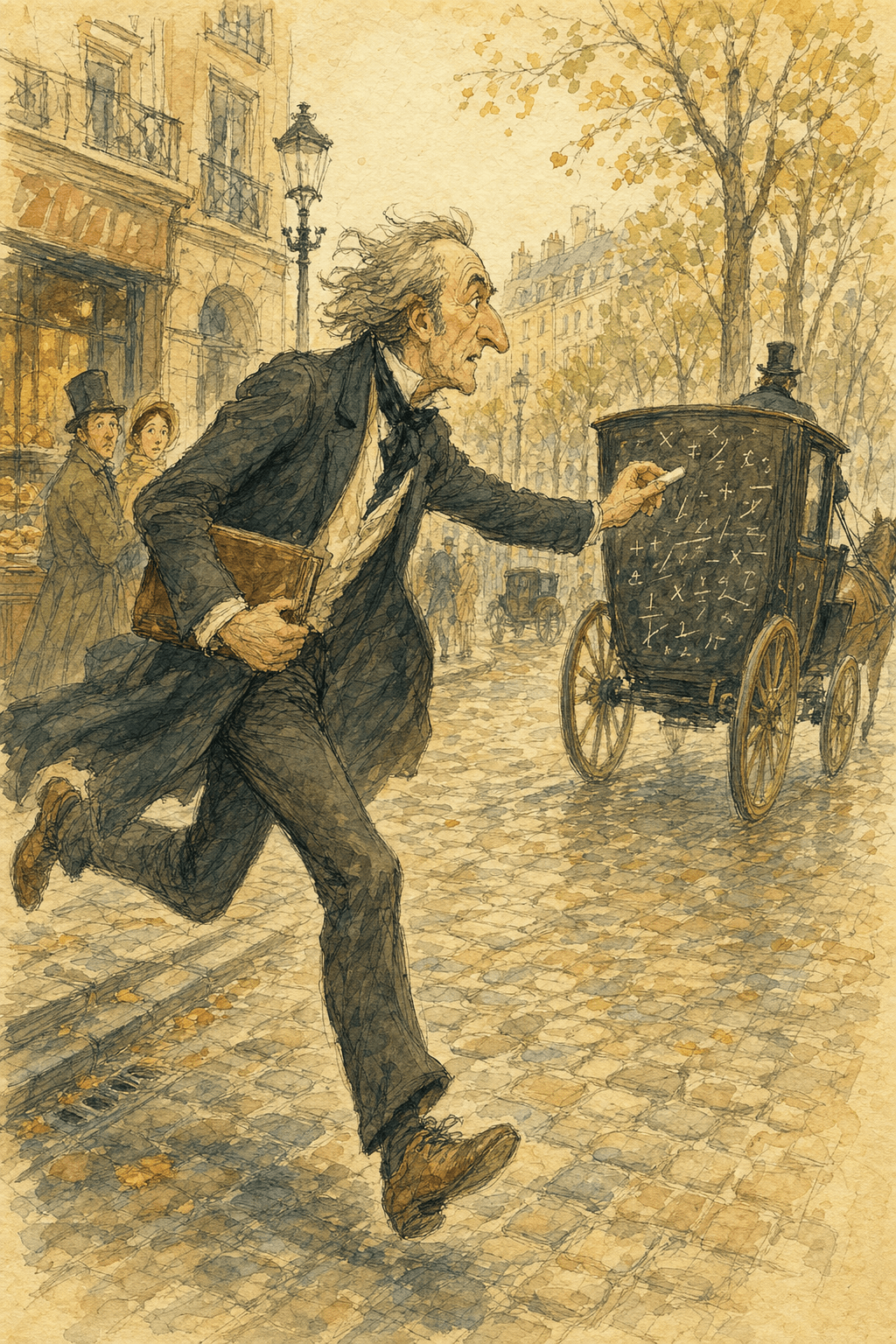
The Man Who Chased His Own Equation
What do you do when the blackboard you've been chalking equations onto turns out to be a moving cab?

The Rope
What do you call a woman who wouldn't cross the lawn for Emerson, but rigged a rope from her window for children she refused to greet at the door?
Wonder, delivered.
A fresh Oddlet in your inbox every morning, a full day before everyone else. True, strange and under a minute.
Free forever. Unsubscribe anytime.