Oddlet: Heraclitus · 1 min read
Aug 6, 2026
The Philosopher Who Took His Own Medicine
What happens when a philosopher who hated water contracts a disease made of it?
Heraclitus of Ephesus inherited the kingship of his city and gave it to his little brother. He had philosophy to do. He wrote one book, deliberately impenetrable, and laid it in the Temple of Artemis. Socrates later said you needed a Delian diver to get to the bottom of it.
The philosophy had a spine. Fire was the noble element. Water was the soul's death. Everything flowed, and the wise man burned dry against the flood.
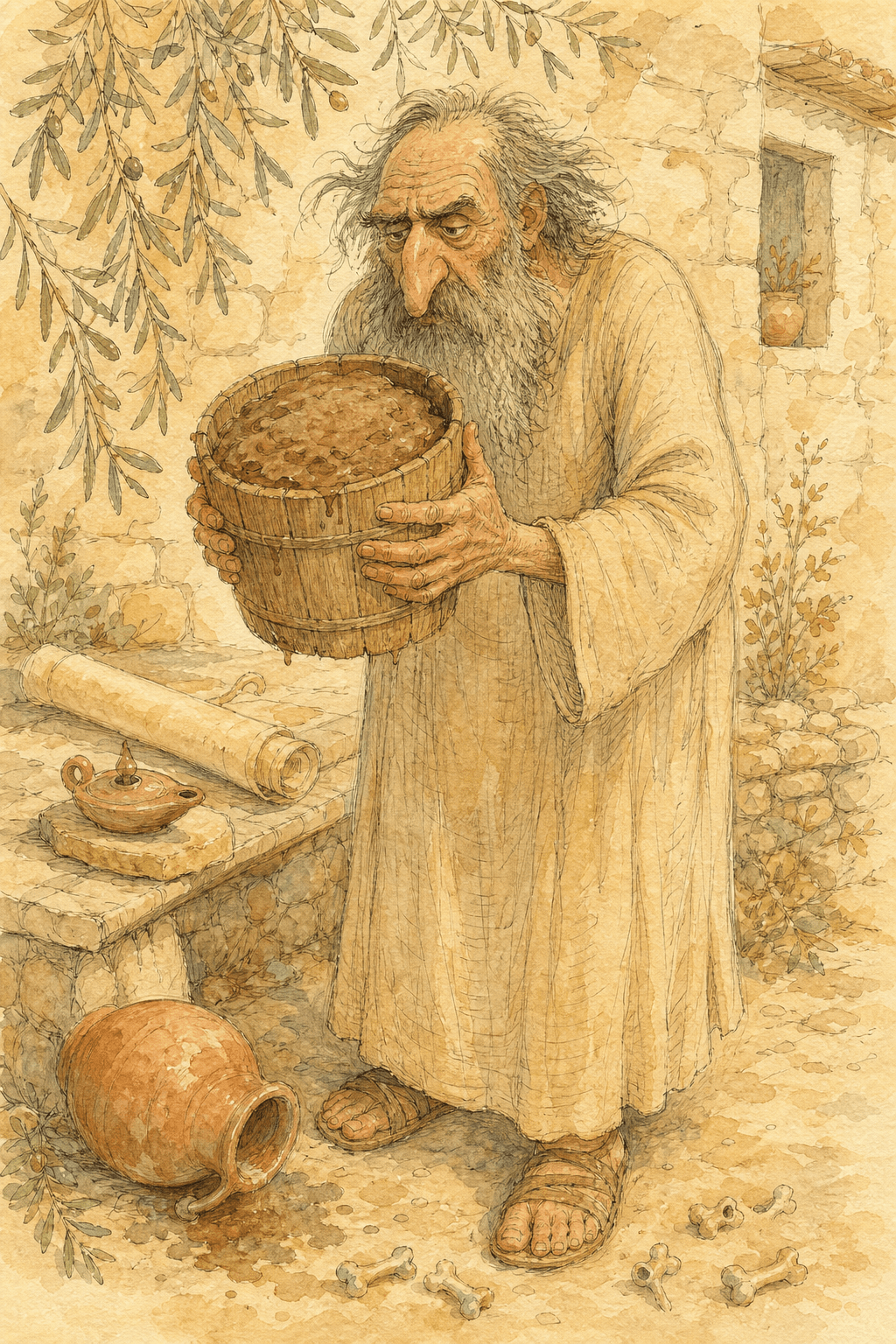
He held this view with a seriousness that scaled. He told the Ephesians they should hang themselves, every grown man, and leave the city to the boys. He declined a personal invitation from Darius, king of Persia. He retreated to the mountains and lived on grass and herbs, which is the diet of a goat and produces, in a human, dropsy. He swelled with water.
He came back down. He asked the physicians, in a riddle, whether they could make a drought after rain. They could not.
So he applied the doctrine himself. He had boys plaster him head to foot in fresh cow dung and lay him in the sun, reasoning that the heat would bake the water out.
He died the next day, cooked in manure, defeated by the wet.
Know someone who’d love this?
- Stanford Encyclopedia of Philosophy — 'Heraclitus' (Daniel W. Graham) — Authoritative academic overview: dates (fl. c. 500 BCE), Ephesus background, renunciation of kingship to his brother, single papyrus-roll book deposited in the Temple of Artemis at Ephesus, structure of fragments (>100 surviving), core doctrines of flux, unity of opposites, fire, and Logos, his elitism and distrust of democracy, criticism of Homer/Hesiod/Pythagoras (B40), and direct quotation of B1.
- Diogenes Laertius, 'Lives of Eminent Philosophers,' Book IX, ch. 1 — Primary ancient biographical source. Provides father's name, 69th Olympiad floruit, renunciation of kingship, the knucklebones-with-children episode, the title 'On Nature' and its three-part structure, the retreat to the mountains eating grass/herbs, the dropsy, the riddle to the physicians, the cow-dung self-cure, death at age 60, the Hermippus variant (died next day, buried in marketplace) and the Neanthes of Cyzicus variant (eaten by dogs).
- Internet Encyclopedia of Philosophy — 'Heraclitus' — Covers floruit c. 500 BCE, Ephesus, his doctrines (lawlike flux, unity/transformational equivalence of opposites, fire, Logos), criticism of Homer/Hesiod/Pythagoras/Xenophanes, and cites major fragments.
- Wikipedia — 'Heraclitus' — Confirms the epithets 'the Obscure' (ho Skoteinos) and 'the weeping philosopher' (vs. Democritus the laughing philosopher), aristocratic family, renunciation of hereditary kingship to younger brother, the single work 'On Nature' housed at the Temple of Artemis, ~100+ surviving fragments, and the core ideas.
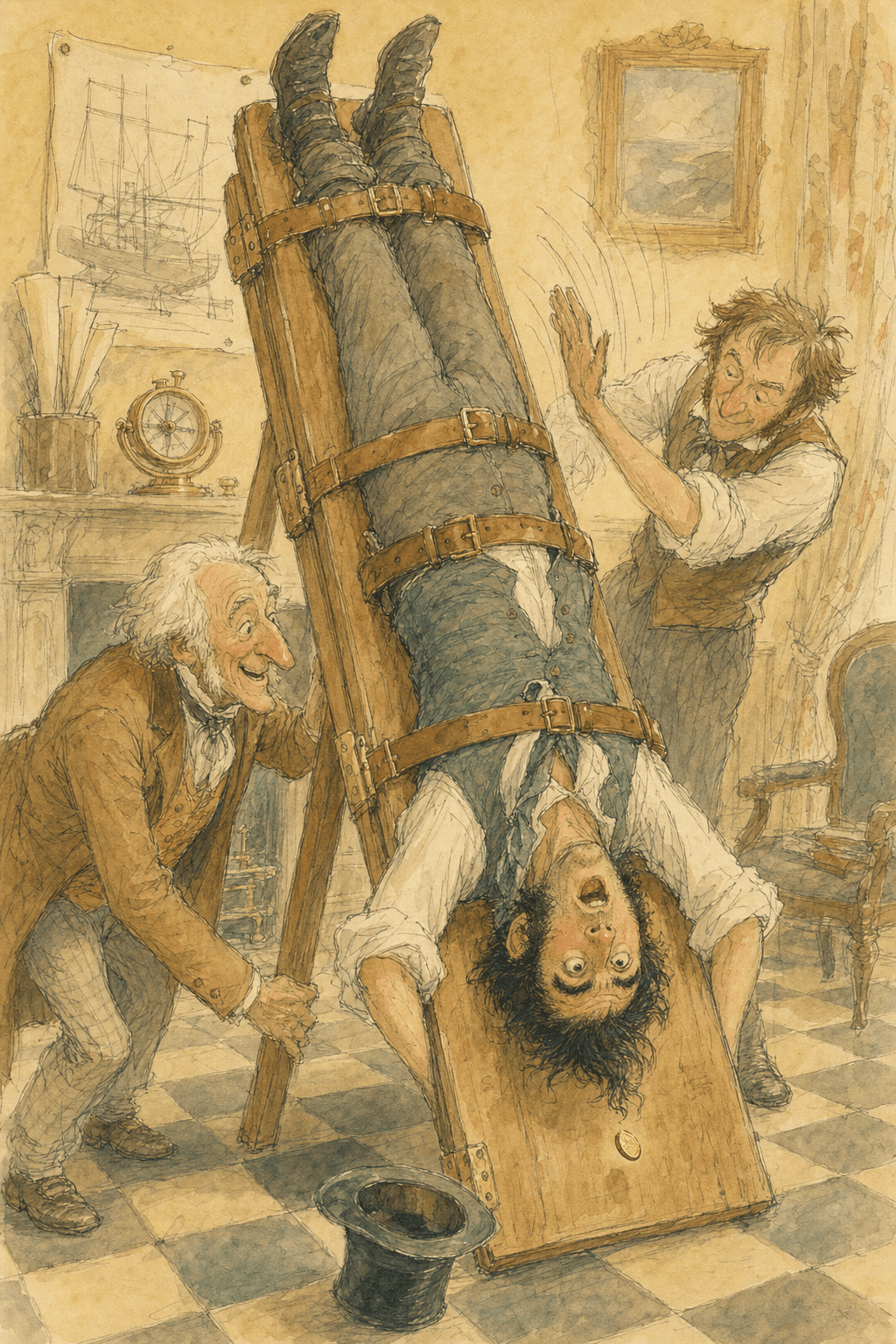
The Half-Sovereign
What do you do when the greatest engineer of the Victorian age inhales a gold coin during a magic trick for his children?
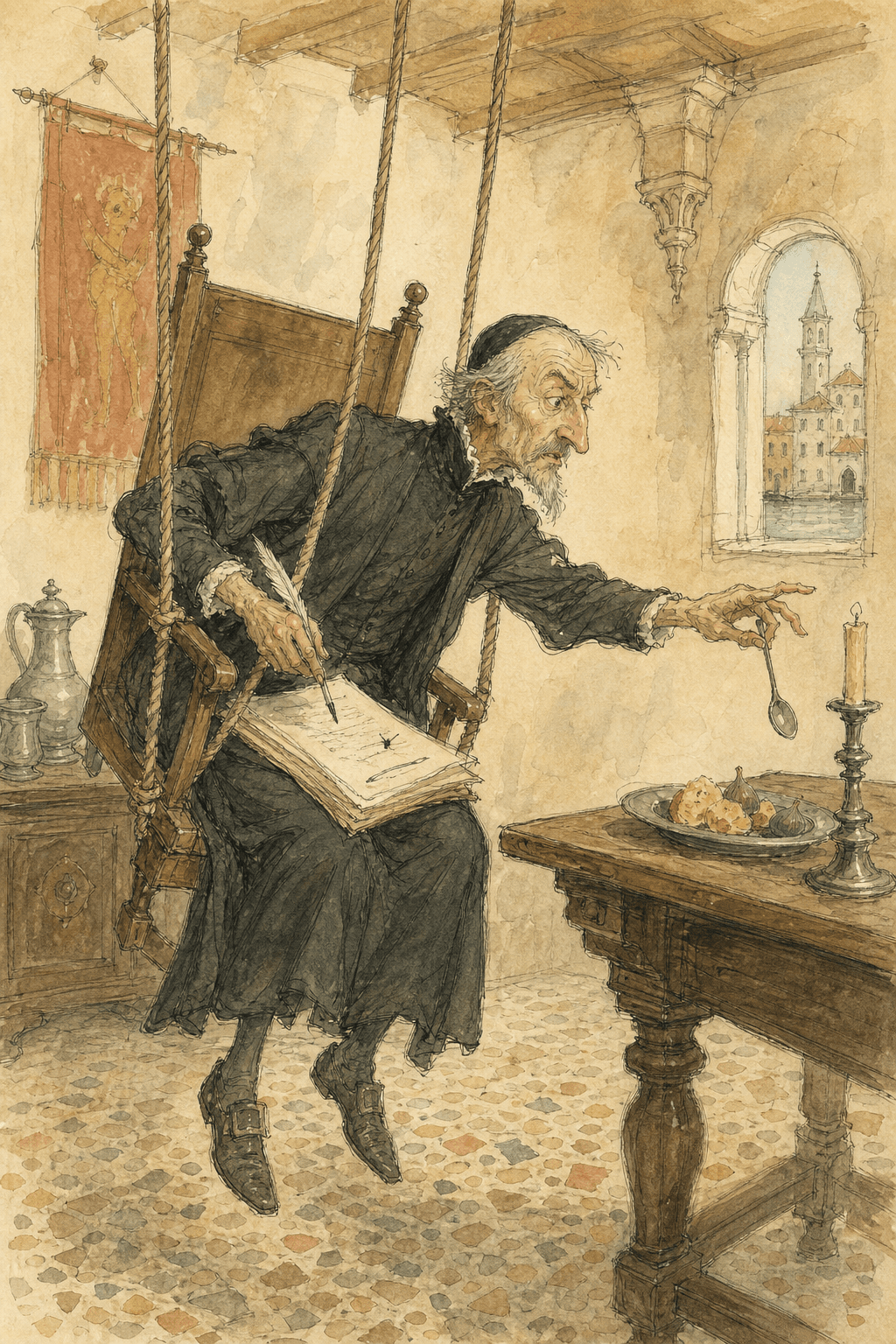
The Chair That Would Not Let Him Eat
What does a Renaissance physician discover when he rigs his dining chair to yank the table away the moment he has eaten his ration?
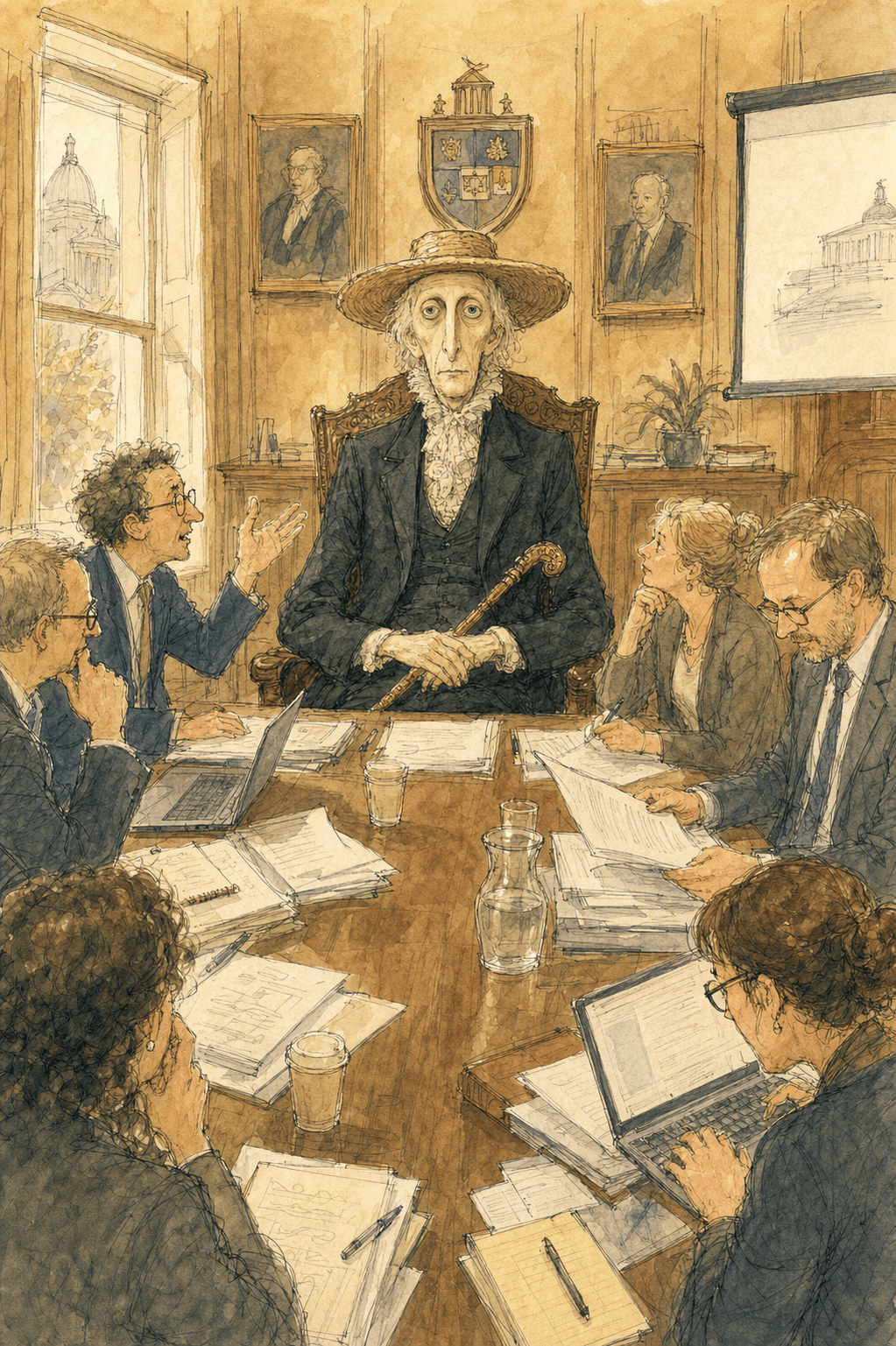
Present But Not Voting
What kind of man spends sixty-three years perfecting the instructions for his own stuffed body?
Wonder, delivered.
A fresh Oddlet in your inbox every morning, a full day before everyone else. True, strange and under a minute.
Free forever. Unsubscribe anytime.