Oddlet: Queen Nzinga · 1 min read
Mar 9, 2026
The Queen Who Made Her Own Chair
She arrived to negotiate a peace treaty, noticed there was no chair for her, and solved the problem immediately.
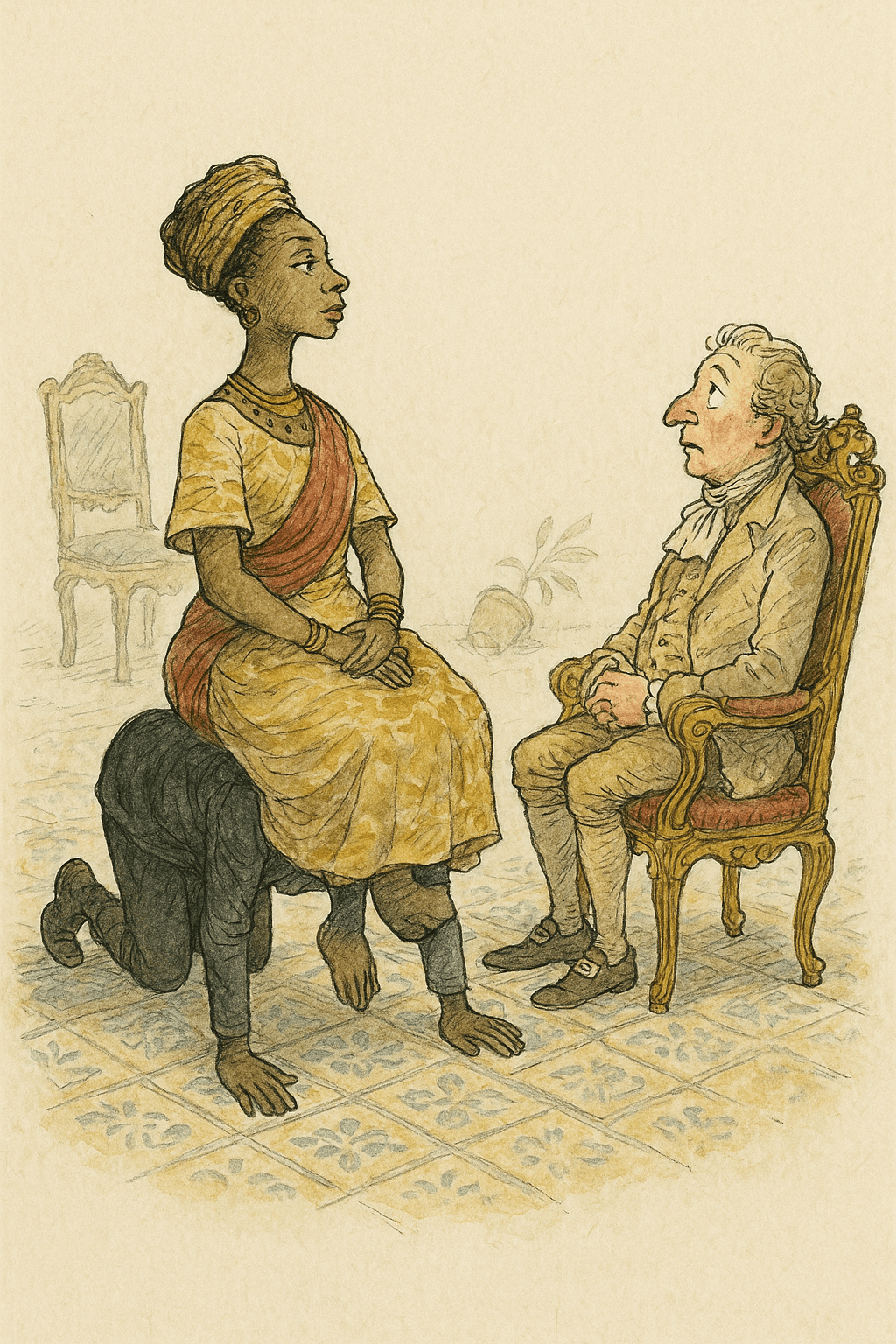
In 1622, the Portuguese governor of Luanda summoned a representative from the Kingdom of Ndongo to discuss a peace treaty. King Ngola Mbande sent his sister, Nzinga. She arrived in traditional royal dress, spoke fluent Portuguese, and immediately noticed that the governor had provided himself a chair and offered her a mat on the floor.
She signaled to one of her attendants, who dropped to all fours. Nzinga sat on their back, met the governor at eye level, and negotiated the treaty from there.
When the meeting ended and the governor gestured toward the still-kneeling attendant, Nzinga reportedly said it was beneath her to use the same chair twice. Then she went home and built an army.
For the next thirty years she waged guerrilla war against Portugal, personally leading troops into battle in her sixties. She forged an alliance with the Dutch, defeated a Portuguese army in 1647, and by 1656 forced Portugal to recognize her as sovereign ruler of both Ndongo and Matamba. At a military review in 1662, a priest watched the seventy-nine-year-old queen perform agility drills for her soldiers. She died peacefully the following year, at roughly eighty.
In the century after her death, queens ruled Matamba for at least eighty of those hundred and four years. The chair they refused to give her changed every year after.
Know someone who’d love this?
- Britannica — Nzinga biography — Primary reference for birth/death dates (c. 1582 – December 17, 1663), the 1622 negotiation, the chair incident, her 30-year guerrilla campaign, the 1656 peace treaty terms, and her correspondence with Pope Alexander VII. Reliable encyclopedic source.
- BlackPast — Queen Nzinga (1583–1663) — Describes the chair incident in detail: 'the only chair in the room was Governor Corria's, she immediately motioned to one of her assistants, who fell to her hands and knees and served as a chair for Nzinga for the rest of the meeting.' Also covers her Dutch alliance (1641), defeat of Portuguese army (1647), and death on December 17, 1663.
- Wikipedia — Nzinga of Ndongo and Matamba — Covers the chair incident, the 104-year queen succession statistic, her traditional dress choice at the 1622 meeting, and the Cavazzi engraving. Notes the chair story is 'popular' and that Portuguese behavior was a standard display of 'subordinate status.' Cites Linda M. Heywood's 2017 Harvard University Press biography as a key scholarly source.
- Jamestown-Yorktown Foundation — Primary Source: Alamandini's 'Queen Njinga of Ndongo' — Discusses the Cavazzi/Alamandini engraving (first published 1687) as the primary visual source for the chair incident. Also records the detail that when the governor asked about the kneeling attendant at the meeting's end, Nzinga said she was leaving the servant there as it was beneath her to sit in the same chair twice. Notes Cavazzi arrived in Ndongo in 1654 and was an eyewitness to court culture, though his writings were filtered through his own biases.
The Cartwheel Brims
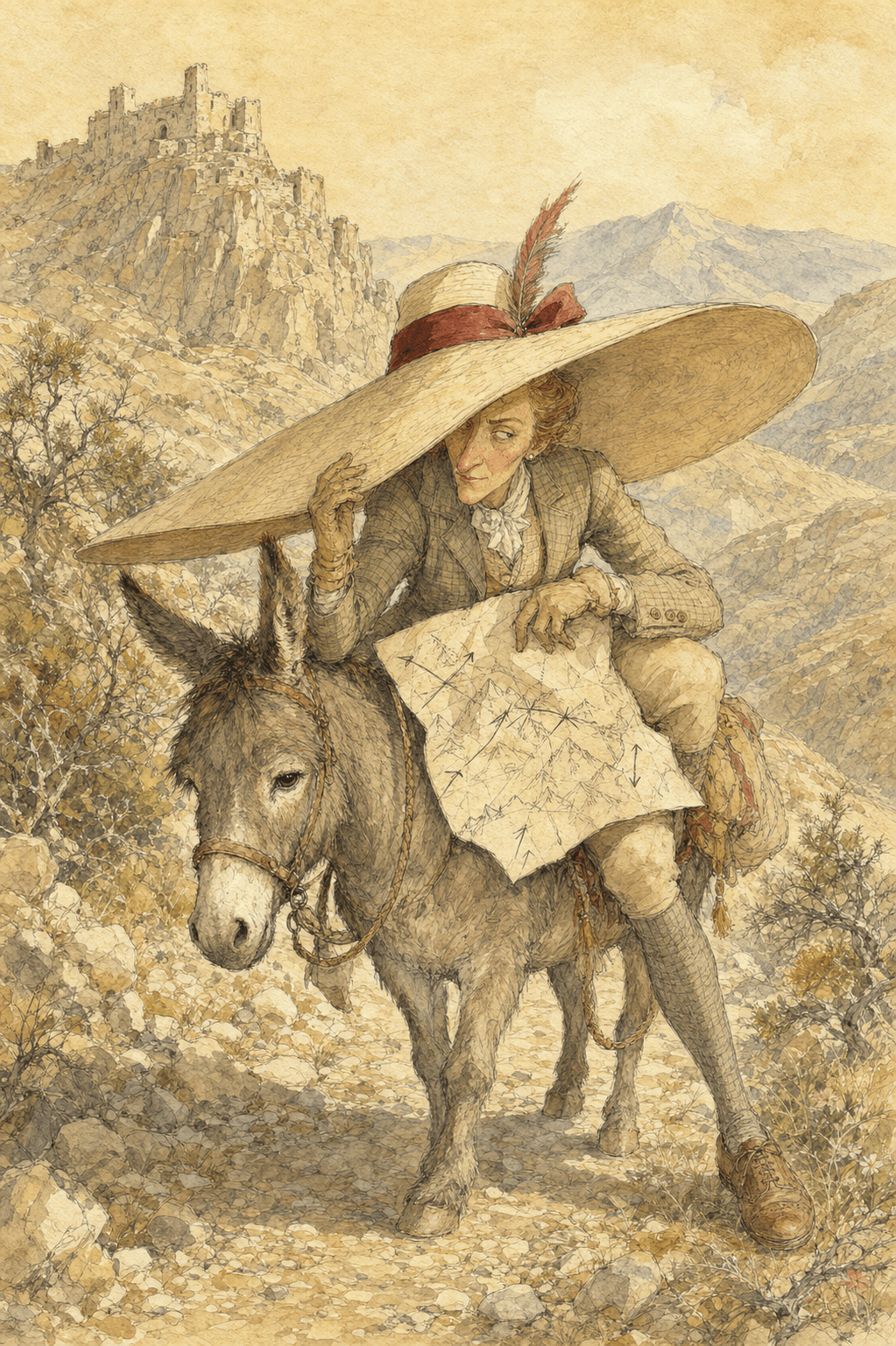
A loom took half her scalp at thirteen; she spent the next eighty-seven years deciding what the world was allowed to see.
Peace
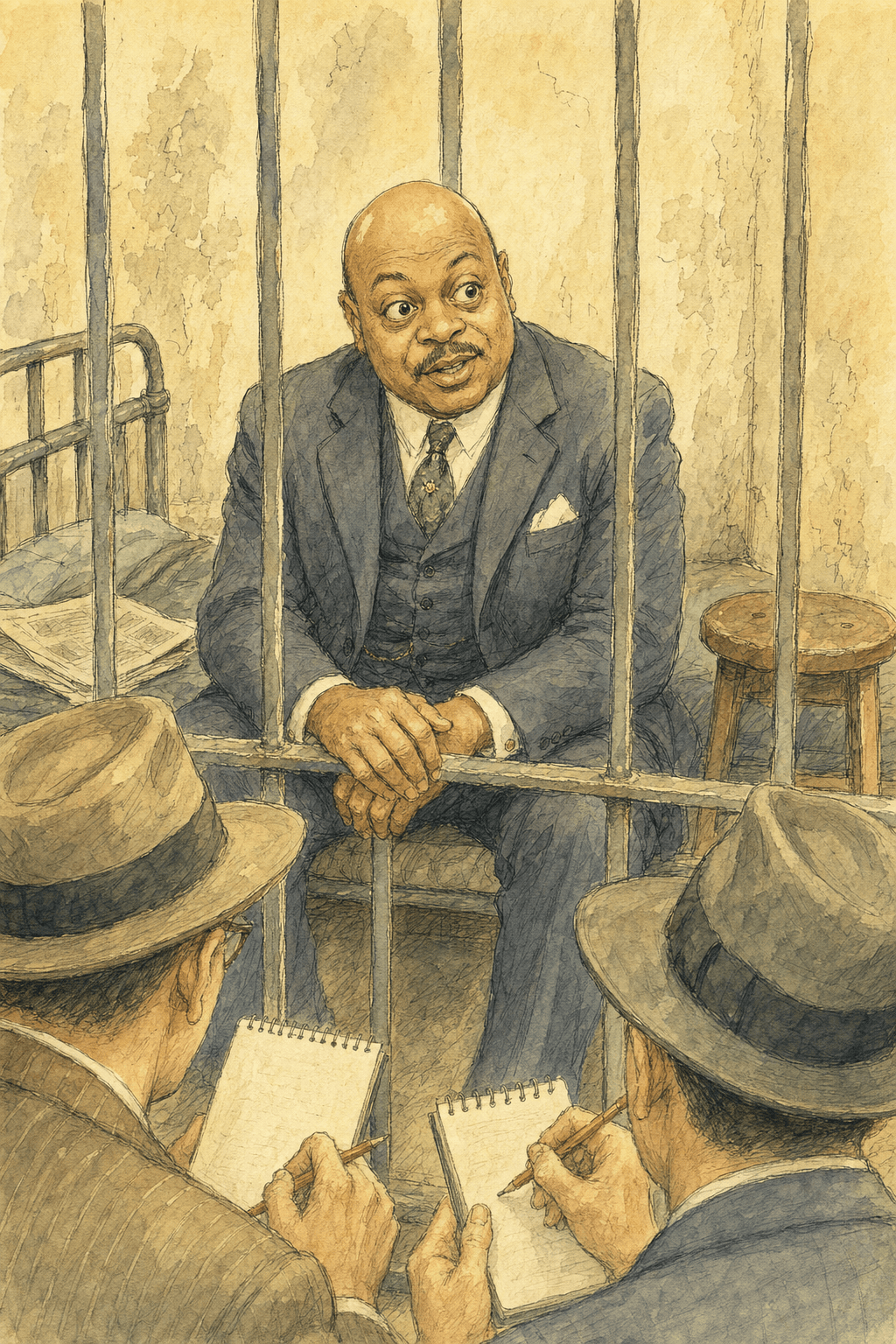
He fed three thousand people in an afternoon, banned the word "hello" because it contained "hell," and quietly let his followers know he was God.
What For
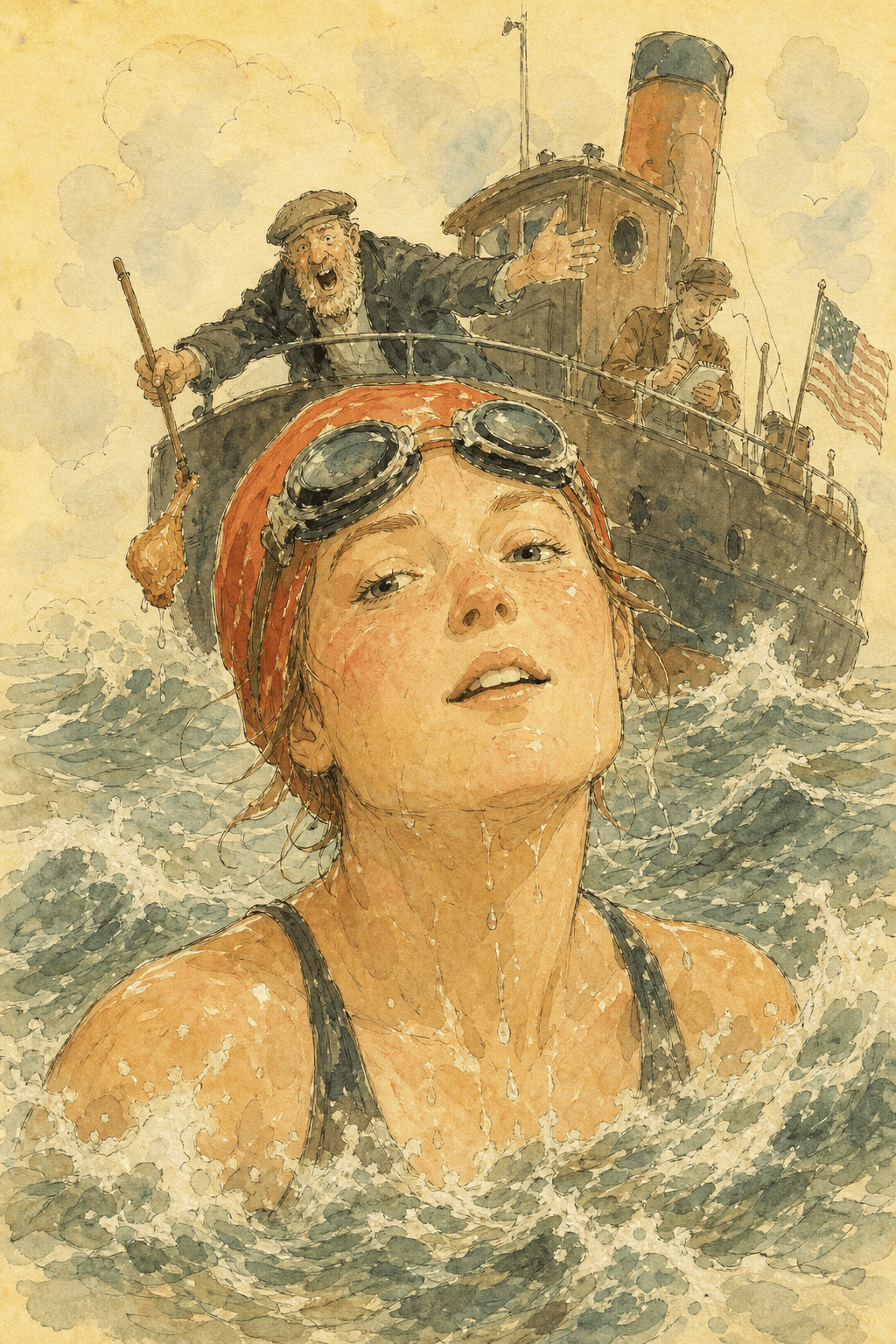
In 1926 a twenty-year-old swam the English Channel faster than any man alive — and her trainer spent the worst hour of it begging her to quit.
Wonder, delivered.
A fresh Oddlet in your inbox every morning, a full day before everyone else. True, strange and under a minute.
Free forever. Unsubscribe anytime.