Oddlet: Lady Hester Stanhope · 1 min read
Feb 25, 2026
The Woman Who Destroyed Her Own Discovery
She found exactly what she was looking for, then ordered it smashed and thrown into the sea.
Lady Hester Stanhope ran 10 Downing Street. Not officially — her uncle William Pitt the Younger was Prime Minister — but she managed his household, hosted his dinners, and operated as the most powerful woman in British politics without holding any title at all. When Pitt died in 1806, Parliament granted her a pension of £1,200 a year.
She used it to leave England forever.
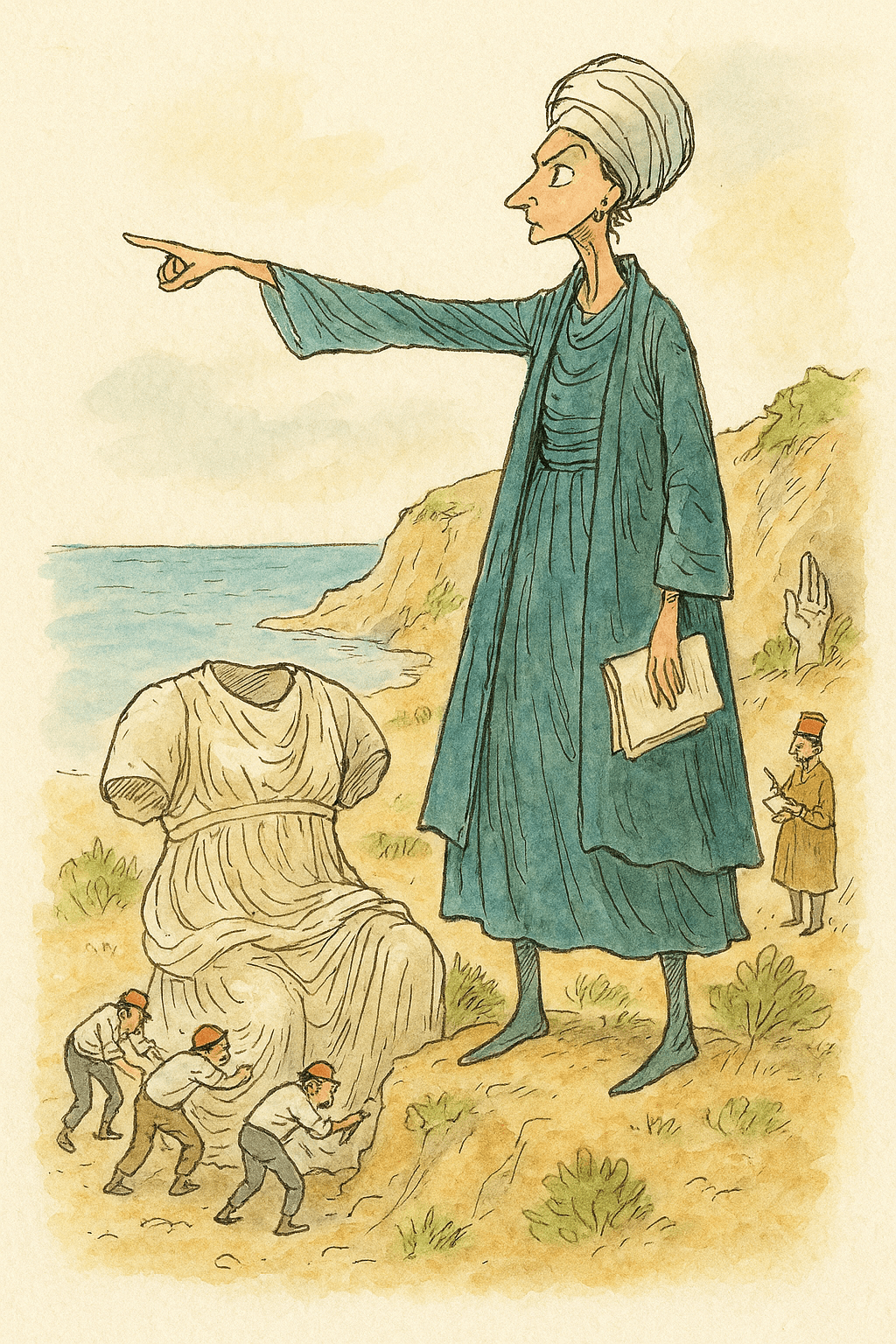
A shipwreck off Rhodes in 1810 destroyed every piece of clothing she owned. She borrowed Turkish male robes and a turban, and simply never changed back. She rode astride through the Ottoman Empire, entered the ancient city of Palmyra dressed as a man — the first European woman to do so — and was crowned "Queen of the Desert" by Bedouin tribes. Lord Byron met her in Athens and was intimidated. She dismissed him as a great poet but a very bad man.
In 1815, she led what is now considered the first organized archaeological excavation in Palestine, at Ashkelon. Her team unearthed a massive headless marble statue — exactly where a medieval Italian manuscript said it would be.
She ordered it smashed to pieces and thrown into the sea. She wanted the Ottoman authorities to know she was there for knowledge, not plunder.
When Britain cut her pension in 1838, she bricked up the gates of her Lebanese fortress and never came out.
Know someone who’d love this?
- Wikipedia — Lady Hester Stanhope — Comprehensive overview covering her life at Downing Street, departure from England, travels, settlement at Djoun, the Ashkelon excavation, and death. Wikipedia synthesises secondary sources; individual claims should be verified against Meryon's memoirs and DNB for publication.
- Oxford Dictionary of National Biography — Lady Hester Stanhope — Authoritative scholarly biography. Confirms pension of £1,200, role as Pitt's hostess, settlement at Djoun, and death in 1839. Paywall; details cited here are consistent with the freely available abstract and with Wikipedia's sourcing.
- Meryon, Charles Lewis — 'Memoirs of the Lady Hester Stanhope' (1845), 3 vols., London: Henry Colburn — Primary source by her personal physician and long-term companion. Describes the Palmyra reception, her dress, her manner of travel, and the Ashkelon excavation including the destruction of the marble statue. Available in full on Internet Archive. Direct eyewitness account, though Meryon was a partisan admirer.
- Silberman, Neil Asher — 'Digging for God and Country' (1982), Knopf — Contextualises the Ashkelon dig of 1815 as the first organised archaeological excavation in Palestine. Discusses the Ottoman firman and the destruction of the statue. Standard reference in the history of Levantine archaeology.
- Childs, Virginia — 'Lady Hester Stanhope: Queen of the Desert' (1990), Weidenfeld & Nicolson
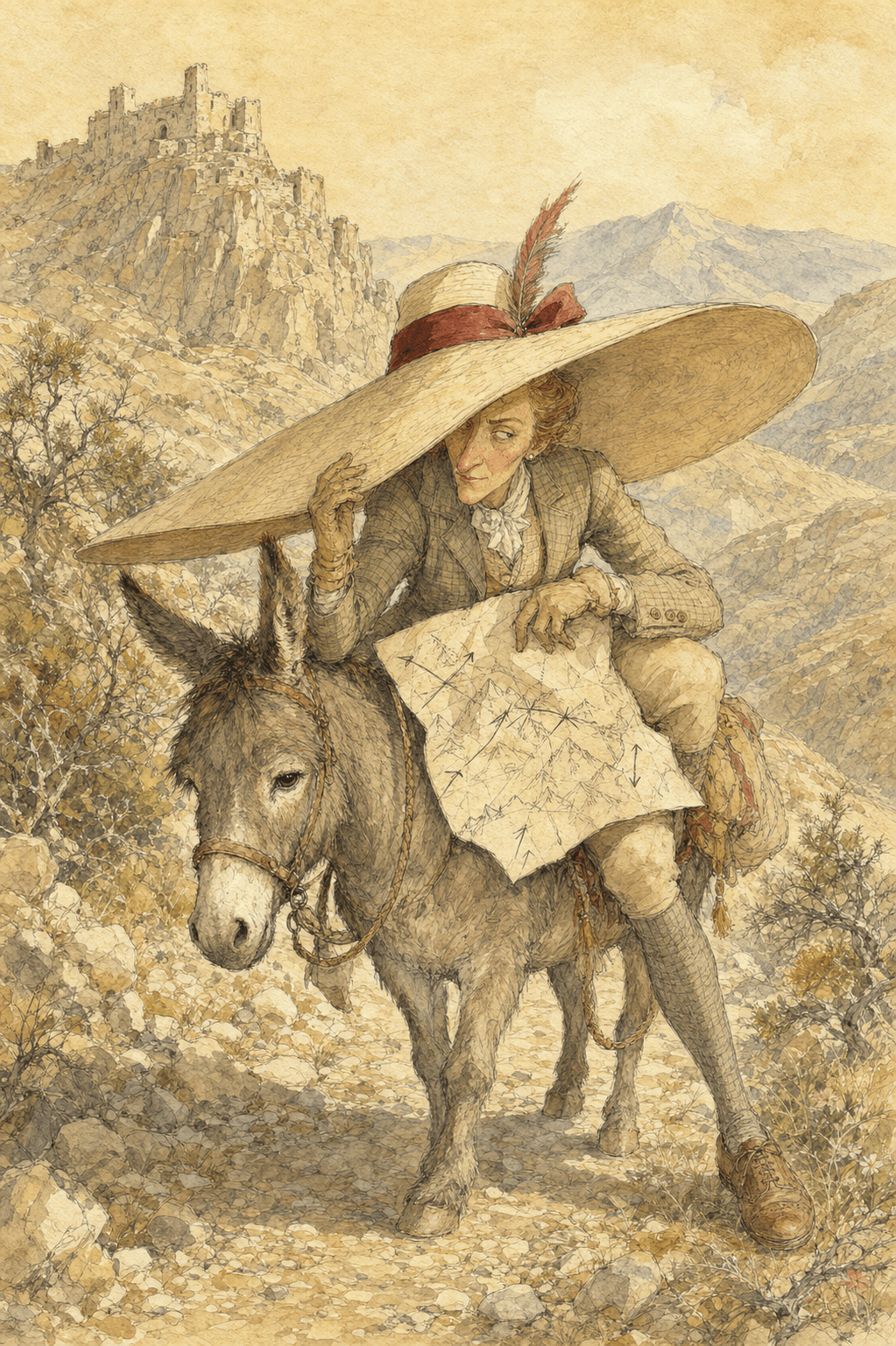
The Cartwheel Brims
A loom took half her scalp at thirteen; she spent the next eighty-seven years deciding what the world was allowed to see.
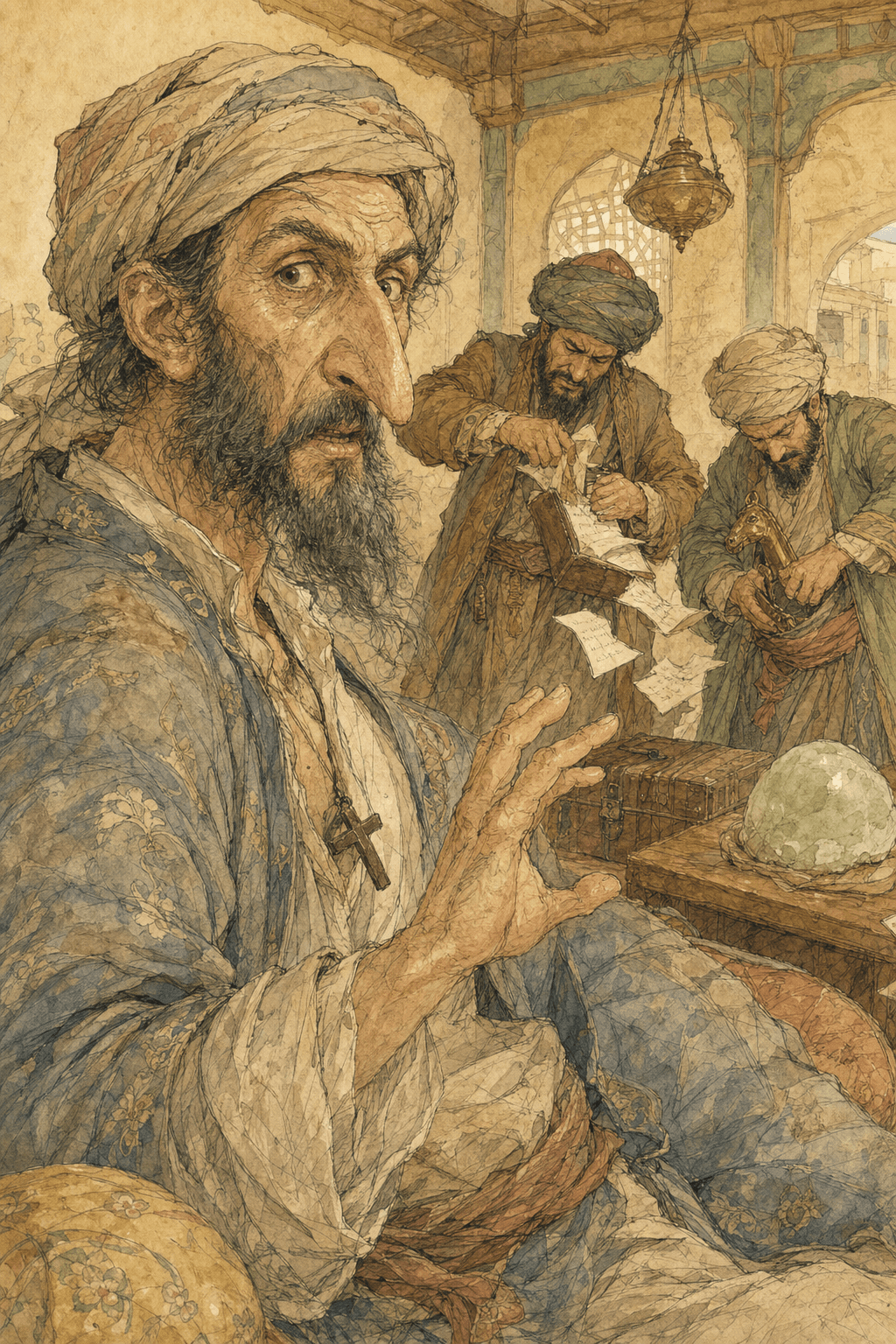
The Servant of Jesus
In 1602 the Jesuits sent a former soldier to walk from India to China in disguise to settle a geography argument — what could possibly go wrong?
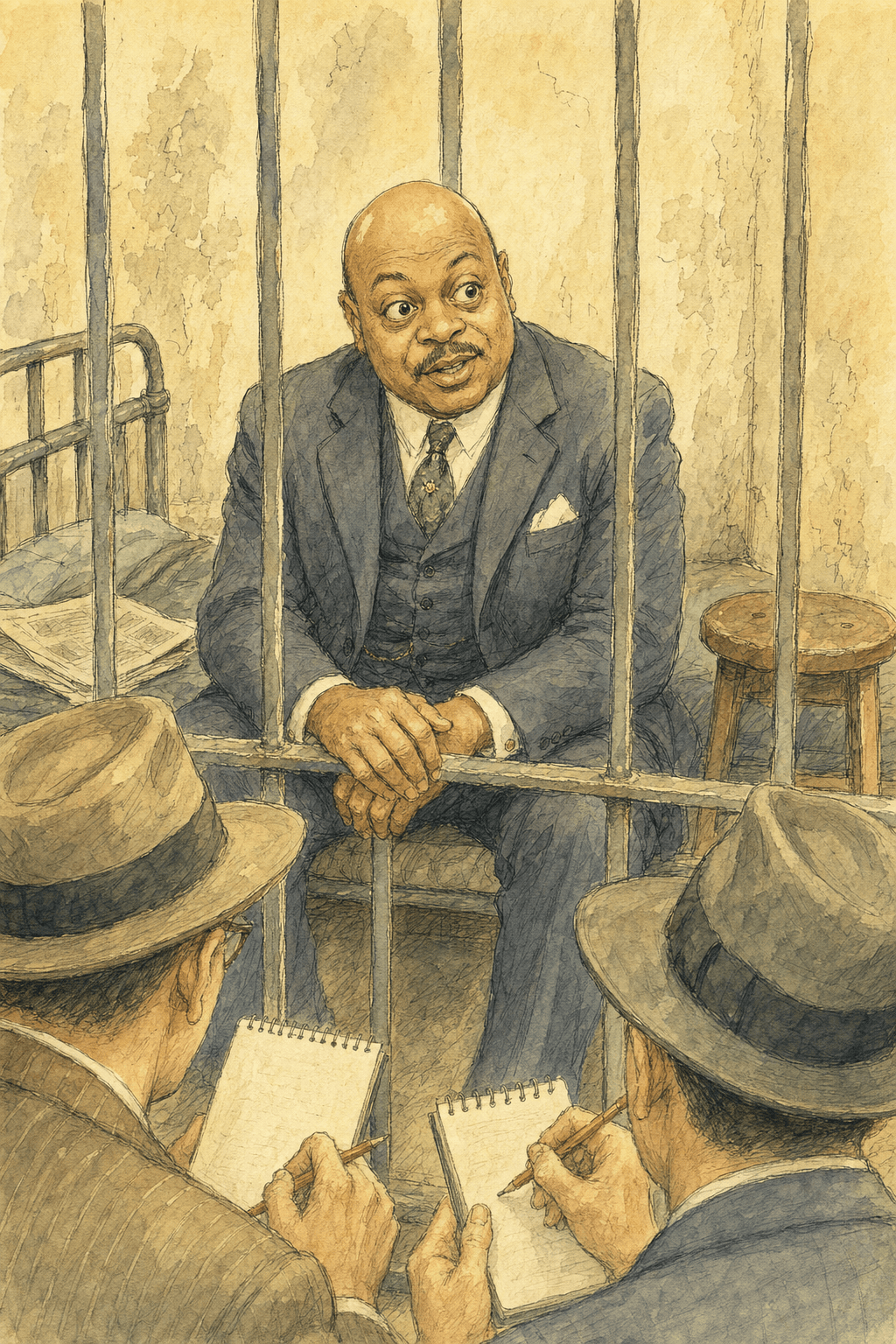
Peace
He fed three thousand people in an afternoon, banned the word "hello" because it contained "hell," and quietly let his followers know he was God.
Wonder, delivered.
A fresh Oddlet in your inbox every morning, a full day before everyone else. True, strange and under a minute.
Free forever. Unsubscribe anytime.