Oddlet: Götz von Berlichingen · 1 min read
Mar 28, 2026
The Knight Whose Insult Became a Mozart Composition
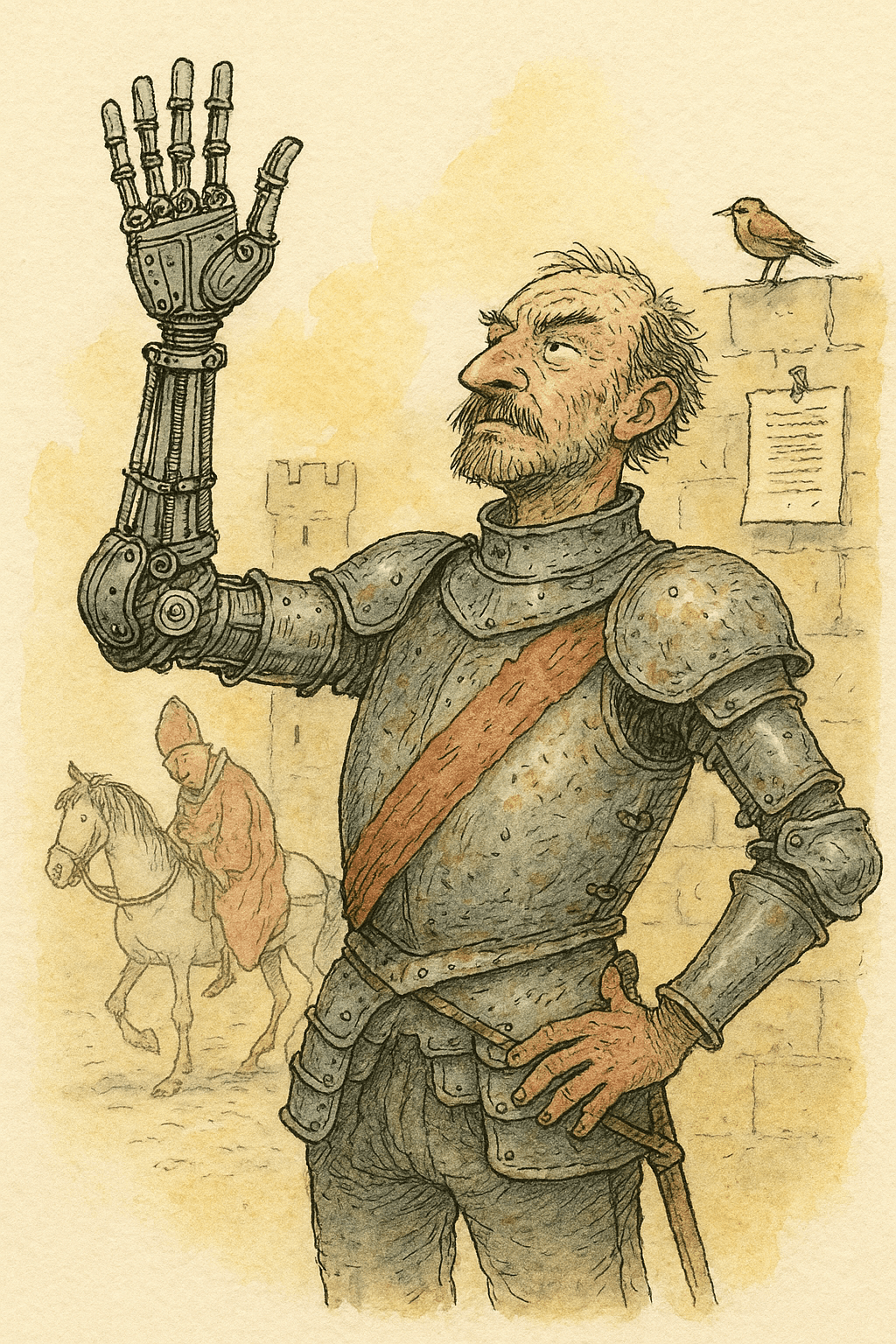
He had a second, fancier iron hand built for Sundays.
In 1504, during the siege of Landshut, a cannonball from his own side struck twenty-three-year-old Götz von Berlichingen and took his right hand. He had a blacksmith forge him an iron one — spring-loaded fingers, ratcheting knuckles, joints that could lock around a sword hilt or a set of reins — and went back to war for another forty years.
He fought fifteen feuds by his own count. He captured a count and ransomed him. He raided merchants until the Emperor himself placed him under an imperial ban. He had a second, fancier iron hand built for Sundays.
At some point during a standoff with the Bishop of Bamberg, Götz was ordered to surrender. He told the bishop's men to lick his arse. He liked the line well enough to dictate it into his autobiography.
The autobiography was published in 1731, a hundred and sixty-nine years after his death. A twenty-four-year-old Goethe read it and turned it into a play. The line stayed in. It became so famous that actors eventually replaced it with "My name is Götz von Berlichingen" — his name itself becoming the insult.
Nine years after Goethe's play, Mozart sat down in Vienna and set the phrase to music: Leck mich im Arsch, a canon for six voices, composed as a party piece for friends.
After Mozart died, his widow sent it to the publisher. They renamed it Laßt froh uns sein.
"Let us be glad."
Know someone who’d love this?
- **Wikipedia — Götz von Berlichingen** — Comprehensive overview with citations; good for dates, feuds, autobiography details, and cultural legacy. Cross-check specific claims.
- **PMC / Clinical Orthopaedics and Related Research** — Peer-reviewed medical history article on the iron hand's mechanics; highly reliable for prosthetic details.
- **PMC — Letter to the Editor (Quasigroch/Otte)** — Scholarly correction noting the friendly-fire origin of the injury; cites primary German-language sources including Götz's autobiography.
- **Atlas Obscura** — Well-sourced popular history piece; cites *Plastic & Reconstructive Surgery* and *American Journal of Surgery*. Good for quotes and cultural context.
- **Wikipedia — Götz von Berlichingen (Goethe play)** — Reliable for the play's publication history, Walter Scott translation, and the exact textual lineage of the famous quote.
- **Wikipedia — Leck mich im Arsch**
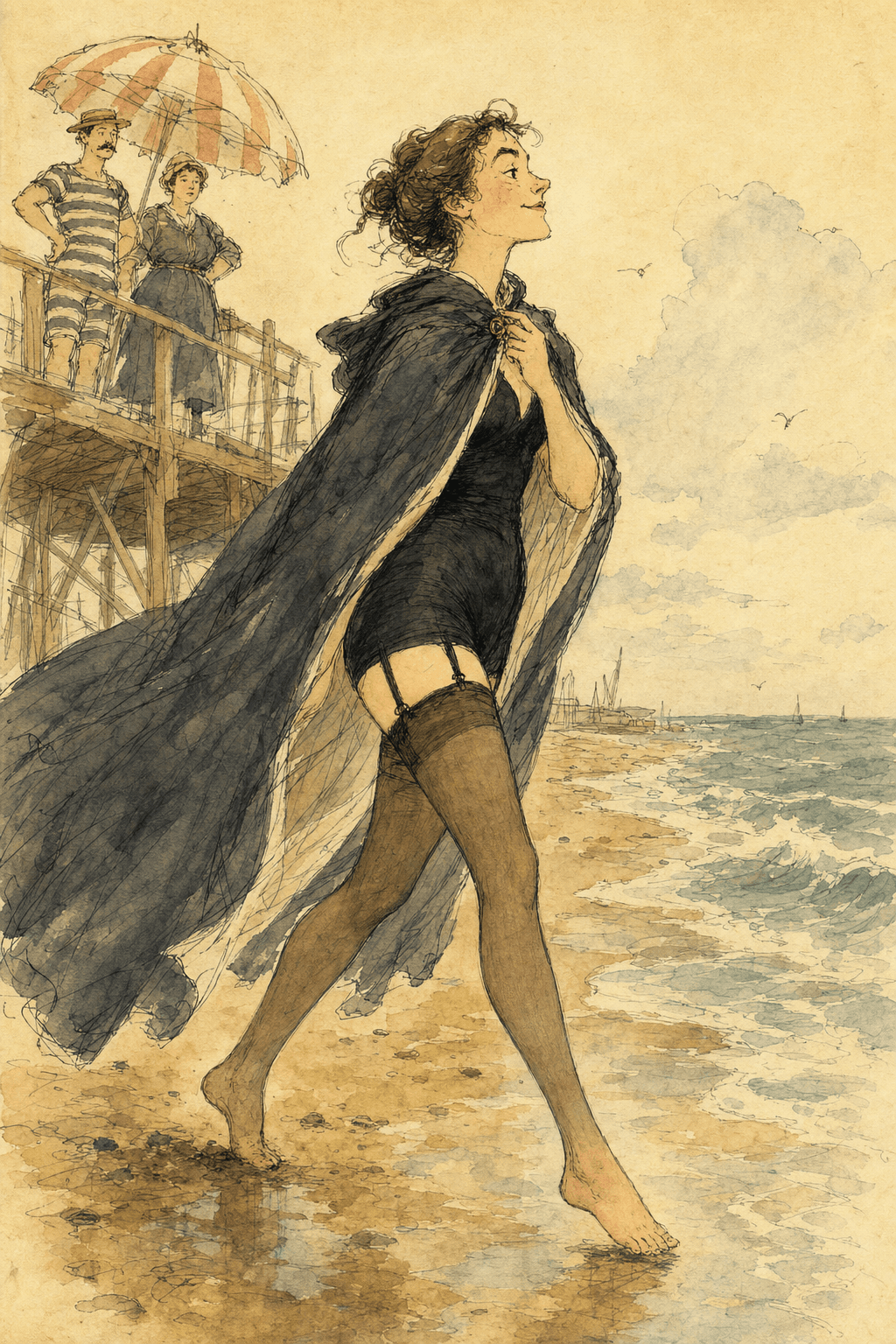
The Cape Compromise
She swam thirteen miles down the Thames, twenty-two down the Danube, and got arrested walking onto a beach in Boston.
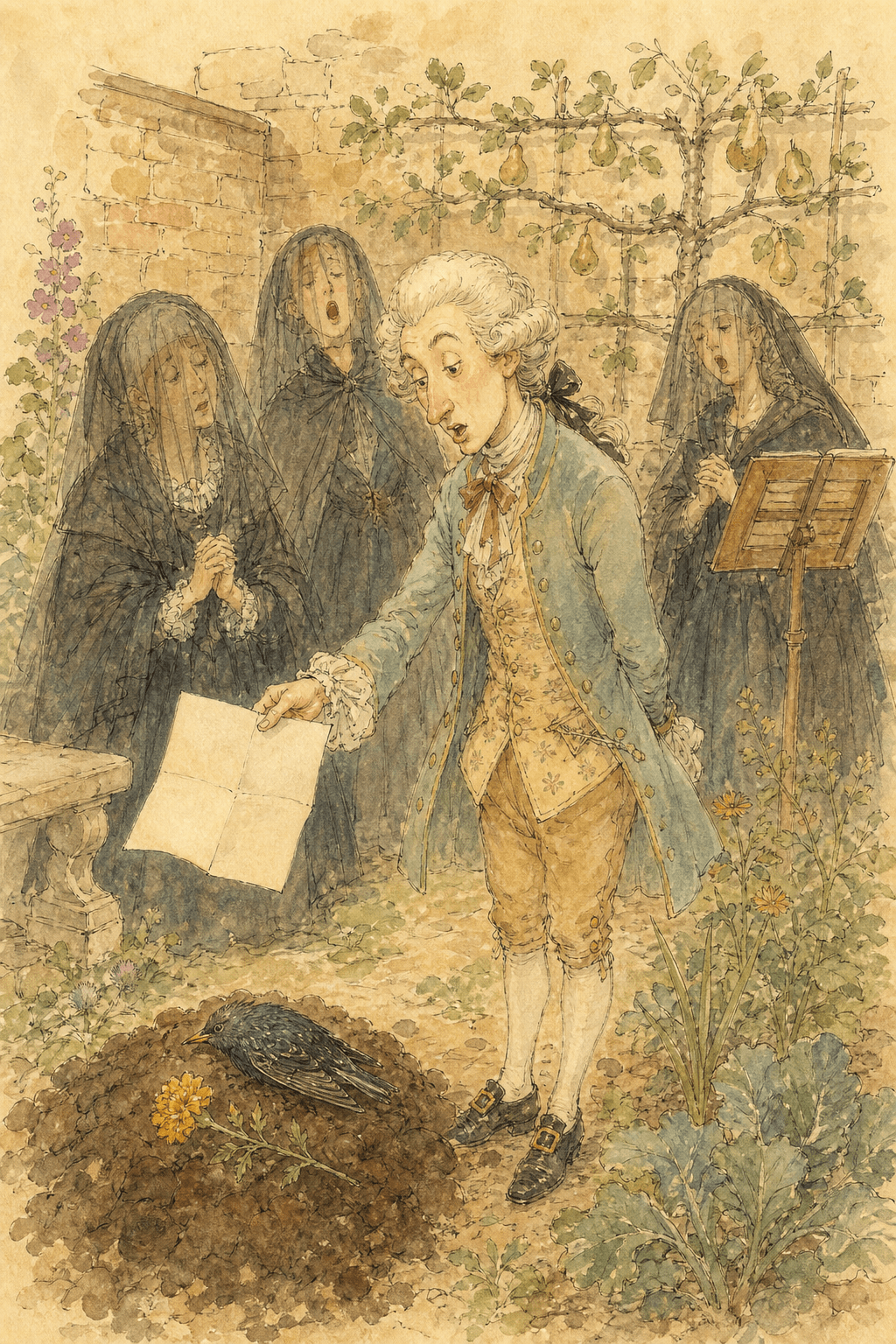
Vogel Stahrl, 34 Kreuzer
What does a composer owe a shop bird that whistles his six-week-old concerto back at him, holds a fermata he never wrote, and sharpens a single G?

The Formosan
How did a blonde Frenchman convince 1700s London he was from Formosa?
Wonder, delivered.
A fresh Oddlet in your inbox every morning, a full day before everyone else. True, strange and under a minute.
Free forever. Unsubscribe anytime.