Oddlet: Maria Sibylla Merian · 1 min read
Jul 20, 2026
The Spider That Was Named After Her
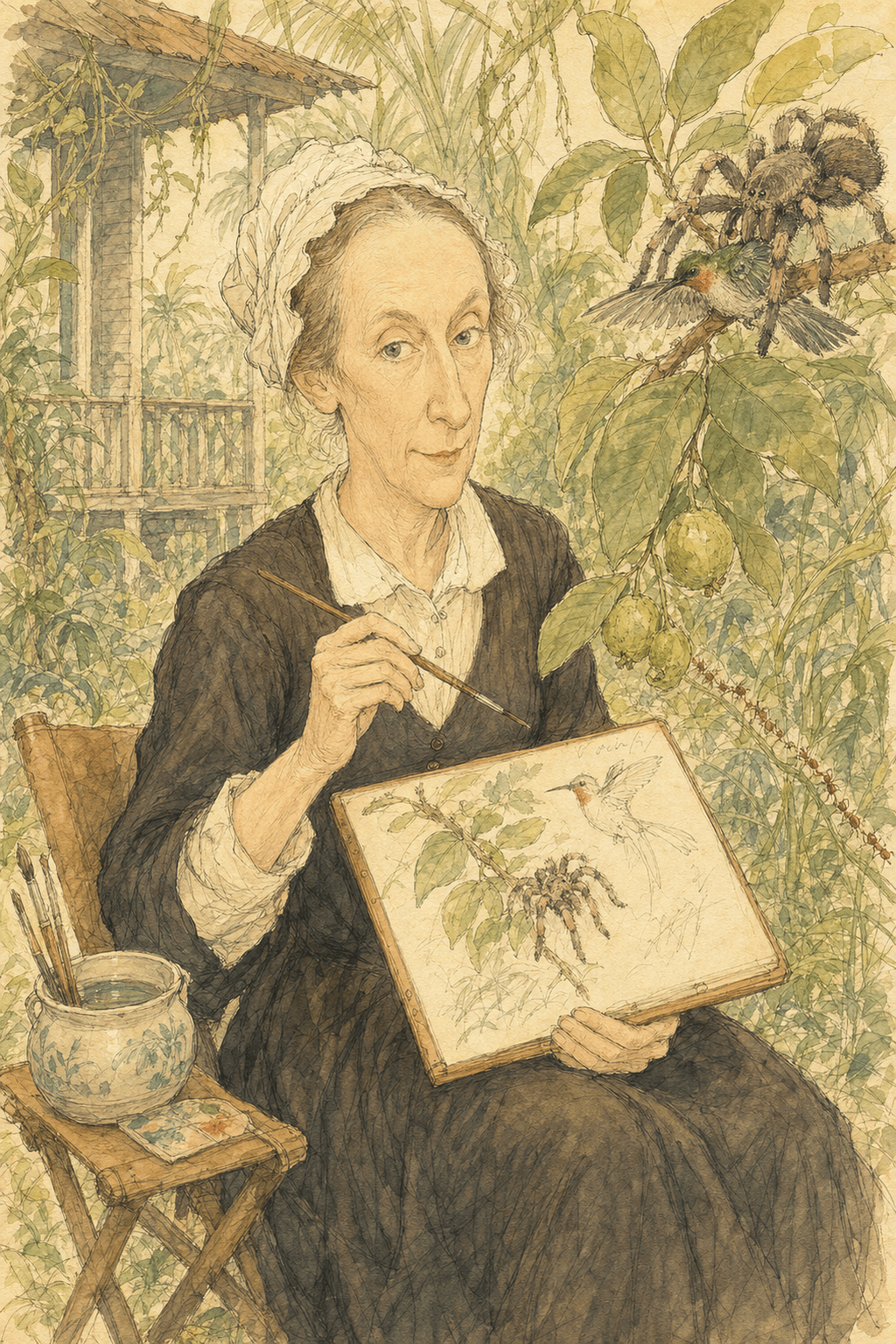
At fifty-two, a divorced naturalist sold every painting she owned and sailed to a malarial jungle to paint a spider no one believed existed.
Maria Sibylla Merian kept silkworms in her bedroom at thirteen, watched a moth crack out of its chrysalis, and grew up to overturn the European theory of where insects came from. Two books on caterpillars followed. By her early fifties she was a divorced woman in Amsterdam with two grown daughters and a steady trade in flower paintings.
Then, at fifty-two, she sold 255 of her own paintings, took her twenty-one-year-old daughter Dorothea, and sailed to Suriname.
She stayed nearly two years, painting by candlelight in a malarial jungle, until the malaria sent her home. The result was Metamorphosis Insectorum Surinamensium, sixty hand-colored plates. Plate 18 shows a pink-toed tarantula on a guava branch eating a hummingbird, with army ants in the background forming a bridge out of their own bodies.
The European scientific establishment called it fantasy. For one hundred and fifty years. A naturalist who had never set foot in Suriname pronounced her engravings vile and useless, which is the kind of review you cannot buy.
In 1863, in the Amazon, Henry Walter Bates watched a tarantula eat a bird.
The species is now called Avicularia merianae.
Know someone who’d love this?
- Wikipedia — Maria Sibylla Merian — Comprehensive biography covering birth/death dates, family, Labadist community, Suriname expedition, publications, Peter the Great purchase, Linnaeus citations, and 500 DM banknote.
- Encyclopædia Britannica — Maria Sibylla Merian — Authoritative overview confirming dates, parents, stepfather Jacob Marrel, marriage to Johann Andreas Graff, Labadist colony at Wiewert, 1699 Suriname departure with Dorothea Maria, and 1705 Metamorphosis publication.
- Public Domain Review — Merian's Metamorphosis Insectorum Surinamensium (1705) — Detailed essay on the 1705 folio with reproductions of plates, including the peacock flower (Plate 45) and Merian's quoted account of enslaved women using its seeds as an abortifacient.
- The Conversation — Hidden women of history: Maria Sibylla Merian — Academic piece by entomologist Tanya Latty covering the spontaneous-generation context, her reliance on enslaved labor, and her later rediscovery.
- Royal Collection Trust — Plate 18 watercolor — Curatorial entry on Merian's original watercolor for Plate 18 of Metamorphosis, identifying the pink-toed tarantula and ruby-topaz hummingbird and discussing the long-disputed bird-eating spider observation.
Too Great a Strain
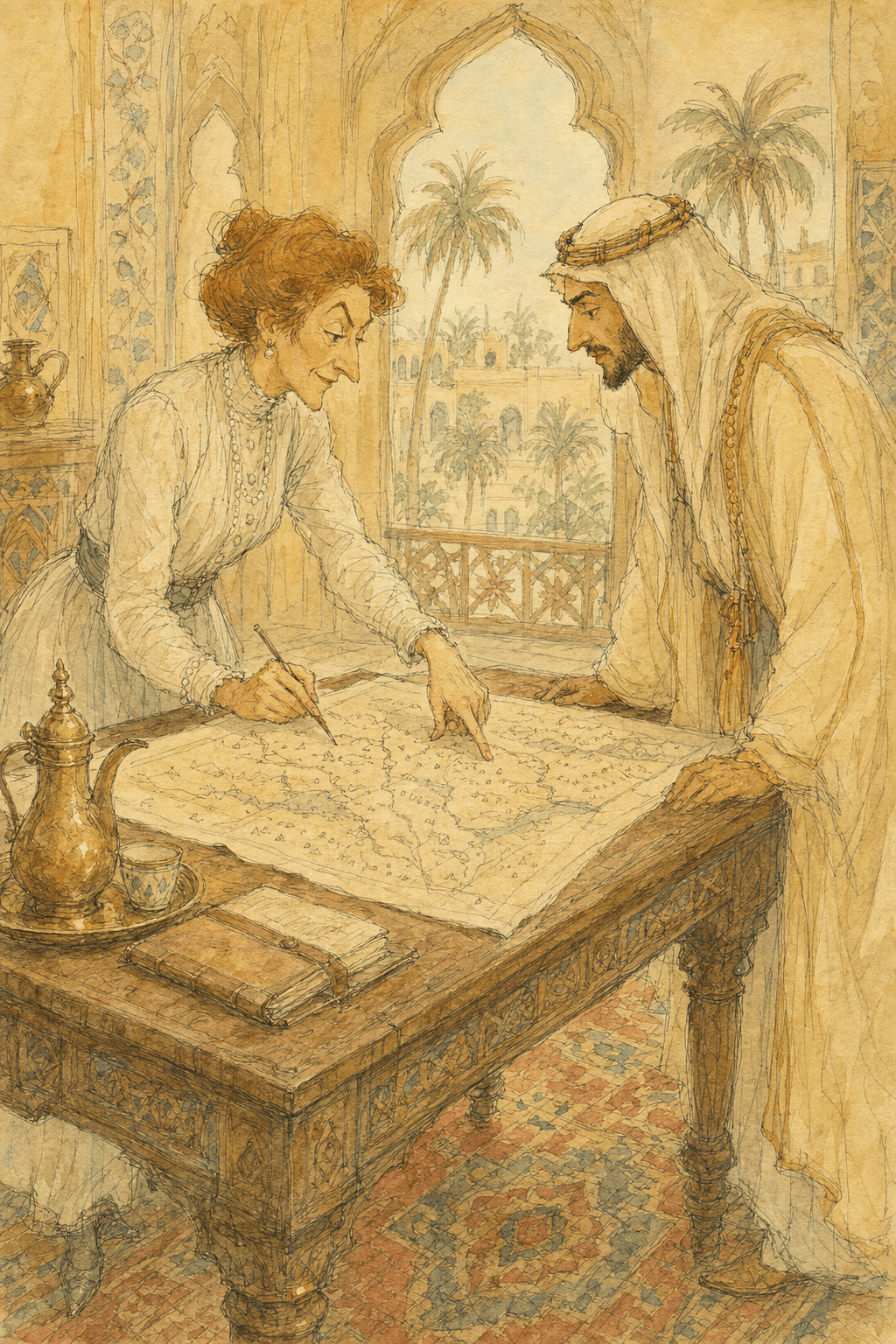
Gertrude Bell took a first at Oxford before Oxford gave women degrees, climbed ten new Alpine routes in a single season, and in March 1921, in a Cairo hotel, picked Iraq's king.
The Horses and the Eels
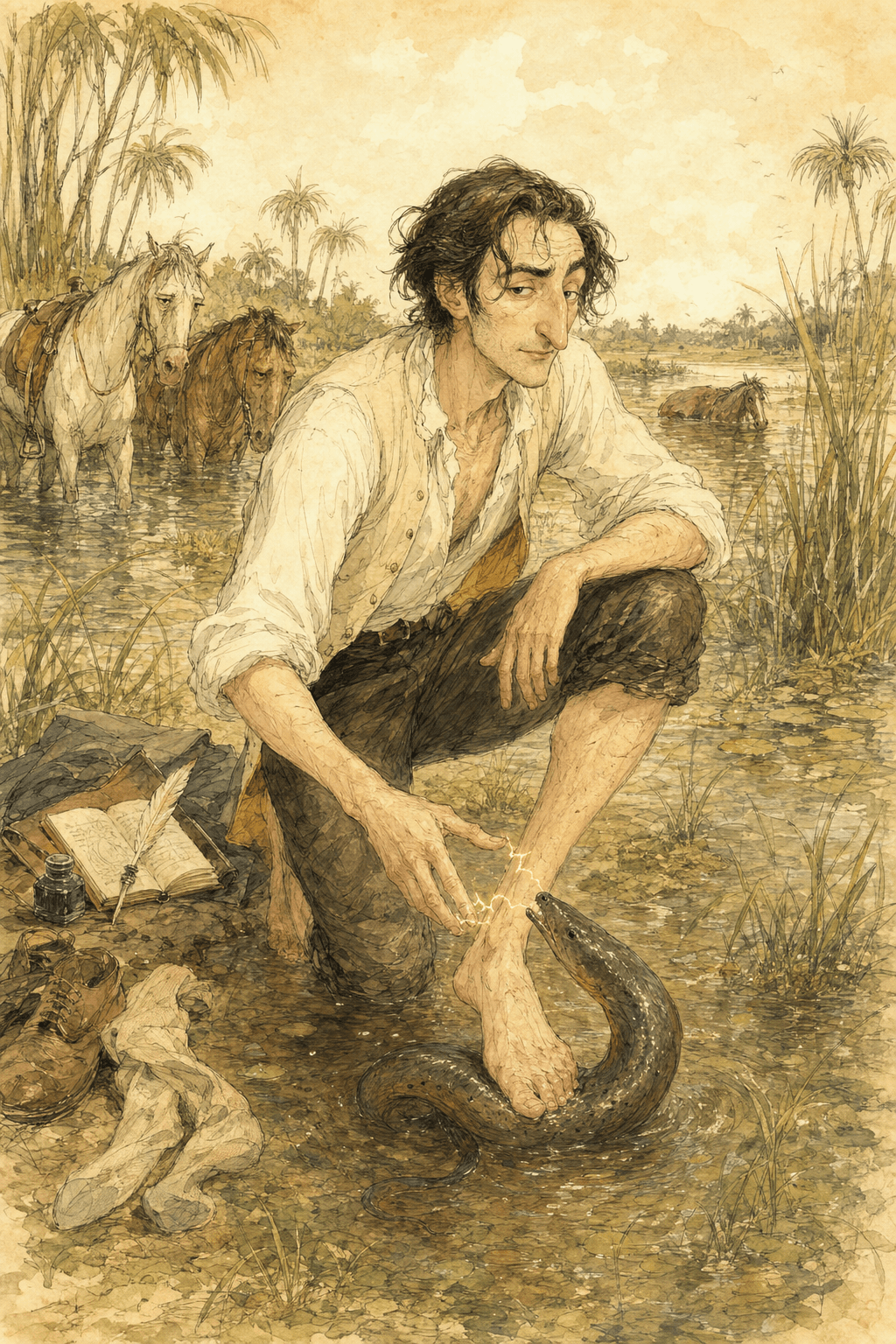
In March 1800, Alexander von Humboldt drove thirty wild horses into a Venezuelan pool to exhaust the electric eels, then waded in barefoot and dissected one while it kept shocking him.
The Newt in Her Mouth
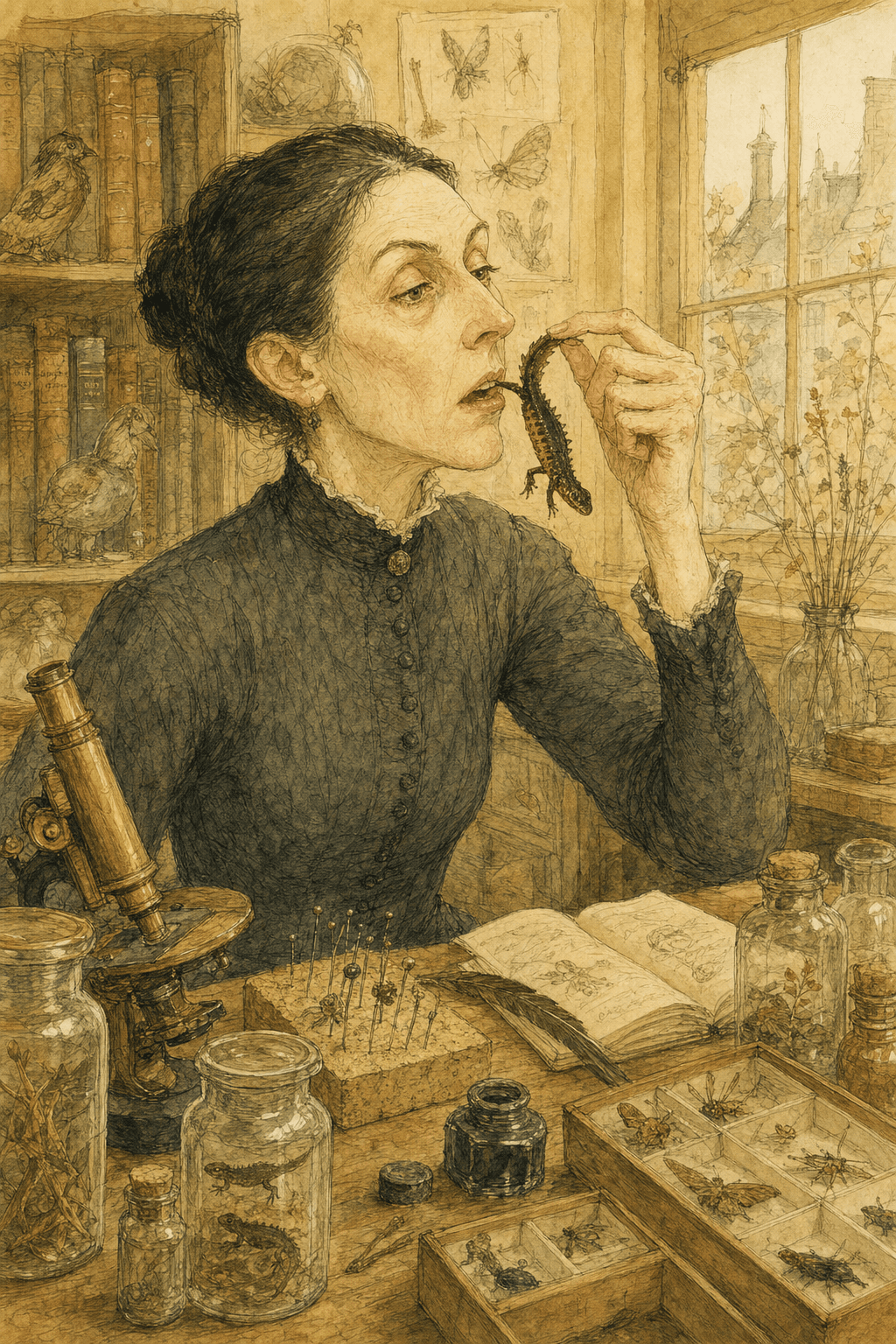
Eleanor Ormerod, the Royal Agricultural Society's consulting entomologist, kept live insect specimens in her pockets and produced them, unannounced, at meetings with farmers.
Wonder, delivered.
A fresh Oddlet in your inbox every morning, a full day before everyone else. True, strange and under a minute.
Free forever. Unsubscribe anytime.