Oddlet: Apsley Cherry-Garrard · 1 min read
Sep 30, 2026
This Ain't an Egg-Shop
Who walks 130 miles through an Antarctic winter, in total darkness, to fetch a penguin egg?
In the winter of 1911, Apsley Cherry-Garrard walked 130 miles across Antarctica in total darkness to fetch a penguin egg.
The point was science. Dr. Edward Wilson believed emperor-penguin embryos would prove that birds descended from reptiles, a Victorian theory that was already quietly being abandoned back in London. Cherry-Garrard, aged twenty-five and so nearsighted he could not wear his spectacles while sledging, went anyway. He was that sort of man.
The temperature dropped to seventy-seven below. His teeth, he wrote, "split to pieces." Their reindeer-hide sleeping bags absorbed sweat, refroze into forty-five-pound coffins, and had to be squirmed into for an hour each night. Stepping out of the tent one morning, he raised his head to look around and could not lower it. He pulled the sledge for four hours with his head frozen upright, which is the sort of detail you'd assume was invented by someone who had never met the Antarctic. Then a Force 11 blizzard tore the roof off their igloo and they lay under drifting snow for forty-eight hours, waiting to die. They didn't. They walked home with three eggs.
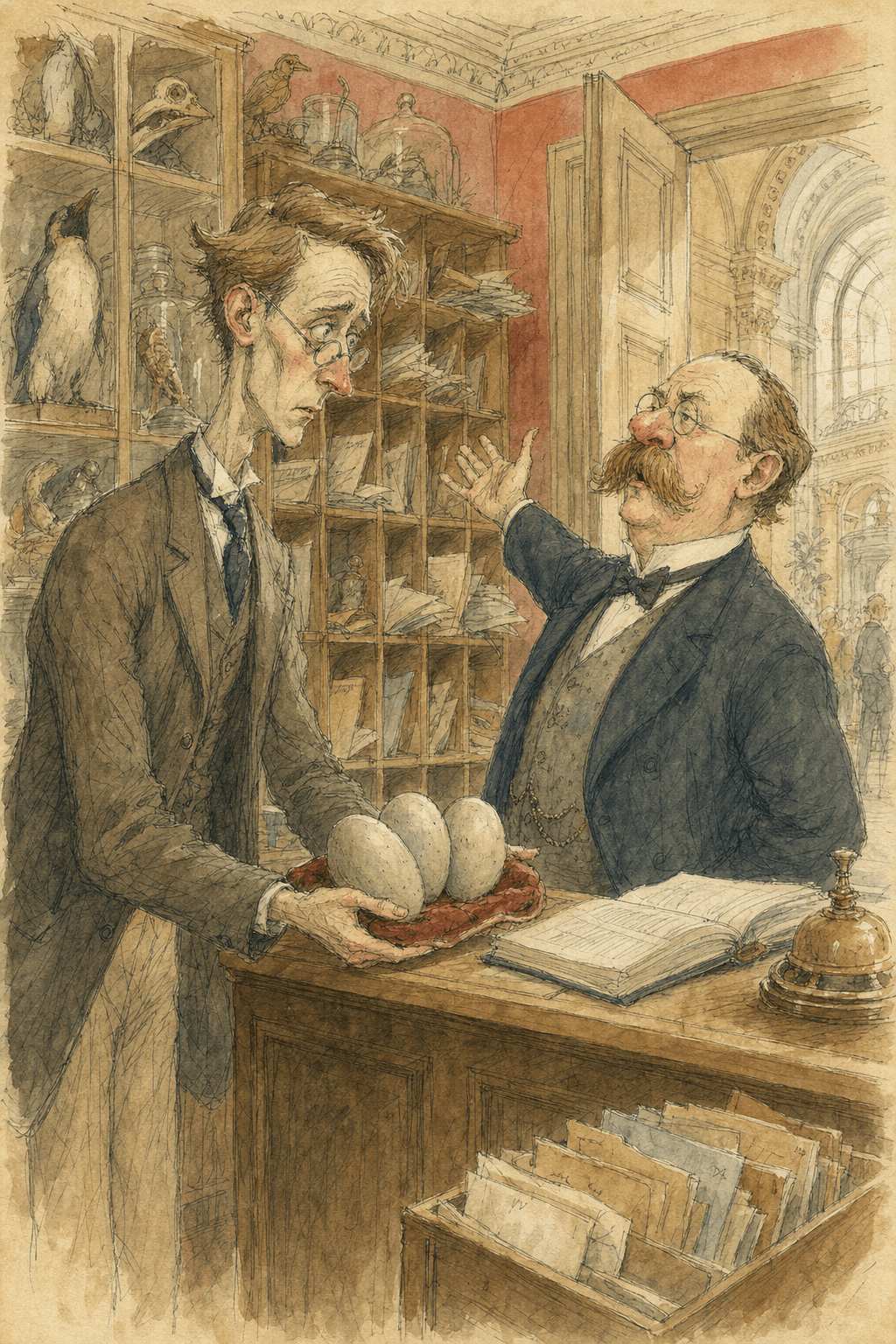
Some years later, Cherry-Garrard carried the eggs into the Natural History Museum in London and presented them to the First Custodian, who looked at him and said:
"This ain't an egg-shop."
Know someone who’d love this?
- Wikipedia — Apsley Cherry-Garrard — Core biographical timeline: birth (2 Jan 1886, Bedford), death (18 May 1959, Piccadilly), education, Terra Nova role, Winter Journey details, One Ton Depot mission, search party finding Scott's tent (12 Nov 1912), fate of the three eggs, marriage.
- Wikipedia — The Worst Journey in the World — Publication date (1922) and publisher (Constable & Co.); confirms winter 1911 date; explains that the eggs disappointed the embryologists because recapitulation theory had been discredited.
- Smithsonian Magazine — 'The Daring Journey Across Antarctica That Became a Nightmare' — Departure date 27 June 1911; ~130-mile round trip; 35 days duration; temperatures approaching -75°F; details on stone igloo at Igloo Spur, Force 11 winds; Bowers's cry 'We're all right!'
- Cool Antarctica — Cherry-Garrard biography — Confirms Wilson and Bowers as companions, the £1,000 pledge, discovery of Scott's tent on 12 November 1912 eleven miles south of One Ton Depot, his myopia.
- Royal Berkshire History — Apsley Cherry-Garrard biography — Family background, 1908 Henley Grand Challenge Cup rowing win, WWI service, invalidation in 1916, post-war bowel disease, death at 73.
The Horses and the Eels
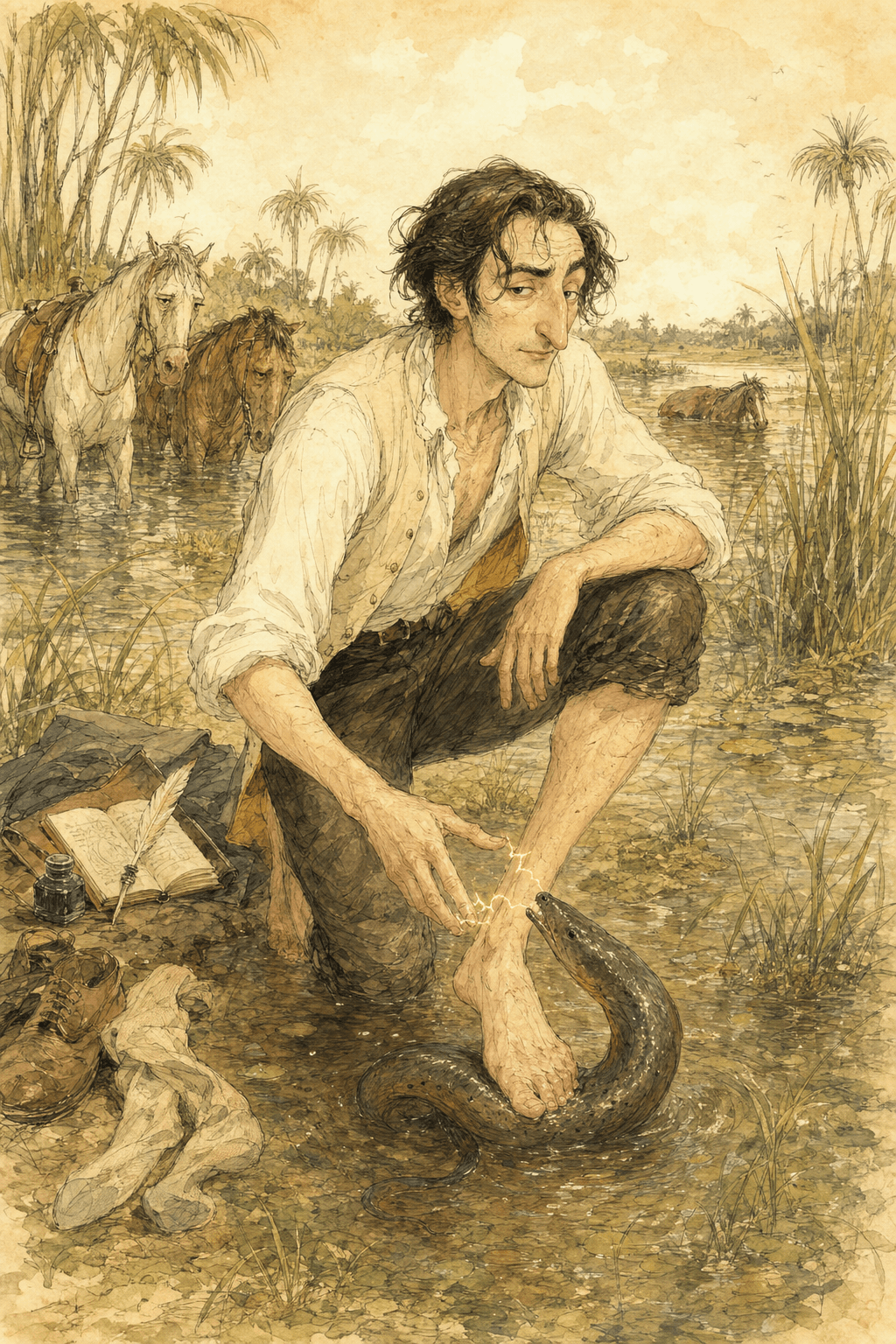
In March 1800, Alexander von Humboldt drove thirty wild horses into a Venezuelan pool to exhaust the electric eels, then waded in barefoot and dissected one while it kept shocking him.
The Newt in Her Mouth
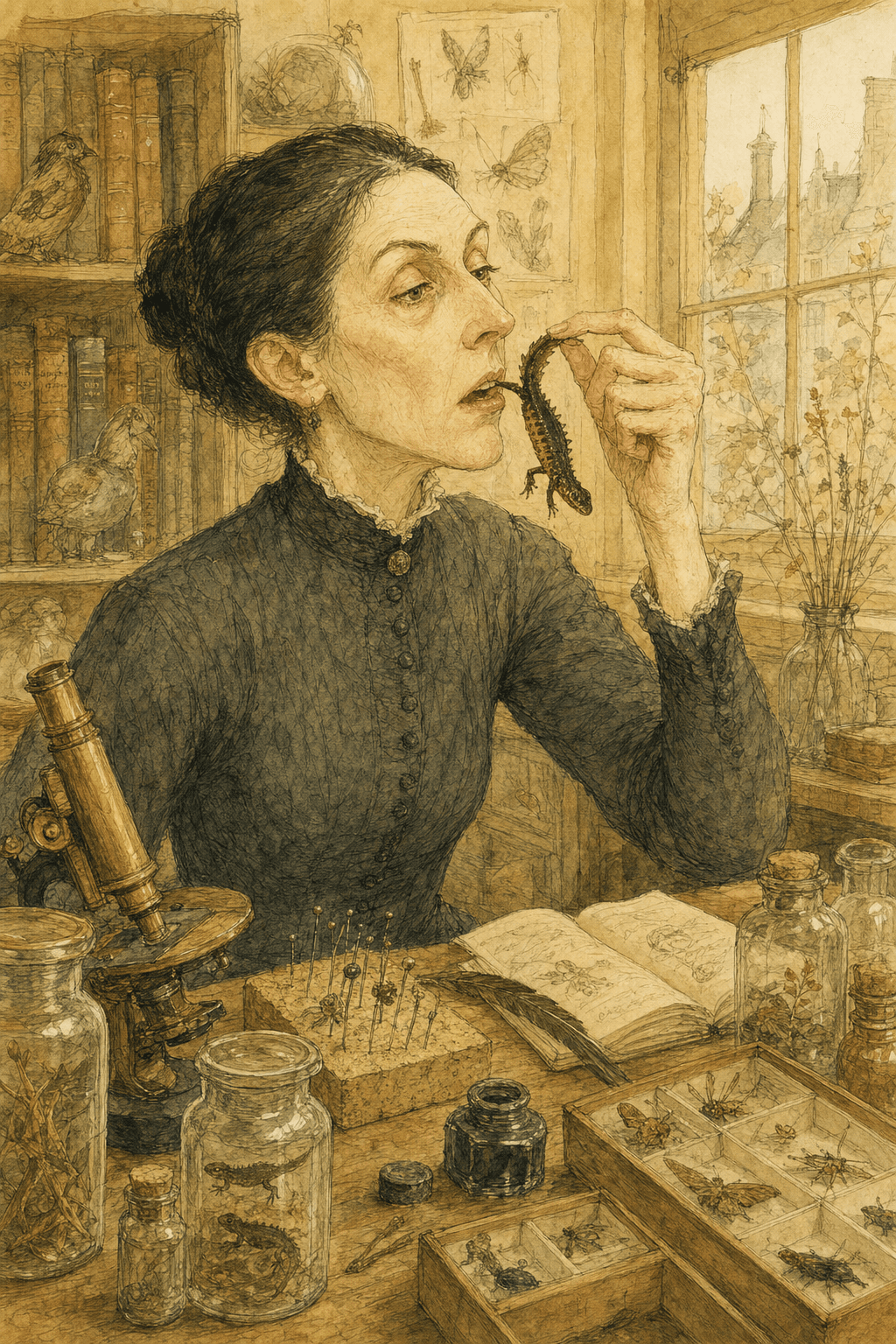
Eleanor Ormerod, the Royal Agricultural Society's consulting entomologist, kept live insect specimens in her pockets and produced them, unannounced, at meetings with farmers.
The Baron in the Bath
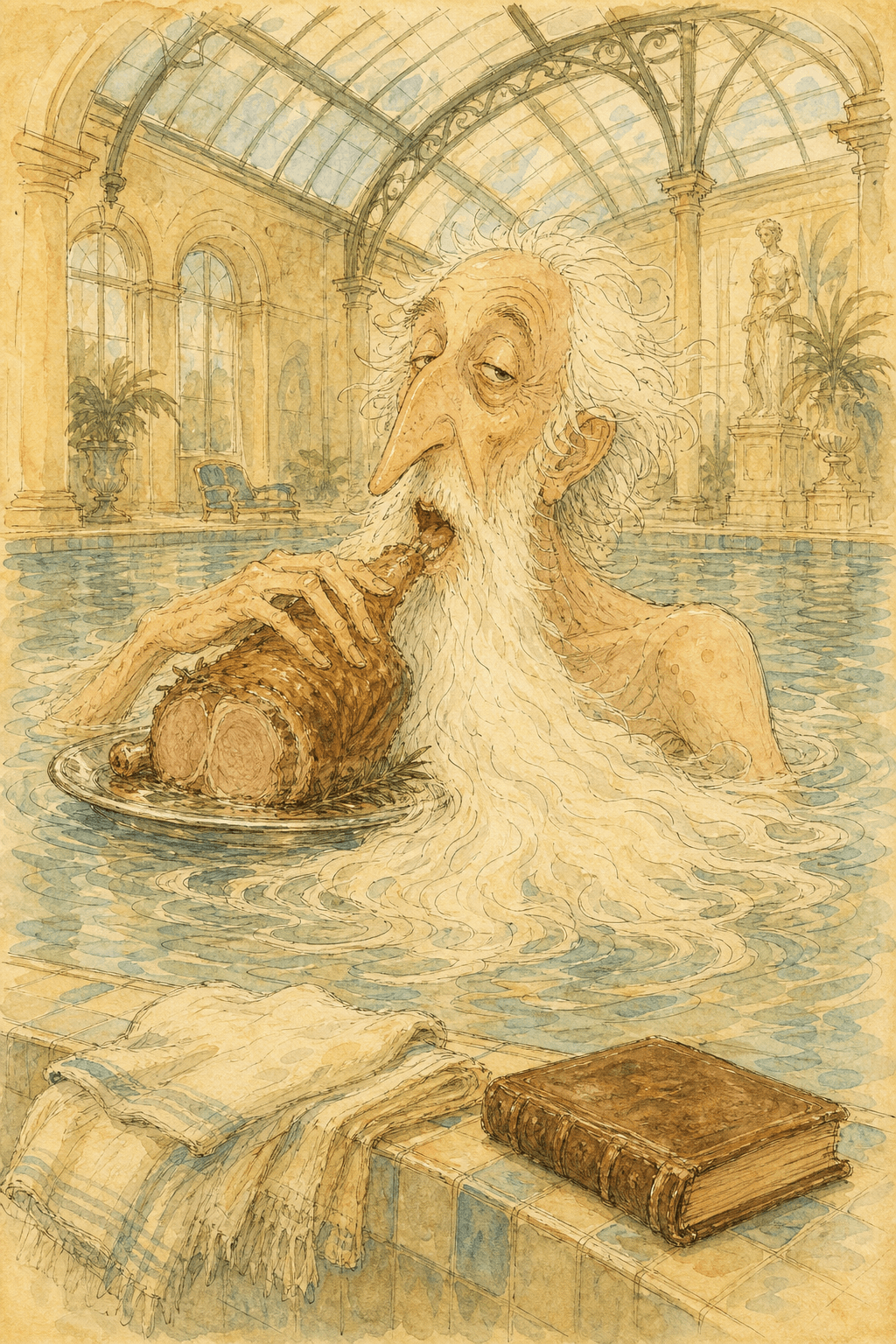
On rainy mornings, a Georgian peer walked miles to the sea to swim while his liveried footman, on the peer's orders, rode dry in the empty carriage behind him.
Wonder, delivered.
A fresh Oddlet in your inbox every morning, a full day before everyone else. True, strange and under a minute.
Free forever. Unsubscribe anytime.