Oddlet: André-Marie Ampère · 1 min read
Sep 15, 2026
The Man Who Chased His Own Equation
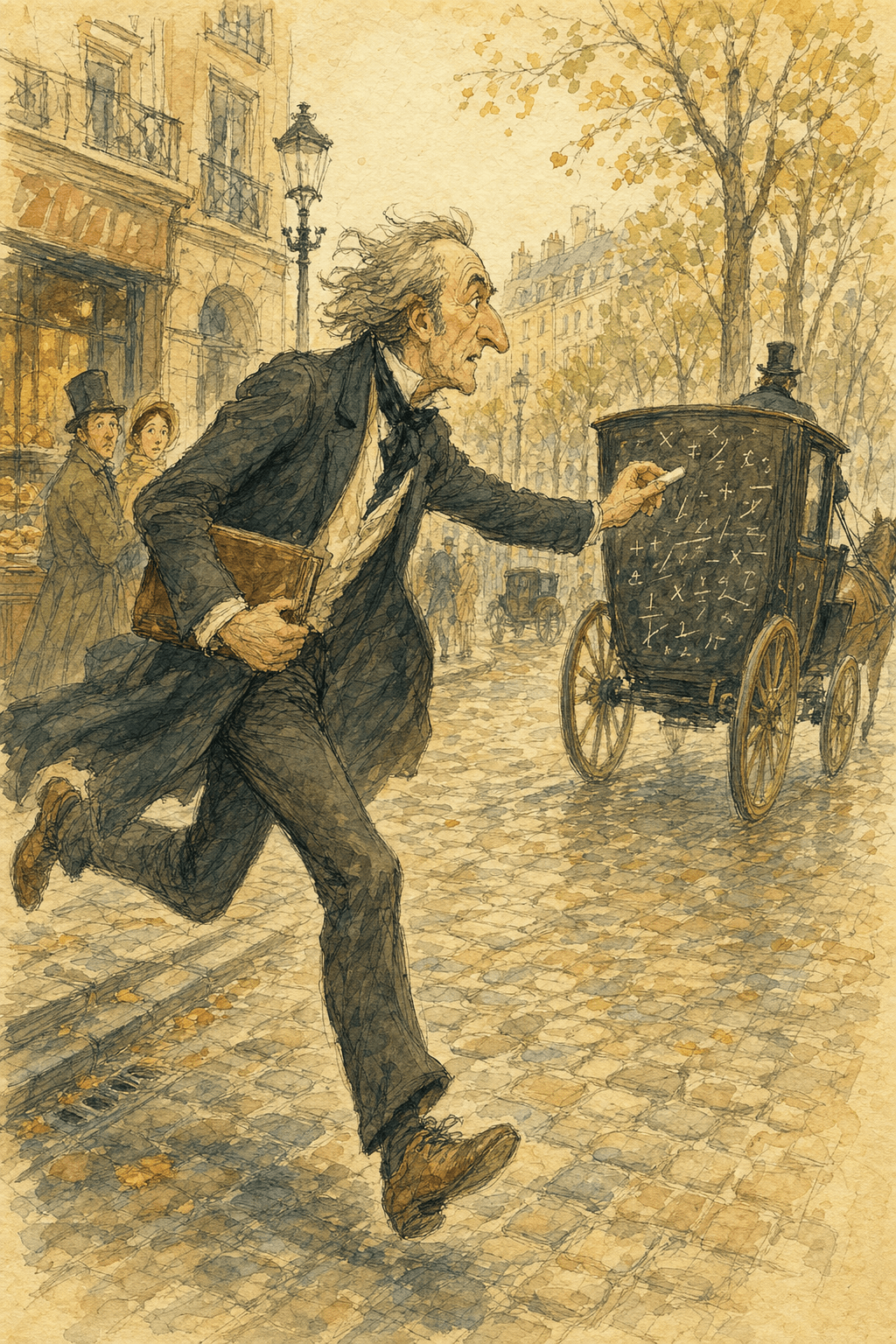
What do you do when the blackboard you've been chalking equations onto turns out to be a moving cab?
André-Marie Ampère founded the science of electrodynamics. In the fortnight after hearing about Ørsted's discovery in September 1820, he worked out that parallel currents attract or repel, formulated the force law that still bears his name, and coined the word solenoid. The unit of electric current is called the ampere because of him. His name is carved into the Eiffel Tower.
He was also, in every other respect, catastrophically elsewhere.
Ampère once picked up a pretty pebble on the Pont des Arts, admired it, remembered he was late, carefully slipped it into his pocket, and threw his pocket-watch into the Seine. On a wet winter night in 1836 he came home from the Sorbonne, tucked his dripping umbrella tenderly into his bed, and stood himself on the doormat. Annoyed by his cats scratching at his study door, he had a carpenter cut two holes in the wood, one large and one small, and was genuinely bewildered to learn the kitten could use the big one.
But his finest moment came on a Paris boulevard, mid-calculation, when he mistook the flat back panel of a parked fiacre for a blackboard. He chalked it dense with equations. The cab pulled away.
He ran after it down the street, trying to finish the proof.
Know someone who’d love this?
- Wikipedia — André-Marie Ampère — Comprehensive biographical entry: birth/death dates and places, father's execution 24 November 1793, both marriages, academic positions (École Polytechnique 1809-1828, Collège de France from 1824), 1820 electromagnetism work following Ørsted/Arago, 1826 Mémoire, coining of 'solenoid,' Royal Society (1827), Eiffel Tower inscription.
- MacTutor History of Mathematics — Ampère — University of St Andrews scholarly biography. Details on father's Justice of the Peace post, prison letter ('I desire my death to be the seal of a general reconciliation'), Julie Carron's July 1803 death, disastrous 1806 marriage, timeline of academic posts.
- Bulletin de la SABIX — 'Les distractions d'Ampère' by Michel Dürr — Peer-reviewed historical study assessing reliability of anecdotes. Traces the omnibus/chalk story to Pierre Larousse and warns 'les anecdotes les plus célèbres ne sont pas les plus certaines.' Also documents the umbrella-in-bed story, the two cat-doors, the forgotten Nobili luncheon, the shirt-drawer at Orléans, and the Saulieu rock-pile abandonment.
- Bulletin SABIX — 'La vie passionnée d'André-Marie Ampère' — Detailed treatment of his personal life — poems written for Julie Carron, the Christian Society founded with Bredin/Ballanche, Jenny Potot as 'monstrously selfish,' the fortnight after Ørsted, Bredin's 'Jamais homme n'aima comme il aimait.'
- Britannica — André-Marie Ampère
The Chair That Would Not Let Him Eat
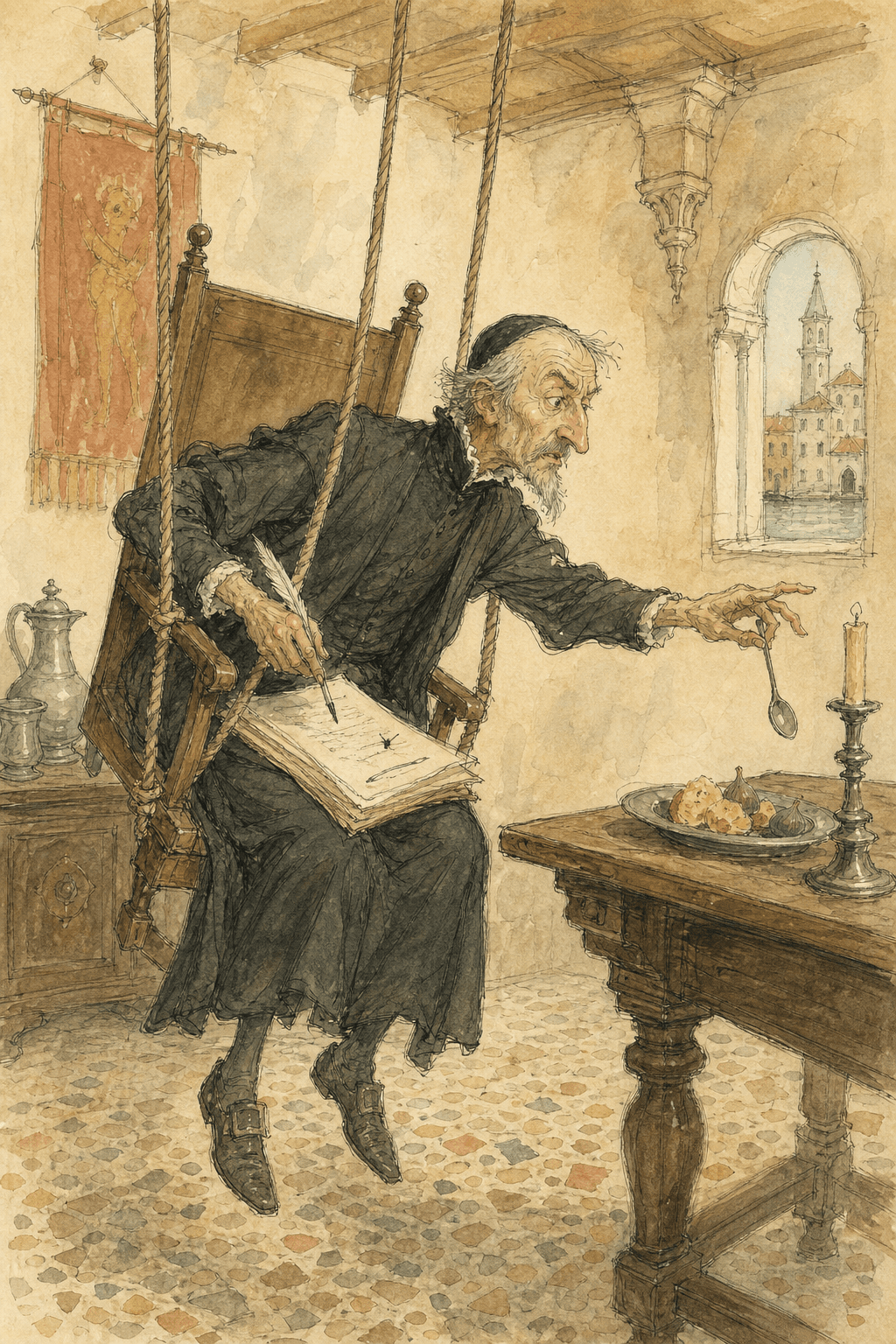
What does a Renaissance physician discover when he rigs his dining chair to yank the table away the moment he has eaten his ration?
The Man Who Let Gravity Draw
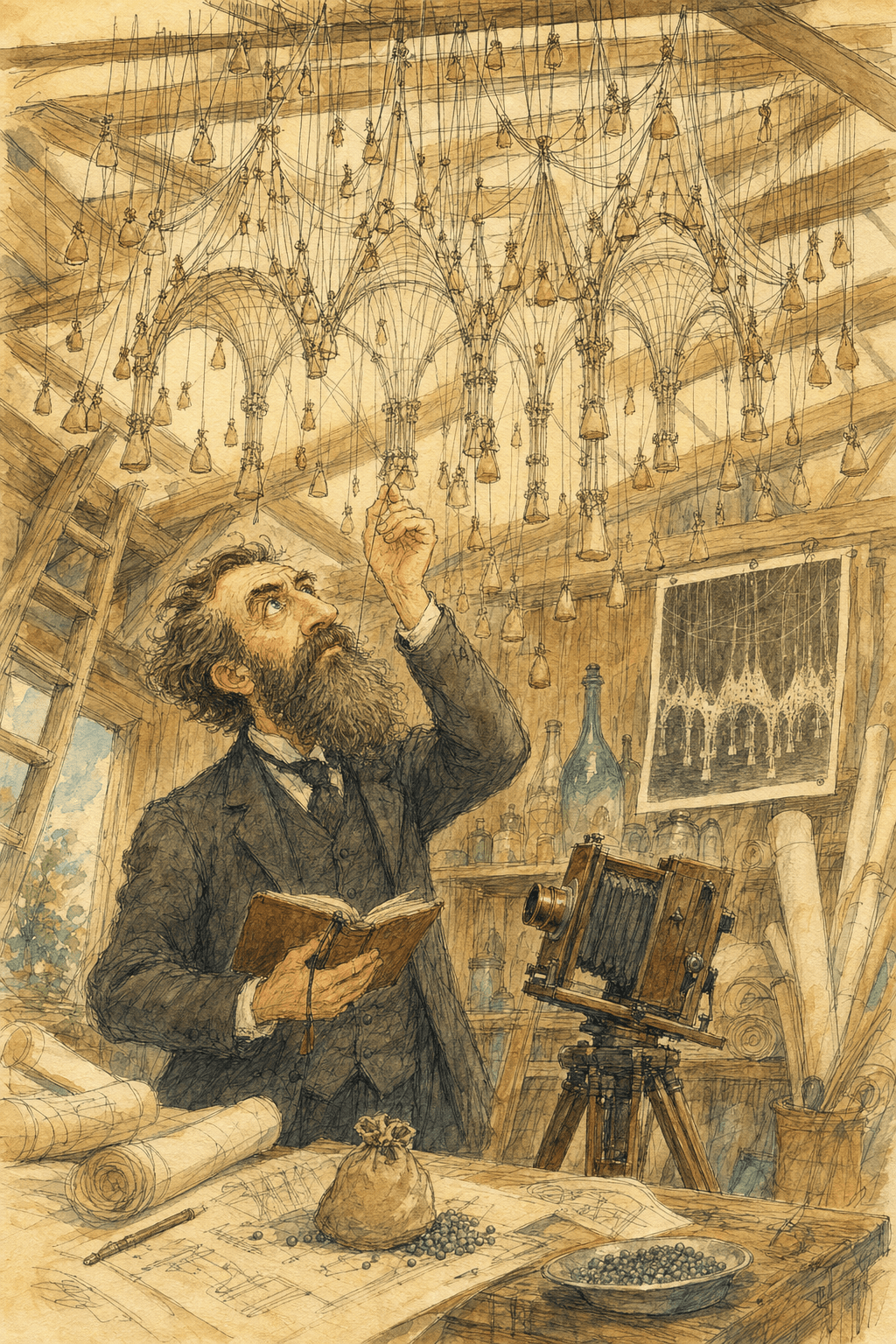
What kind of architect designs a church by hanging it upside down from a shed ceiling?
The Man Who Painted the Dead
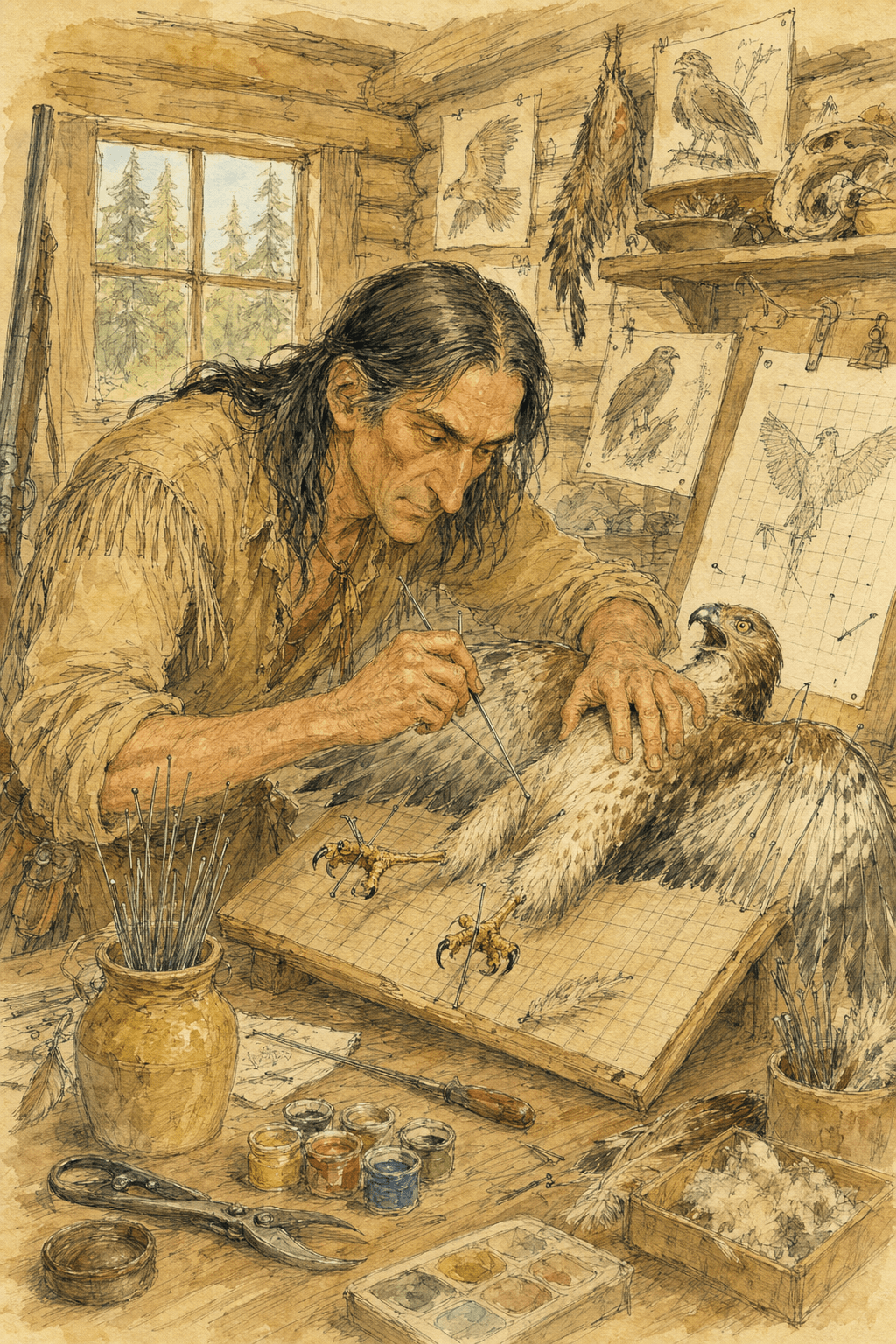
How do you paint a wild bird at exact life size without it moving?
Wonder, delivered.
A fresh Oddlet in your inbox every morning, a full day before everyone else. True, strange and under a minute.
Free forever. Unsubscribe anytime.