Oddlet: Hildegard von Bingen · 1 min read
Jul 15, 2026
The Abbess Who Hid the Grave
What does a twelfth-century abbess do when an archbishop orders her to exhume a body she has decided to keep?
Hildegard von Bingen, abbess of Rupertsberg, was one of the most respected women in twelfth-century Europe. She had founded two monasteries, written a visionary trilogy, set the earliest known morality play to music, invented her own alphabet, and corresponded with four popes and an emperor. By 1178 she was around eighty, and the Pope had personally approved her writings thirty years earlier at the Synod of Trier.
That year she buried a nobleman in her cemetery.
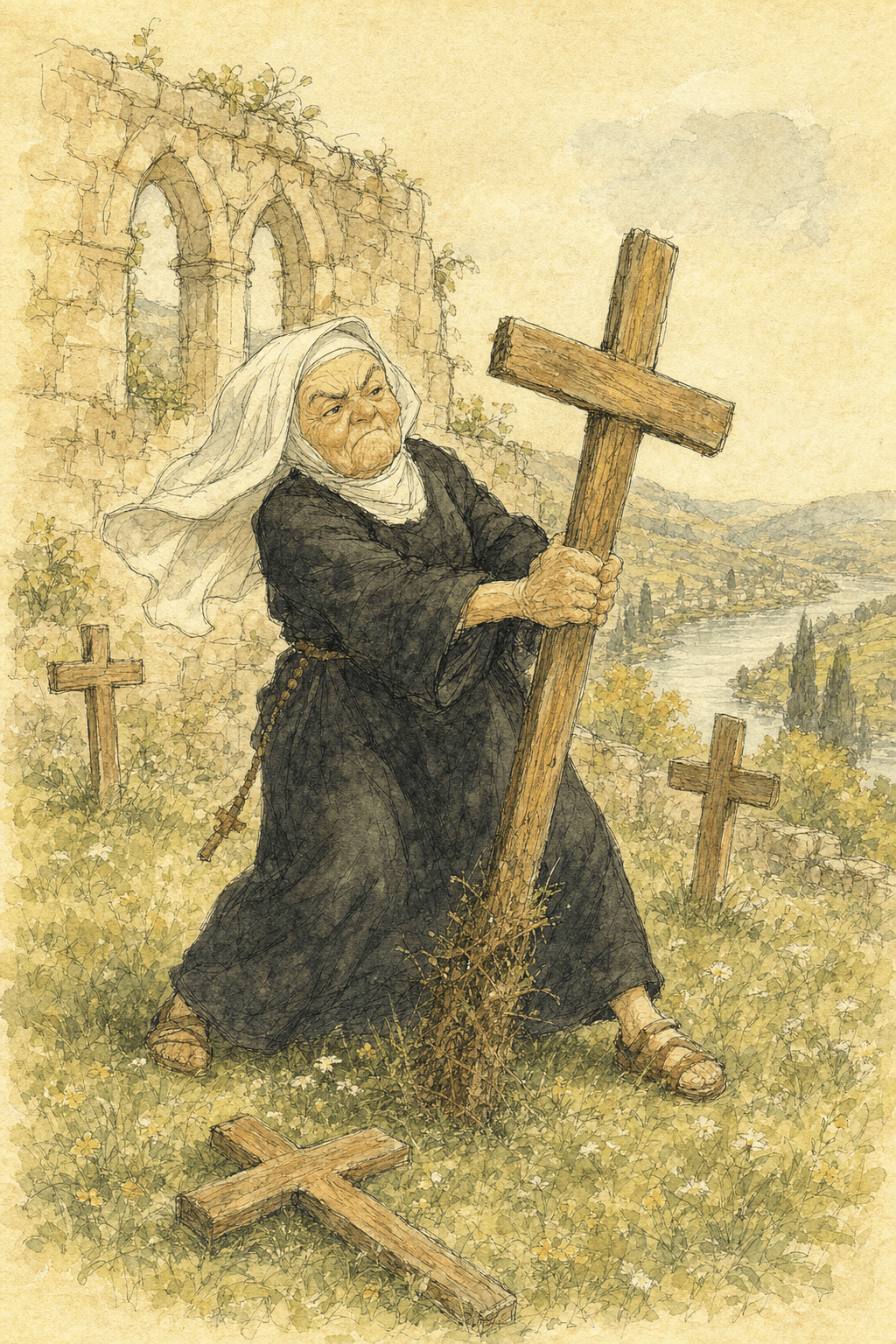
The nobleman had been excommunicated. Hildegard considered him reconciled to the Church before his death and put him in the ground anyway. The archbishop of Mainz ordered her to dig him up. She refused.
So Hildegard went out into the cemetery and pulled up the markers. Every one. The grave was now a field. What anyone made of this is not recorded.
The archbishop placed her entire community under interdict. They were forbidden to sing.
For six months the most celebrated composer in the Rhineland sat in silence with her nuns. The interdict was lifted in March 1179.
She died that September. The nobleman stayed where she had put him.
Know someone who’d love this?
- Encyclopaedia Britannica — Saint Hildegard — Confirms birth 1098, death 17 Sept 1179; education under Jutta at Disibodenberg; succession as prioress 1136; founding of Rupertsberg; Scivias 1141–52; Symphonia armonie celestium revelationum (77 lyric poems); proclamation as Doctor of the Church in 2012 (one of four women).
- Wikipedia — Hildegard of Bingen — Comprehensive biographical synthesis: parents, tenth-child tradition, enclosure with Jutta, election 1136, Rupertsberg (1150), Eibingen (1165), Volmar/Guibert, Richardis von Stade, dates of works, Lingua Ignota with ~1,000 words and 23-letter alphabet, Ordo Virtutum, umbra viventis lucis, canonization 2012.
- Wikipedia — Ordo Virtutum — Composed c. 1151, 82 plainchant melodies, cast of 17 Virtues plus Soul, Devil (speaks/grunts only), likely performed at 1152 Rupertsberg dedication.
- Wikipedia — Scivias — Completed 1151/1152, 26 visions in three parts (6+7+13), 35 miniatures, papal approval 1147–1148, final vision contains 14 songs and material from Ordo Virtutum.
- Catholic Encyclopedia — St. Hildegard — Confirms parents Hildebert and Mechtildis, placement under Jutta at age eight, succession on Jutta's death in 1136, correspondence with Popes Eugene III, Anastasius IV, Adrian IV, and Alexander III.
Sticks for the Spires
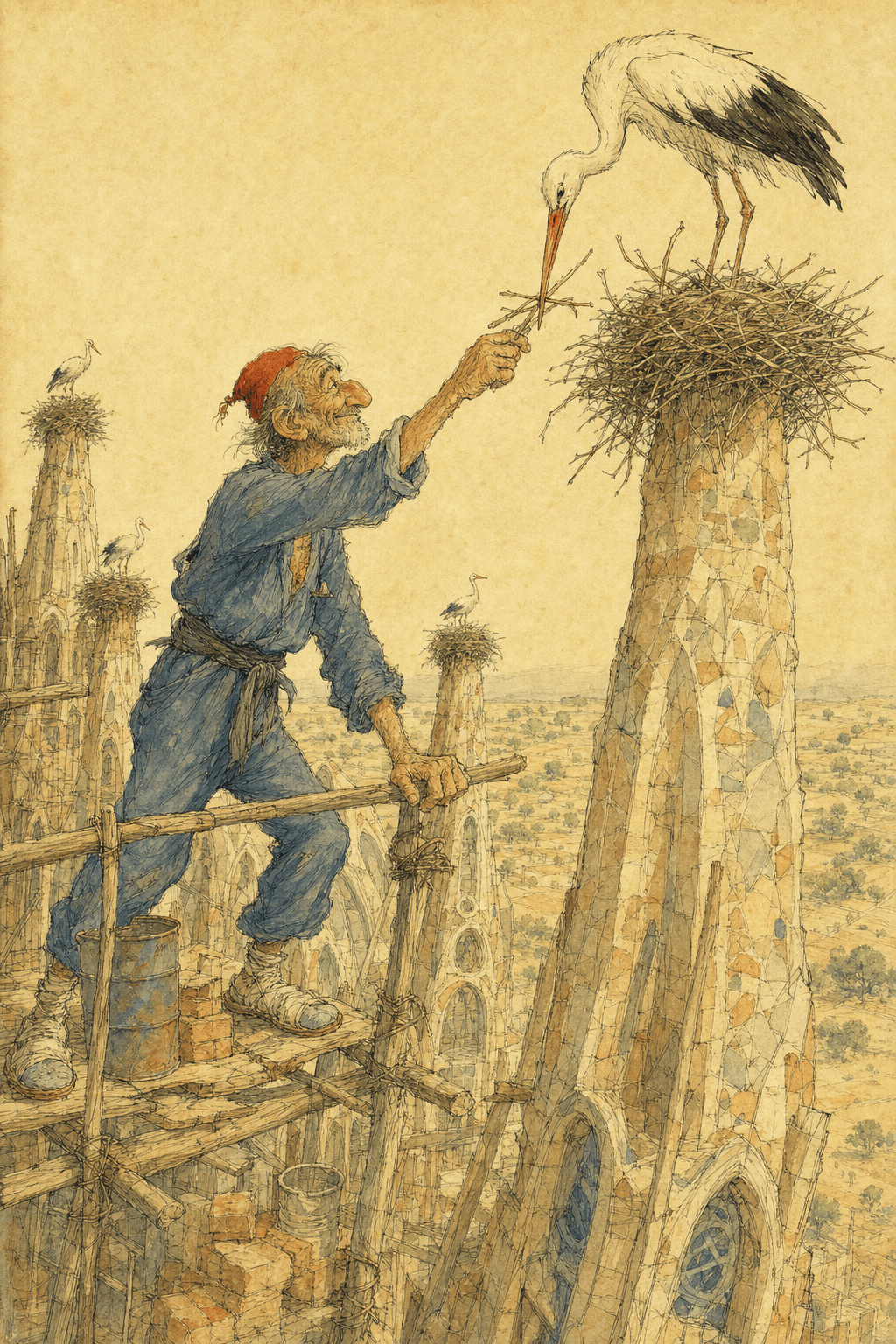
He was thrown out of a Trappist monastery with tuberculosis at thirty-five, and spent the next sixty years alone on a plot outside Madrid, building a cathedral with factory-reject bricks and pillars cast inside oil drums.
The Bear Went First
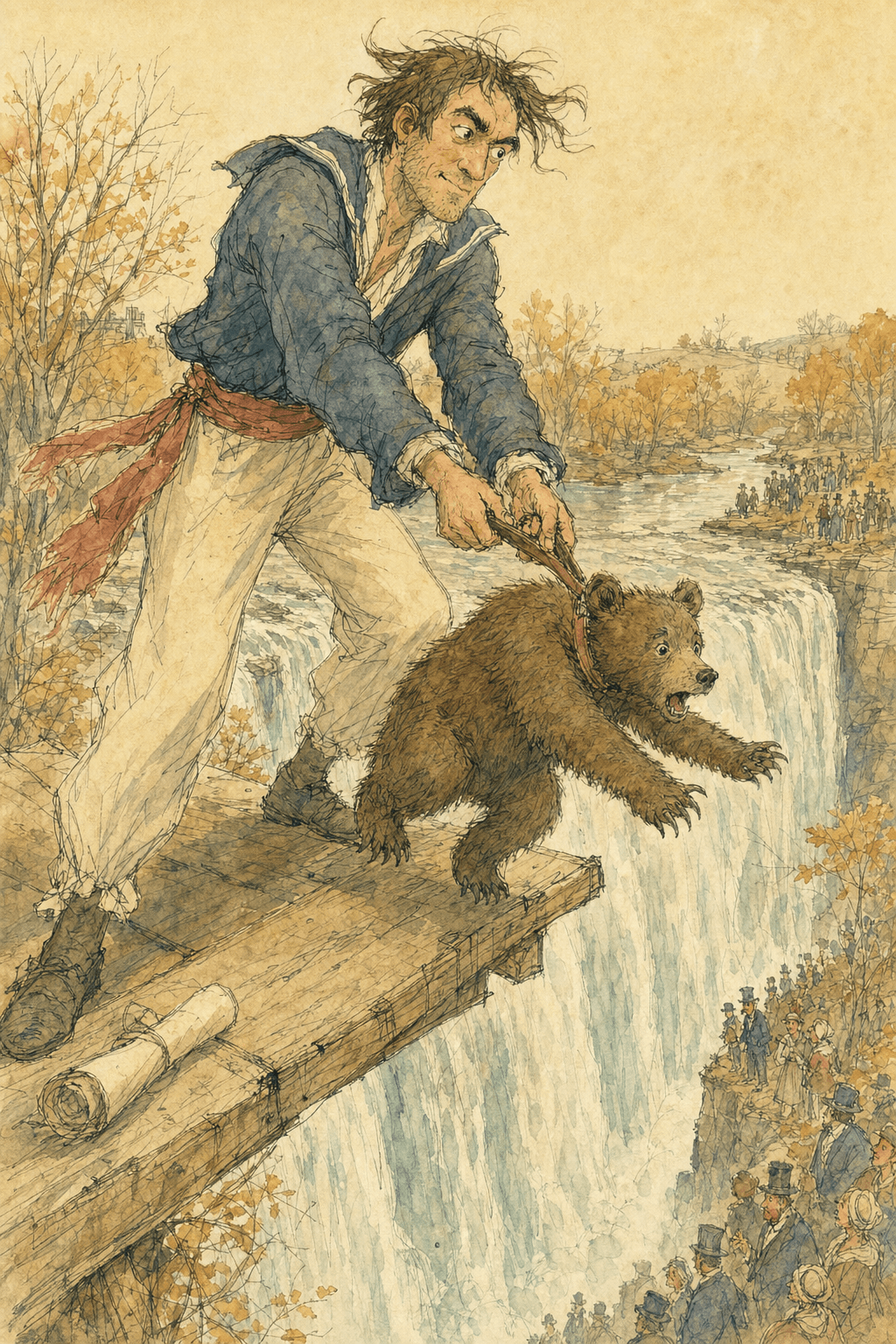
Sam Patch's final act opened with him shoving a bear cub off a hundred-foot waterfall in front of eight thousand people.
Up to His Neck
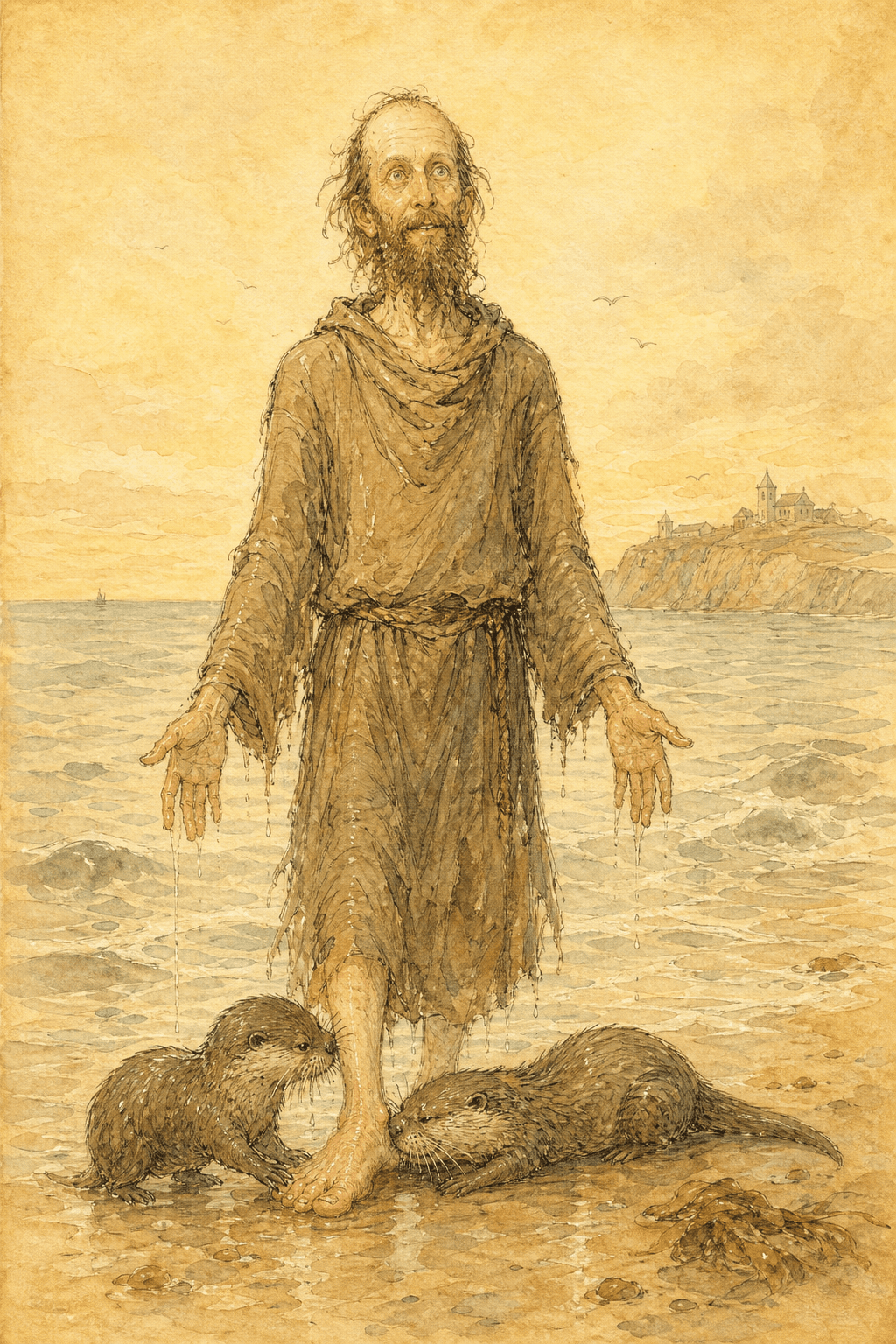
He walked into the North Sea at night until the water reached his neck, and sang psalms until dawn.
Wonder, delivered.
A fresh Oddlet in your inbox every morning, a full day before everyone else. True, strange and under a minute.
Free forever. Unsubscribe anytime.