Oddlet: Harry Partch · 1 min read
Jul 10, 2026
The Hatchery Sessions
What does a composer do when the bulldozers show up before the last take is finished?
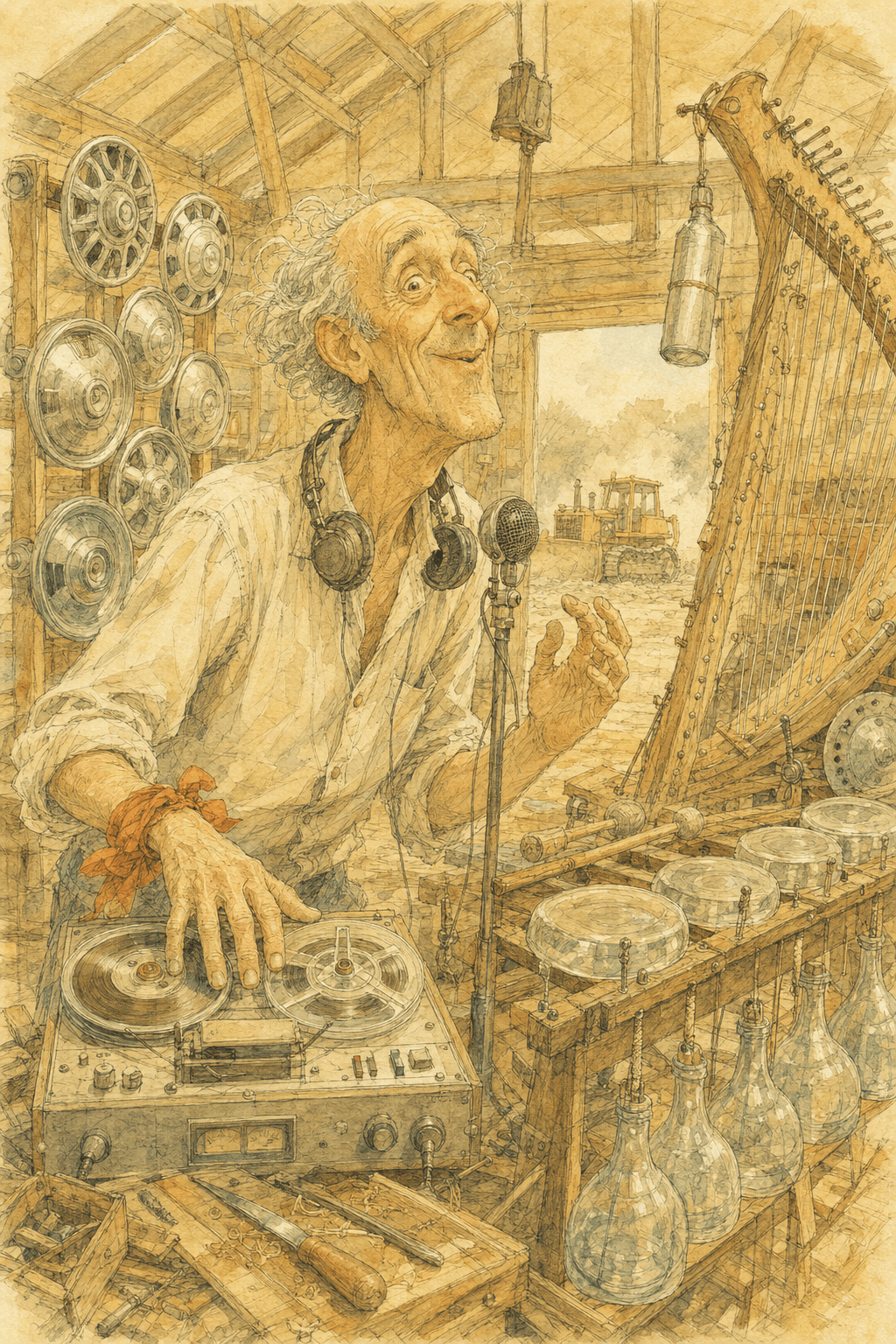
By 1962, Harry Partch had been at it for thirty years. He had burned every note he wrote before age twenty-eight, ridden freight trains through the Depression, invented a forty-three-tone scale, and built the instruments to play it from whatever the twentieth century threw out: Pyrex carboys salvaged from the Berkeley Radiation Laboratory, Ford hubcaps, the nose cones of Douglas bombers, an aluminum ketchup bottle.
He needed somewhere to keep them. He found an abandoned chick hatchery in Petaluma, California, and moved in. Rent was forty-five dollars a month. There was no heat.
For two years he lived there with thirty self-built instruments, including a marimba whose lowest bar hummed at around twenty-two cycles per second, which is less a note than a feeling in the chest.
Then the building came down.
In May 1964, with the demolition crew already arriving, Partch set up microphones and recorded a piece called And on the Seventh Day Petals Fell in Petaluma. The bulldozers worked around him. He taped between strikes. There is a moment on the recording where the wall actually comes down, and the only question is whether you can make out the instruments underneath it.
His own production note, written afterward in flat administrative prose, reads:
"A bulldozer supplied the climax on May 17. I think we actually have a take with the sounds of a collapsing wall."
Know someone who’d love this?
- Wikipedia - Harry Partch — Comprehensive biography with birth/death dates, USC dropout date, 1930 New Orleans burning of scores, hobo years 1935-1944, Guggenheim April 1943, and the 'philosophic music-man seduced into carpentry' self-description.
- Wikipedia - Instruments by Harry Partch — Detailed catalog of each instrument's materials, dimensions, and construction dates: Cloud-Chamber Bowls (1950, from Berkeley Radiation Lab Pyrex carboys), Zymo-Xyl (1963, hubcaps and liquor bottles), Cone Gongs (1964, Douglas bomber nose cones).
- Encyclopedia Britannica - Harry Partch — Confirms birth June 24, 1901 Oakland, death September 3, 1974 San Diego; 43 tones per octave; Genesis of a Music (1949); National Institute of Arts and Letters award (1966).
- John Simon Guggenheim Memorial Foundation - Harry Partch fellowship record — Official record confirming Partch was awarded a Guggenheim Fellowship with 12-month tenure starting April 1, 1943, for creative work in a 43-tone musical system based on the inflections of spoken words.
- Wikipedia - Harry Partch's 43-tone scale — Technical detail on the 43-tone just intonation scale, derived from an 11-limit tonality diamond.
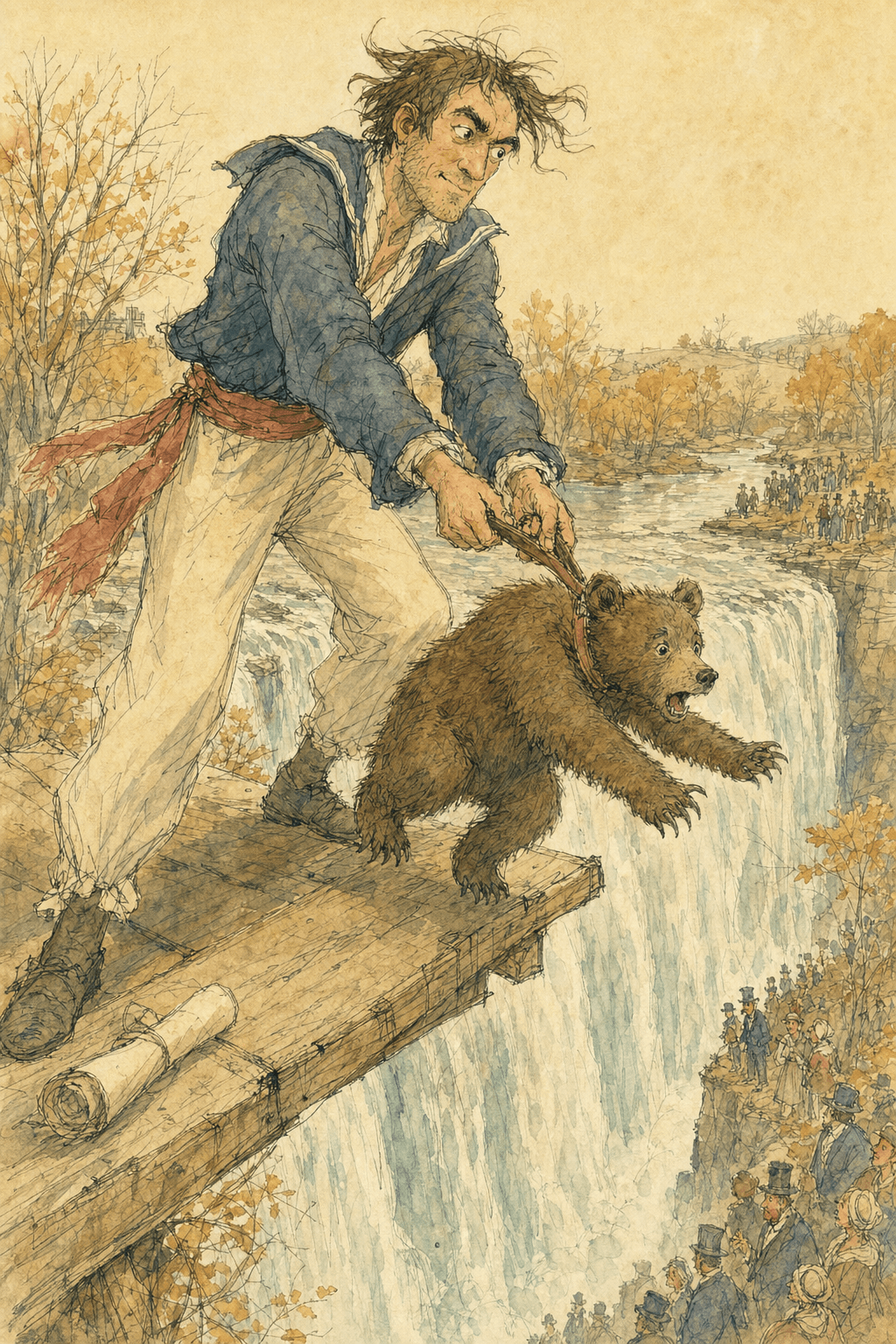
The Bear Went First
Sam Patch's final act opened with him shoving a bear cub off a hundred-foot waterfall in front of eight thousand people.
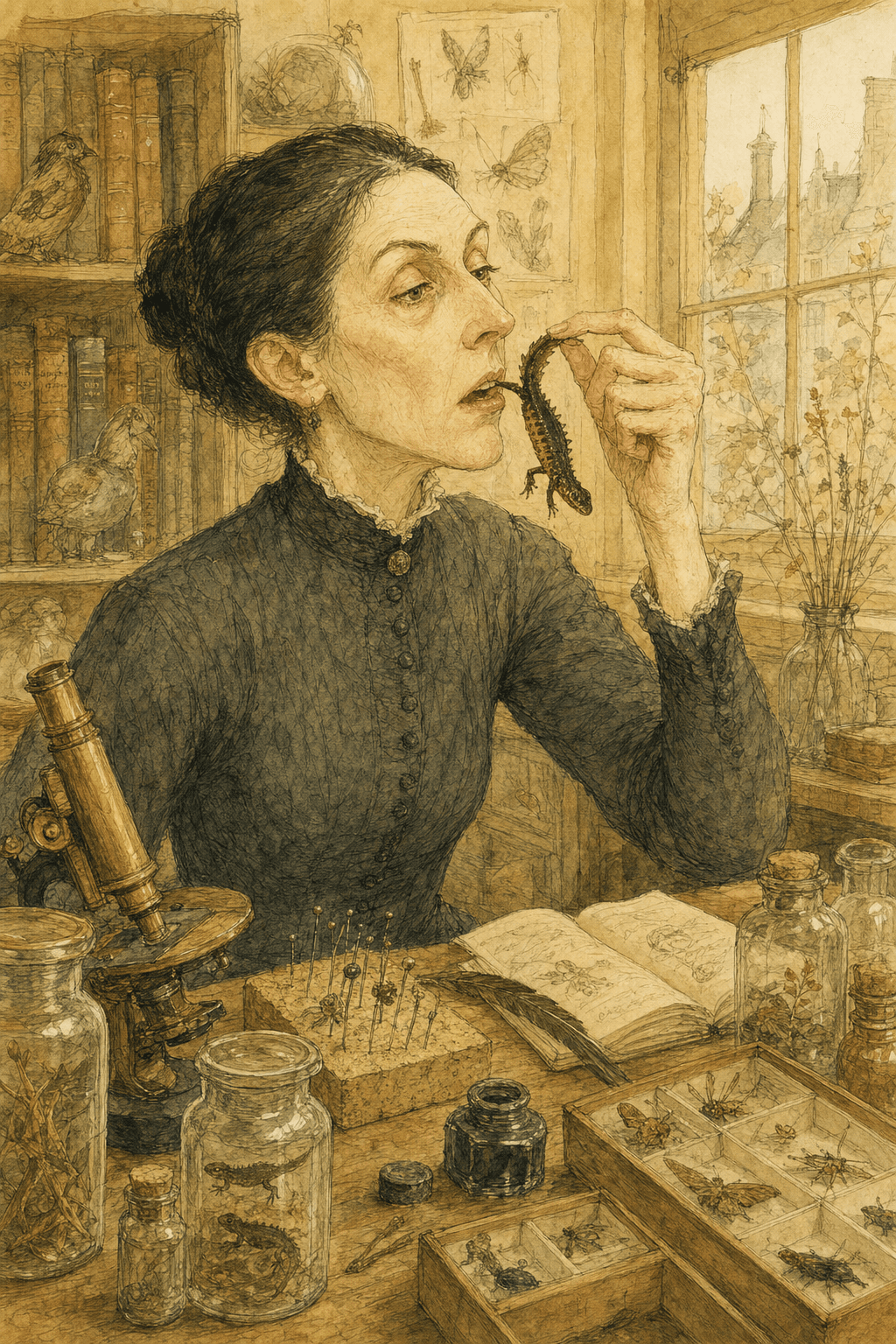
The Newt in Her Mouth
Eleanor Ormerod, the Royal Agricultural Society's consulting entomologist, kept live insect specimens in her pockets and produced them, unannounced, at meetings with farmers.
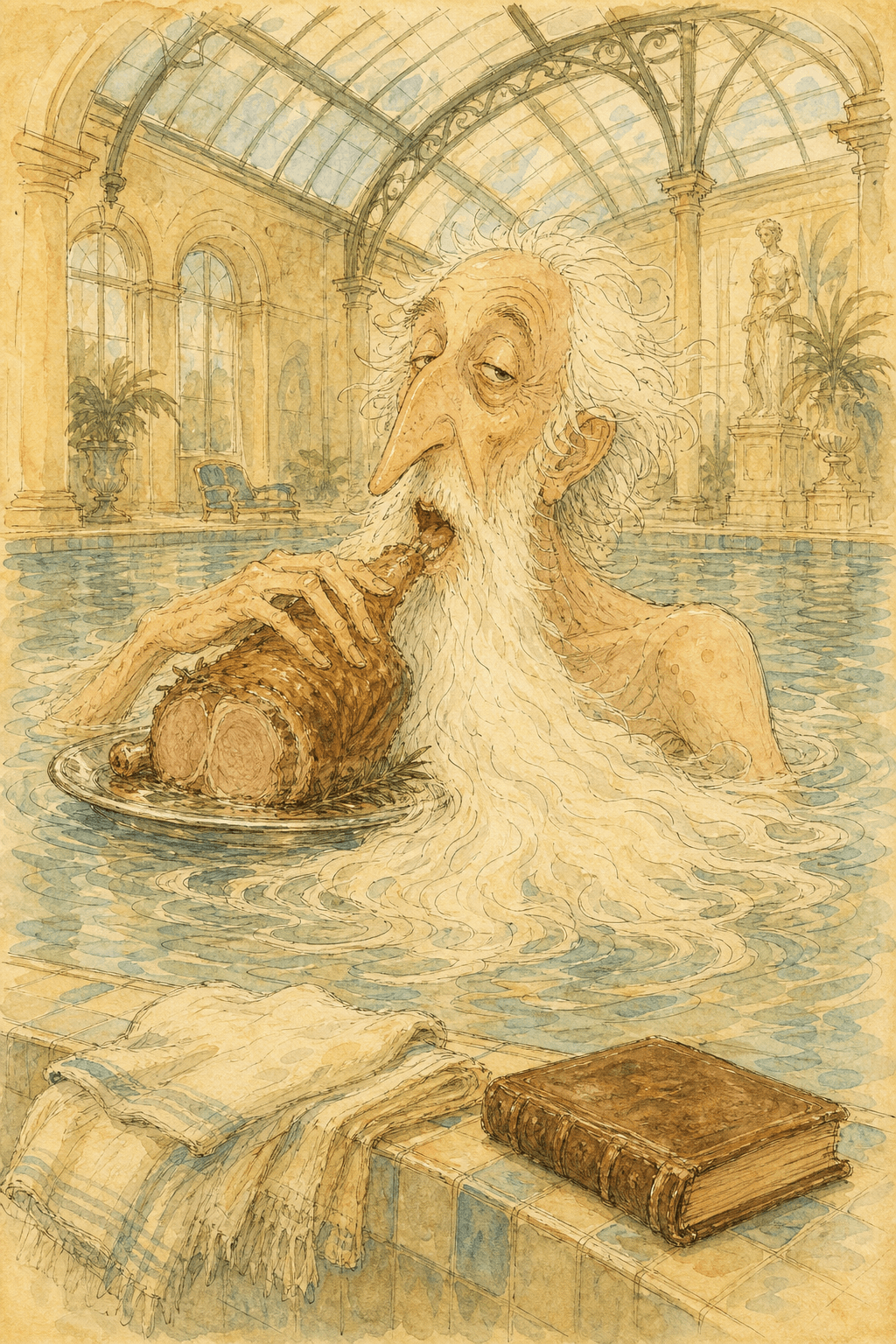
The Baron in the Bath
On rainy mornings, a Georgian peer walked miles to the sea to swim while his liveried footman, on the peer's orders, rode dry in the empty carriage behind him.
Wonder, delivered.
A fresh Oddlet in your inbox every morning, a full day before everyone else. True, strange and under a minute.
Free forever. Unsubscribe anytime.