Oddlet: Democritus · 1 min read
Apr 1, 2026
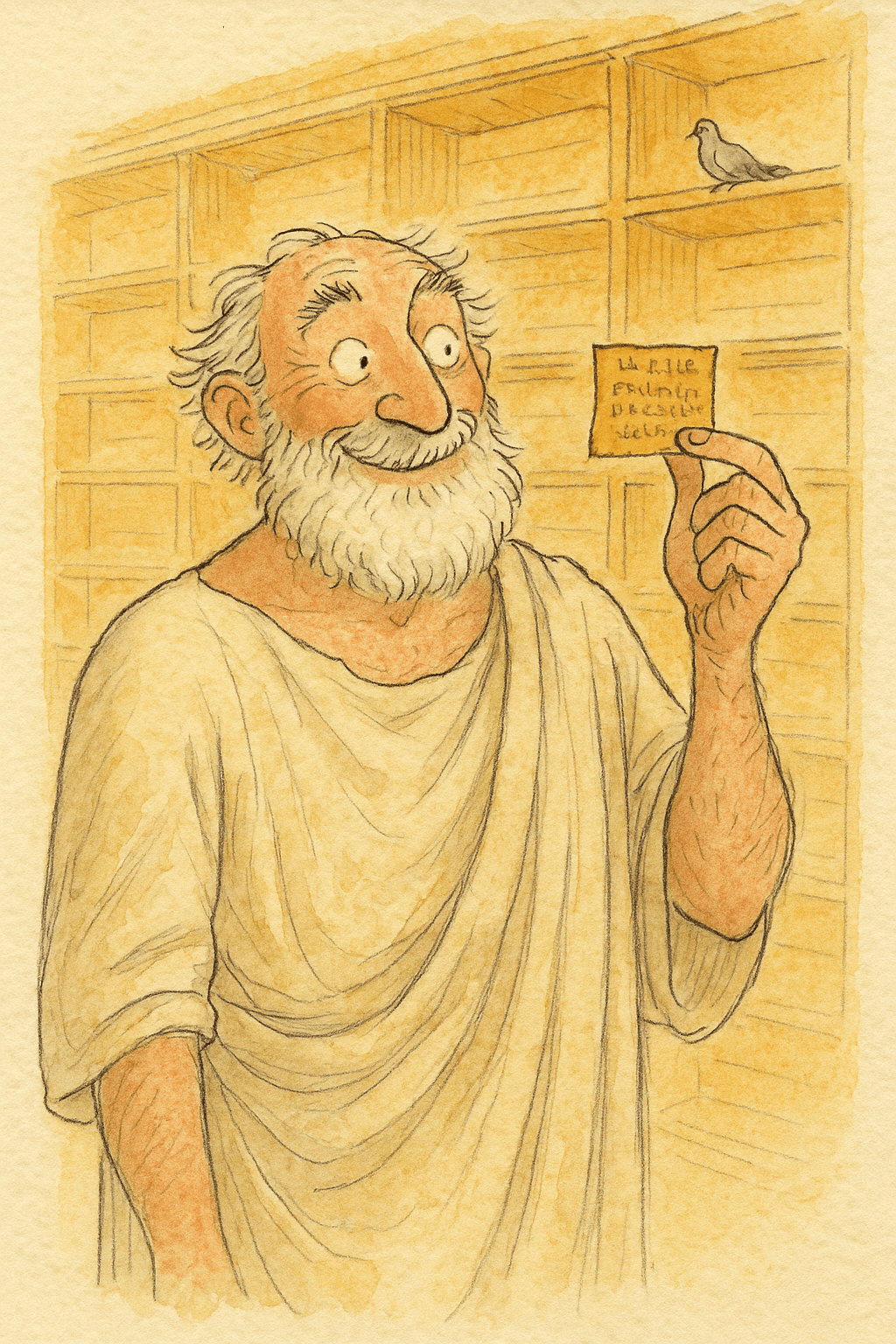
The Man Who Laughed at Everything
He correctly described the structure of all matter in the universe. Plato tried to have his books burned. Plato won.
Democritus of Abdera proposed, around 400 BC, that all matter in the universe was composed of tiny, indivisible particles moving through empty space. He called them atomos. He had no microscope, no laboratory, no experiments. He worked it out by thinking.
He was right. It took twenty-four centuries for anyone to prove it.
In the meantime, he laughed. At funerals. At elections. At men scrambling for money and power and fame. He laughed so constantly, and at such a wide range of human activity, that his fellow citizens concluded he had gone insane and summoned Hippocrates — the most famous physician in the ancient world — to come and cure him. Hippocrates examined Democritus, listened to his reasoning, and reportedly concluded that the citizens were the problem, not the philosopher.
He once visited Athens, the intellectual capital of the world, and later remarked that nobody there knew who he was. Plato, who almost certainly read his work, never mentioned him by name. Plato did, however, try to have his books burned.
Time finished what Plato started. Every word Plato wrote has survived intact for over two thousand years. Of Democritus's seventy-three works, not one remains whole. A few hundred fragments. That's all.
The man who correctly described the structure of all matter left us almost nothing.
Except the atoms.
Know someone who’d love this?
- **Wikipedia — Democritus** — Comprehensive overview with citations to primary sources (Diogenes Laërtius, Aristotle, Aristoxenus); good for cross-referencing claims. Reliability: high for a general reference; individual anecdotes flagged as uncertain.
- **Stanford Encyclopedia of Philosophy — Democritus** — Peer-reviewed philosophical reference. Most reliable source for the atomic theory's philosophical content and scholarly debate. Reliability: very high.
- **Britannica — Democritus** — Edited encyclopaedia entry. Reliable for biographical basics and atomic theory overview. Reliability: high.
- **World History Encyclopedia — Democritus** — Editorially reviewed; good for travel and influence details. Reliability: high.
- **Diogenes Laërtius via Perseus Digital Library** — Primary ancient source (3rd century CE). Reliability: essential but must be treated as ancient biography, not modern scholarship — many anecdotes unverifiable.
- **Famous Scientists — Democritus**

The Drunk Friend
How do you smuggle a corpse past the city guards without anyone asking questions?

The Cape Compromise
She swam thirteen miles down the Thames, twenty-two down the Danube, and got arrested walking onto a beach in Boston.

The Nanny Who Never Looked
What if one of the twentieth century's great photographers spent her whole life making pictures she never bothered to look at?
Wonder, delivered.
A fresh Oddlet in your inbox every morning, a full day before everyone else. True, strange and under a minute.
Free forever. Unsubscribe anytime.