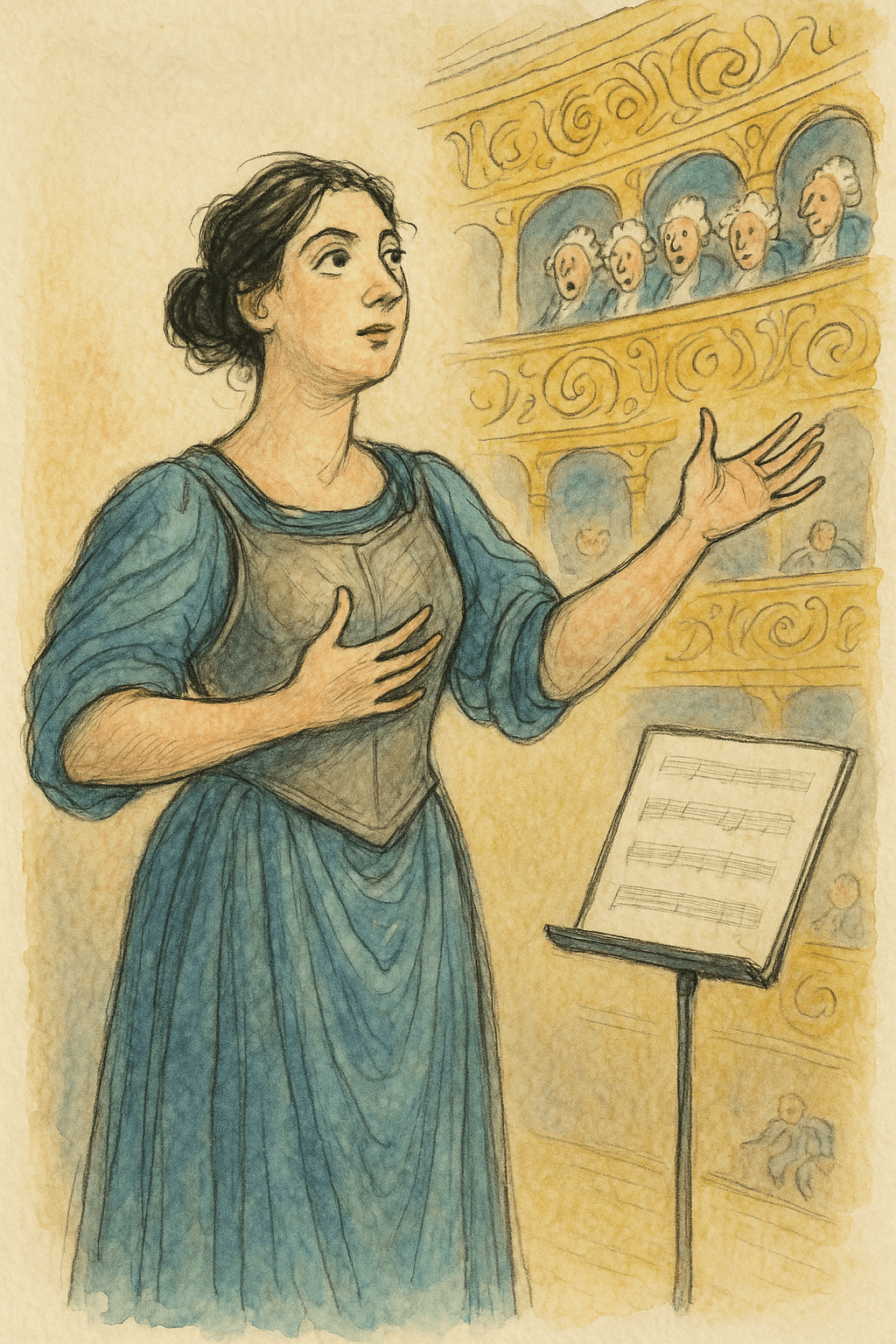
Oddlet: Julie d'Aubigny (La Maupin) · 1 min read
Apr 2, 2026
The Woman Who Rewrote French Opera With a Sword at Her Hip
She broke a woman out of a convent by stealing a dead nun's body, and then went back to singing.
Julie d'Aubigny could not read music. She learned every role by ear, memorized it on the spot, and by 1690 was performing lead roles at the Paris Opéra — the most prestigious stage in Europe. The Marquis de Dangeau, after hearing her sing at Trianon, wrote in his journal that hers was "the most beautiful voice in the world."
She had arrived at the Opéra with a death sentence over her head.
The details of how she earned it are brisk. She broke a woman out of a convent by stealing a dead nun's body, planting it in her companion's bed, and setting the building on fire. The court in Provence, unable to conceive of a woman committing such a crime, tried her as a man and sentenced her — in absentia — to death by burning. She got a royal pardon. At a ball, she kissed a young woman, was challenged to duels by three of the woman's suitors, defeated all three, and returned to the party. Louis XIV pardoned her again, reportedly noting that the law against dueling said nothing about women.
Through all of this, she kept singing. And in 1702, the composer André Campra did something no one in French opera had done before: he wrote Tancrède with a female lead who was not a soprano. He built the role of Clorinde specifically around her range.
Every mezzo-soprano who has sung a lead since is, in a small way, her heir.
Know someone who’d love this?
- **Wikipedia — Julie d'Aubigny** — Well-cited overview drawing on opera records and contemporary diaries; notes clearly where facts are disputed. Good starting point; caveats about legendary embellishment are explicit.
- **Los Angeles Public Library Blog — Alan Westby** — Focuses specifically on her documented opera career; most reliable source for musical legacy and vocal range. Distinguishes documented opera history from biographical legend.
- **Encyclopedia.com — Maupin, d'Aubigny (c. 1670–1707)** — Scholarly encyclopedia entry drawing on primary sources including judicial documents and period memoirs. Strongest source for the Brussels episode and Maximilian II Emanuel detail.
- **Kelly Gardiner — "The Real Life of Julie d'Aubigny"** — Written by a novelist who spent four years researching d'Aubigny; careful to distinguish documented fact from legend. Useful for the Provence trial detail and the Comte d'Albert episode.
- **TV Tropes — UsefulNotes/Julie d'Aubigny** — Unusually rigorous for the platform; explicitly flags which stories are likely fictional vs. documented. Useful for the nuance that some duel stories may be embellished.

The Drunk Friend
How do you smuggle a corpse past the city guards without anyone asking questions?
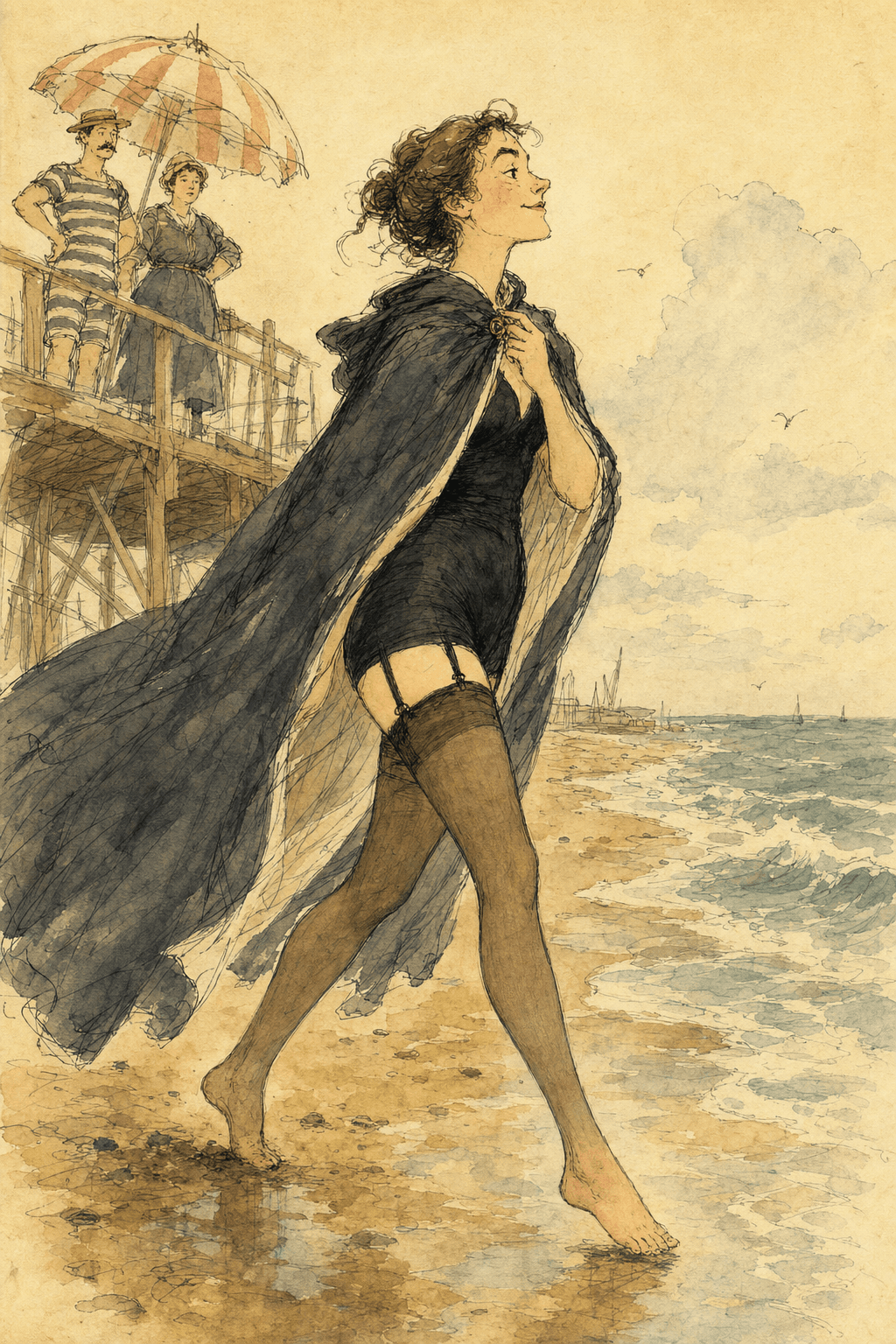
The Cape Compromise
She swam thirteen miles down the Thames, twenty-two down the Danube, and got arrested walking onto a beach in Boston.
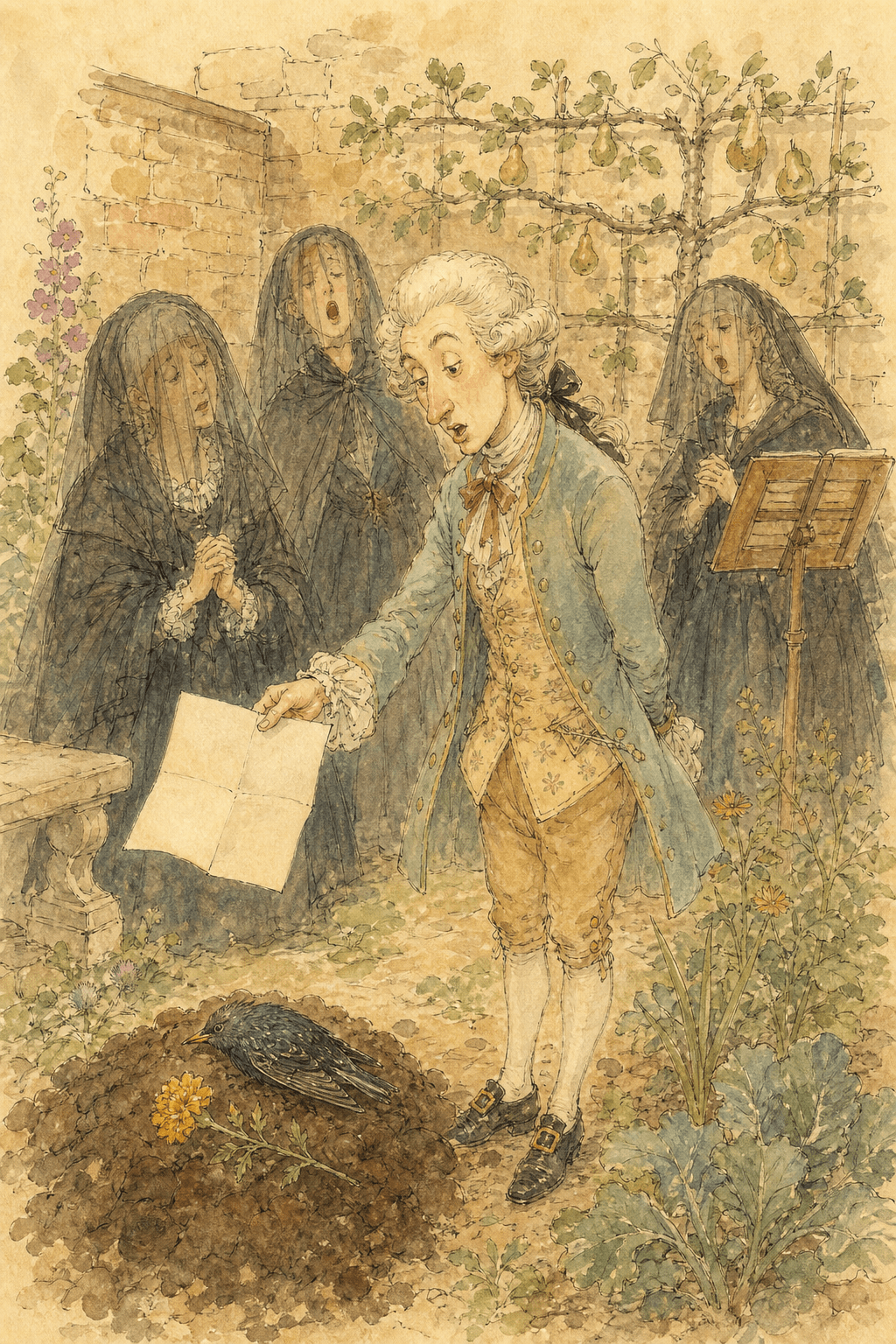
Vogel Stahrl, 34 Kreuzer
What does a composer owe a shop bird that whistles his six-week-old concerto back at him, holds a fermata he never wrote, and sharpens a single G?
Wonder, delivered.
A fresh Oddlet in your inbox every morning, a full day before everyone else. True, strange and under a minute.
Free forever. Unsubscribe anytime.