Oddlet: Srinivasa Ramanujan · 1 min read
Feb 14, 2026 · Updated Feb 20, 2026
The Mathematician Who Dreamed in Equations
A goddess wrote equations on his tongue in dreams, and when mathematicians finally checked his work, he was right.
In January 1913, G.H. Hardy — one of the finest mathematicians in England — received a letter from an unknown clerk in Madras. It contained 120 theorems. Hardy assumed it was a prank. Then he sat down and actually read them.
Some of the formulas he recognized. Some he could prove with effort. Some, he later wrote, "defeated me completely; I had never seen anything in the least like them before." The clerk had no degree. He had failed out of college twice, both times because he refused to study anything other than mathematics. He had reinvented a century of European number theory alone, working in notebooks, while processing accounts at the Madras Port Trust.
Hardy brought Srinivasa Ramanujan to Cambridge. He later devised a personal scale for rating mathematical talent, with 100 as the ceiling. He gave himself 25. He gave Ramanujan 100.
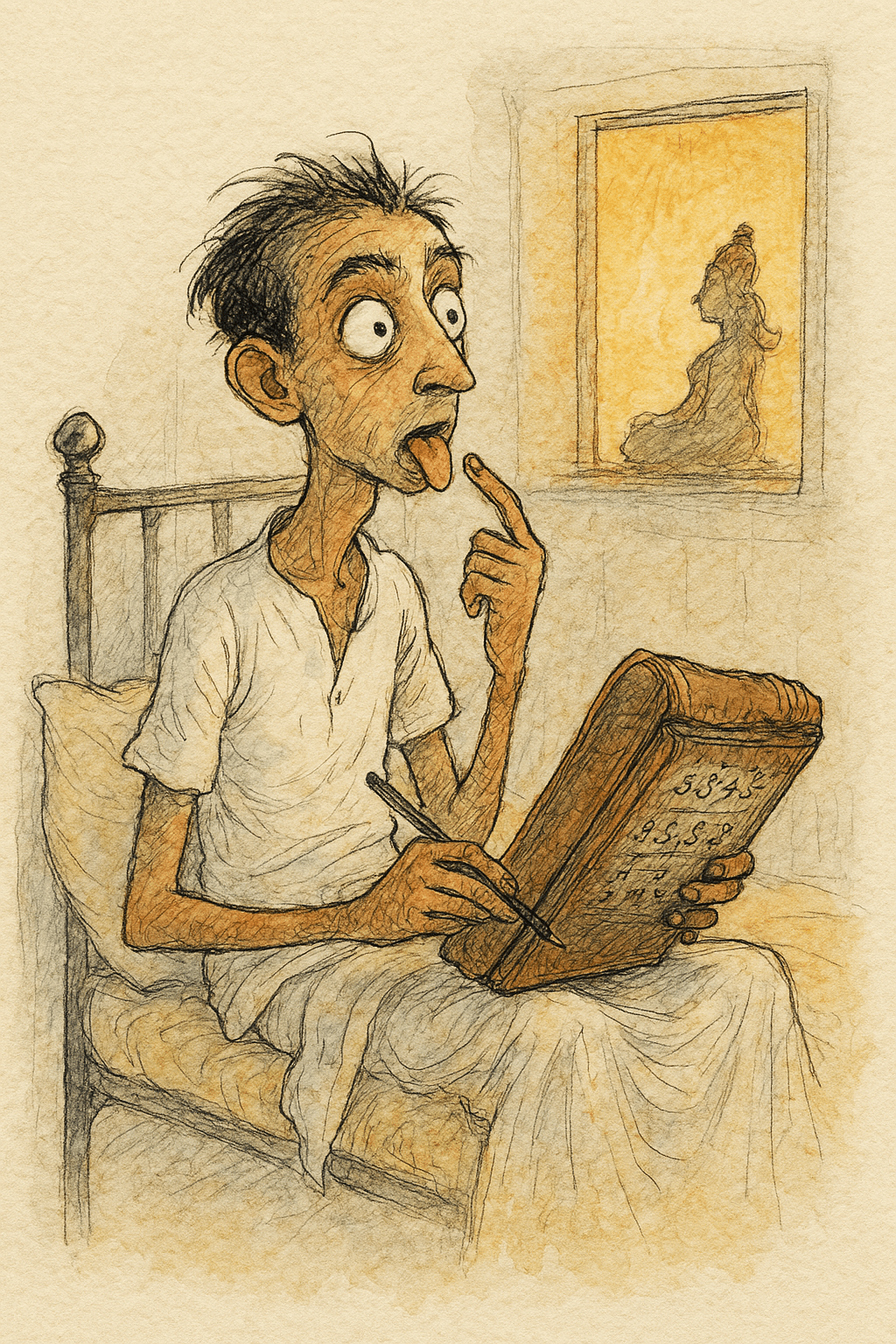
Ramanujan produced nearly 3,900 original results during his short life, many without formal proof. When colleagues asked how he arrived at formulas that seemed to come from nowhere, he had a consistent answer. The goddess Namagiri appeared to him in dreams, he said, and wrote equations on his tongue. He would wake and transcribe them.
He died at thirty-two. He left behind three notebooks. A fourth, lost for decades, was found in a box at Trinity College in 1976. Mathematicians are still proving him right.
Know someone who’d love this?
- Wikipedia: Srinivasa Ramanujan — Comprehensive biographical details, dates, and mathematical contributions verified. Notes Hardy's initial reaction and the scale rating anecdote.
- MacTutor History of Mathematics — Confirms college failures, poverty, and the 1913 letter details. Provides context on his self-taught background and work conditions.
- The Man Who Knew Infinity (book basis) — Britannica entry confirms key dates, Hardy collaboration, and the extraordinary nature of his mathematical intuition. Notes his death at 32 from illness.
- Trinity College Cambridge — Confirms his fellowship at Trinity (1918) and collaboration with Hardy. Notes the 'lost notebook' discovered in 1976.
The Wrapping
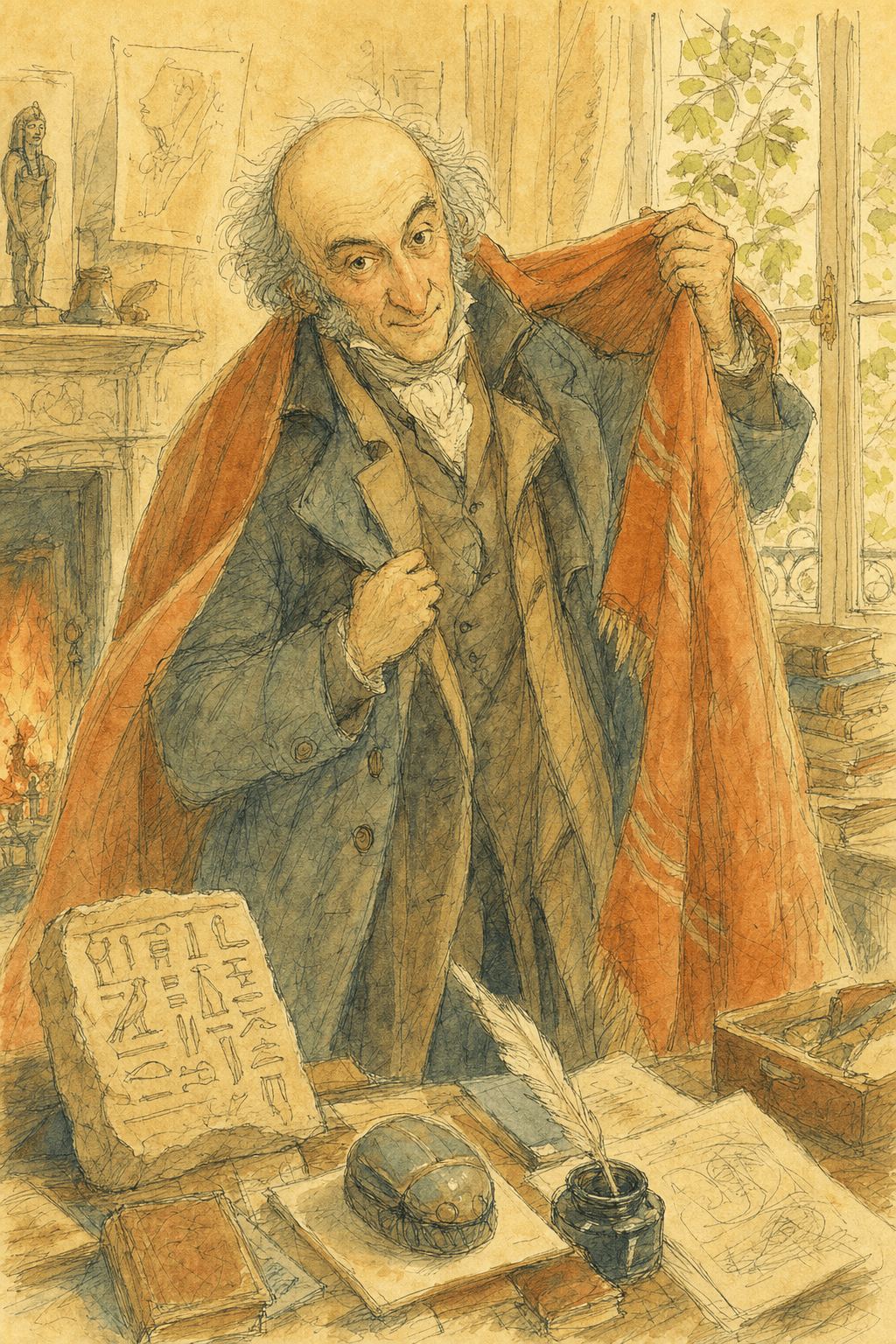
The man whose equations run every JPEG, MP3, and MRI scan came back from Egypt convinced heat was the secret to staying alive — and wore several overcoats indoors, in summer, until it killed him.

Paint Sacred Art
What does a 59-year-old Baptist preacher do when a face appears in a smudge of paint on his fingertip and tells him to start painting?

The Man Who Would Not Be Seen
What does the richest man in America do when a photographer finally catches him on the street at age 80?
Wonder, delivered.
A fresh Oddlet in your inbox every morning, a full day before everyone else. True, strange and under a minute.
Free forever. Unsubscribe anytime.