Oddlet: Moonlight Sonata's Namesake: Giulietta Guicciardi · 1 min read
Apr 15, 2026
The Woman Who Got the Moonlight by Accident
The most famous piano dedication in history was a last-minute substitution, named by a man who never met her, for a woman who was busy doing other things.
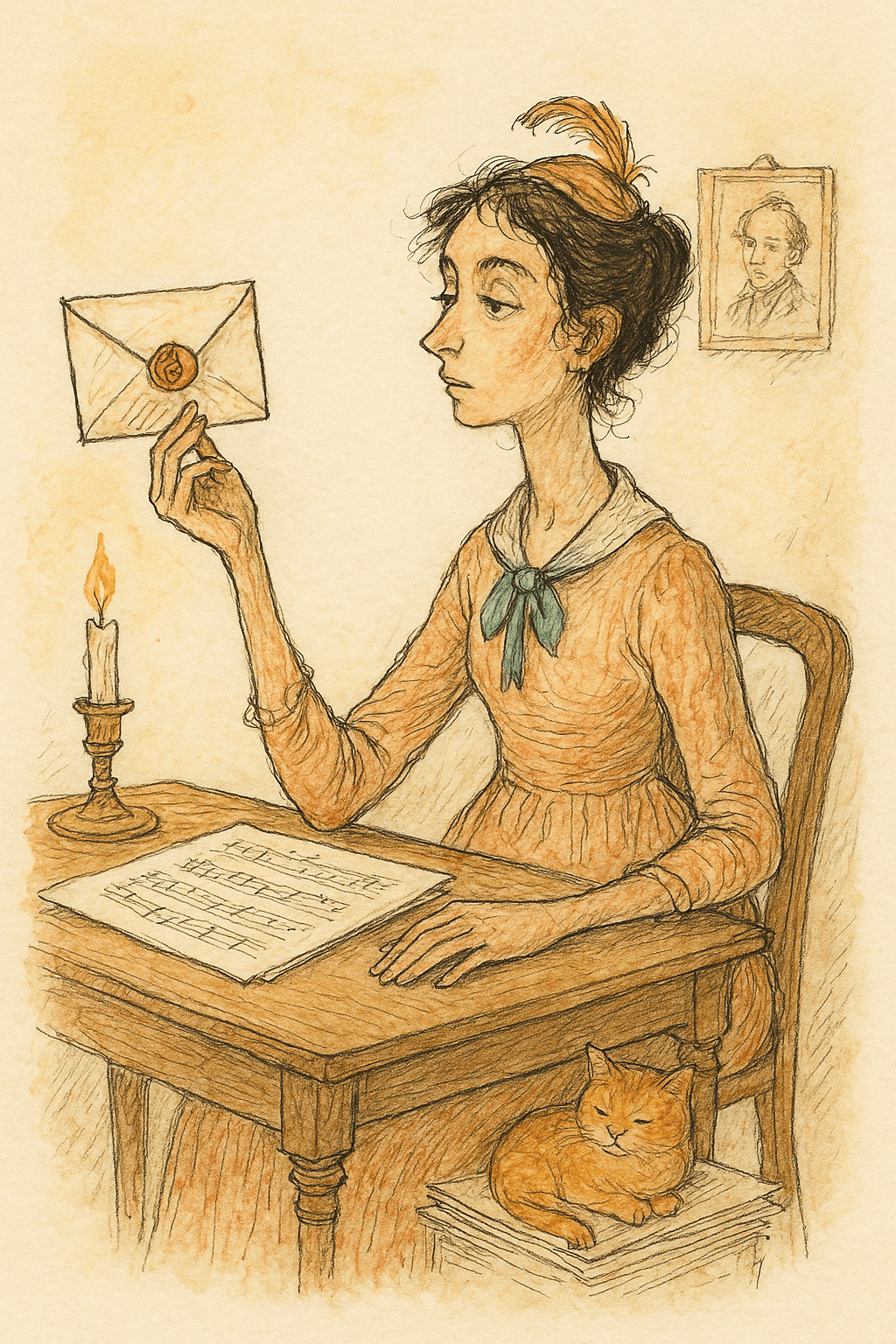
Countess Julie Guicciardi arrived in Vienna in 1800, and the city noticed. She was young, beautiful enough that society called her "La Bella Guicciardi," and she needed a piano teacher. She got Beethoven.
He fell in love almost immediately. She, by most accounts, did not.
Beethoven had written a Rondo in G for her — a pleasant, warm little piece. But when political obligations forced him to dedicate that rondo to someone else, he needed a substitute. He rummaged through his recent work and landed on a sonata he'd titled Quasi una Fantasia. It was dark, strange, unlike anything he'd written before. He put her name on it and sent it to the publisher.
One imagines Julie received the news with approximately the same enthusiasm she'd shown for his affections.
She married Count Gallenberg, a composer of ballet music, in 1803. They moved to Naples. A decade later, she turned up at the Congress of Vienna as an informal diplomatic emissary for Napoleon's brother-in-law, working the most powerful room in Europe while Metternich and Talleyrand redrew the map. Meanwhile, a poet named Rellstab decided Beethoven's sonata sounded like moonlight on a lake, and the nickname stuck.
The most famous piano dedication in history was a last-minute substitution, named by a man who never met her, for a woman who was busy doing other things.
Know someone who’d love this?
- **Wikipedia — Julie Guicciardi** — Well-maintained article with footnotes citing Thayer's *Life of Beethoven*, baptismal records, and tombstone evidence; reliable for core biographical facts. Notes ongoing scholarly disputes about birth year.
- **Classic FM — Giulietta Guicciardi (1784–1856)** — Useful secondary source; includes anecdote from Lady Pia Chelwood (a claimed descendant), which is unverified family oral history — treat with caution.
- **Wikipedia — Piano Sonata No. 14 (Beethoven)** — Strong sourcing on the sonata's composition, dedication history, and the Rondo/Lichnowsky substitution, citing Thayer directly.
- **Britannica — Ludwig van Beethoven: Beethoven and Women** — Authoritative tertiary source; confirms the Gallenberg marriage, Beethoven's later contempt, and the Immortal Beloved debate.
- **Unheard Beethoven — February 4, 1823** — Transcription and commentary on Beethoven's Conversation Notebook 22; cites Theodore Albrecht's scholarly edition (Boydell & Brewer, 2020). High reliability for the 1823 café conversation quotes.
The Newt in Her Mouth
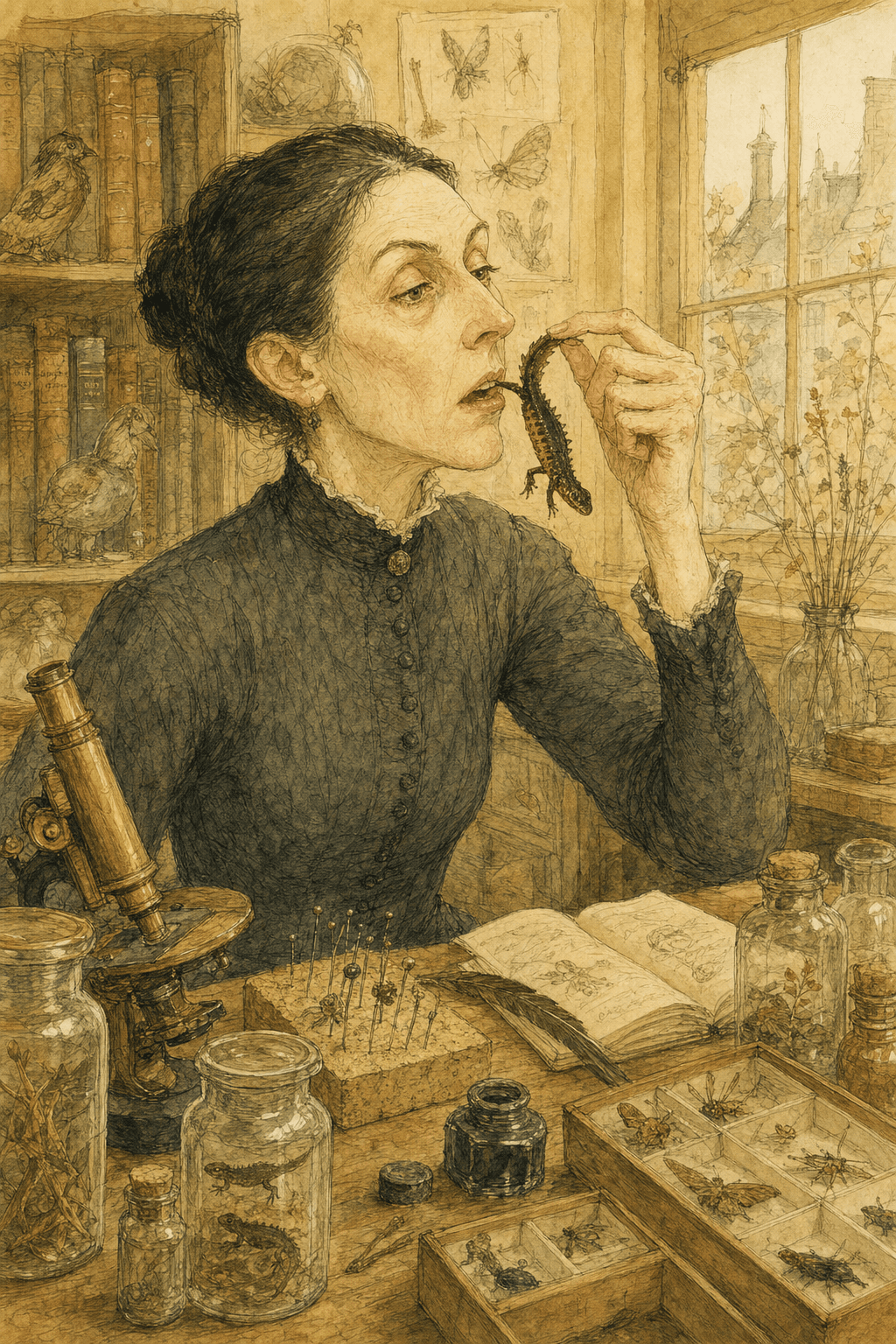
Eleanor Ormerod, the Royal Agricultural Society's consulting entomologist, kept live insect specimens in her pockets and produced them, unannounced, at meetings with farmers.
The Return to Life
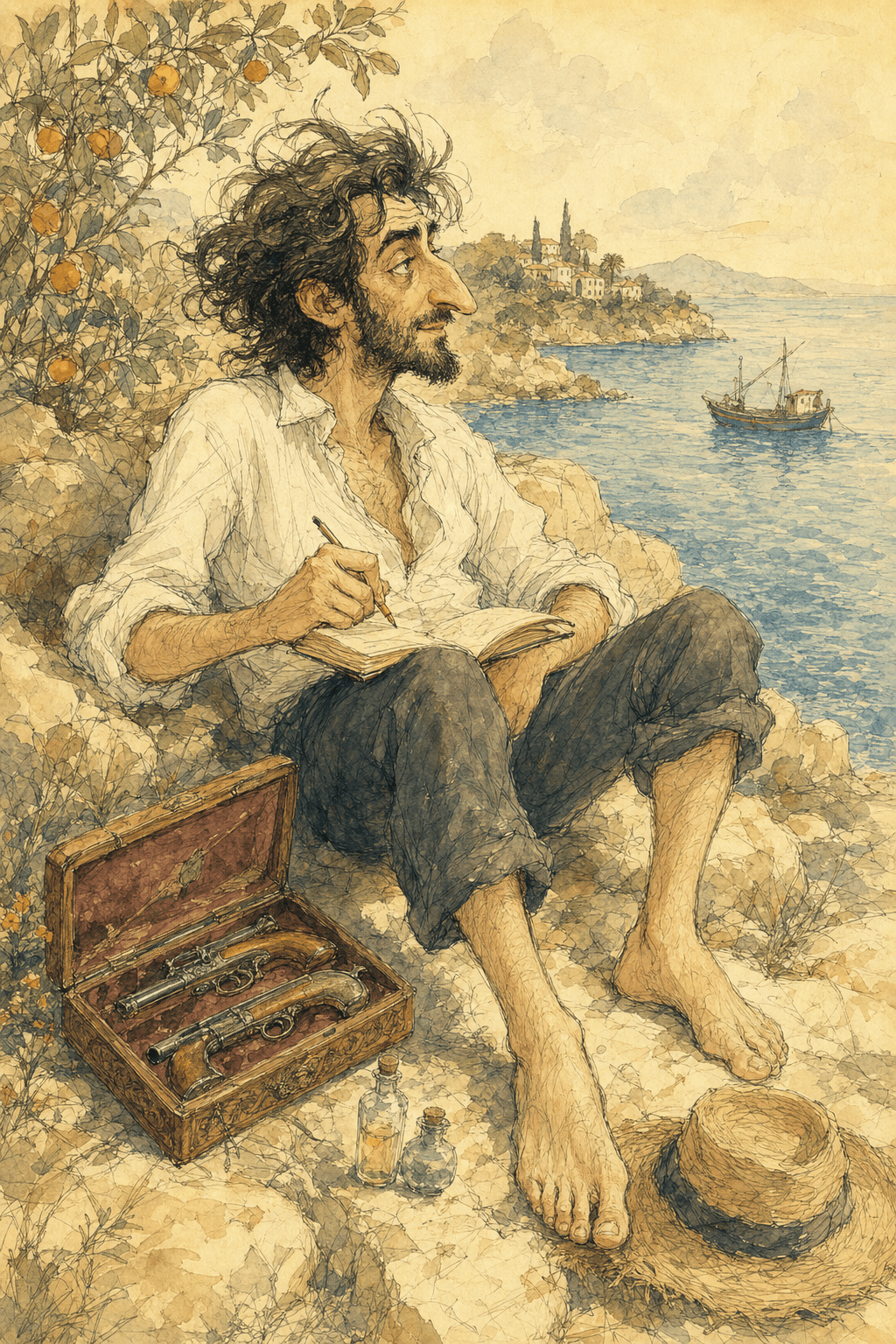
In 1831, a jilted composer sketched a two-minute plan involving a lady's maid disguise, a pair of double-barrelled pistols, and two vials of poison in case the pistols failed.
Vogel Stahrl, 34 Kreuzer
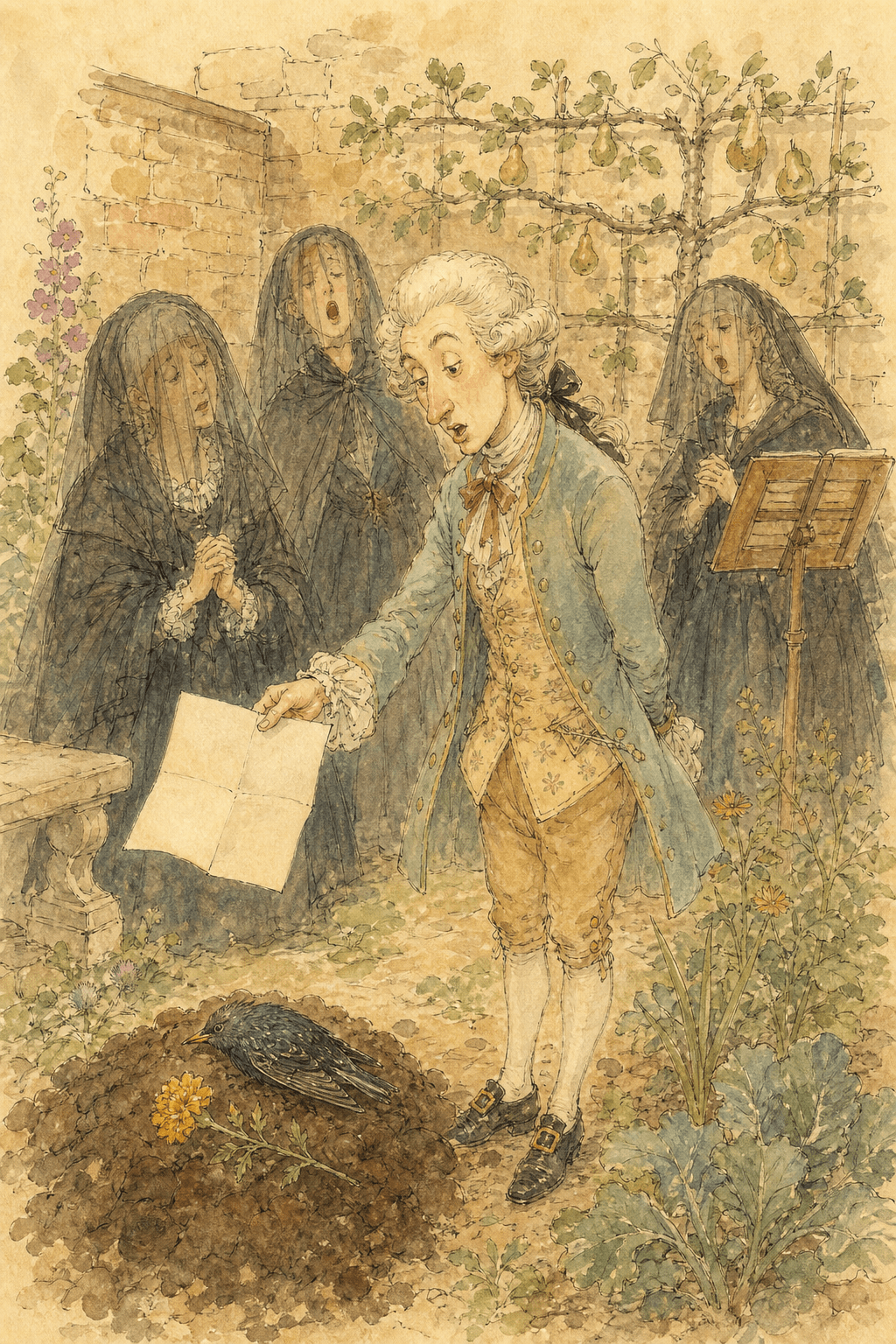
What does a composer owe a shop bird that whistles his six-week-old concerto back at him, holds a fermata he never wrote, and sharpens a single G?
Wonder, delivered.
A fresh Oddlet in your inbox every morning, a full day before everyone else. True, strange and under a minute.
Free forever. Unsubscribe anytime.