Oddlet: Robert Hooke · 1 min read
May 30, 2026
The Man Without a Face
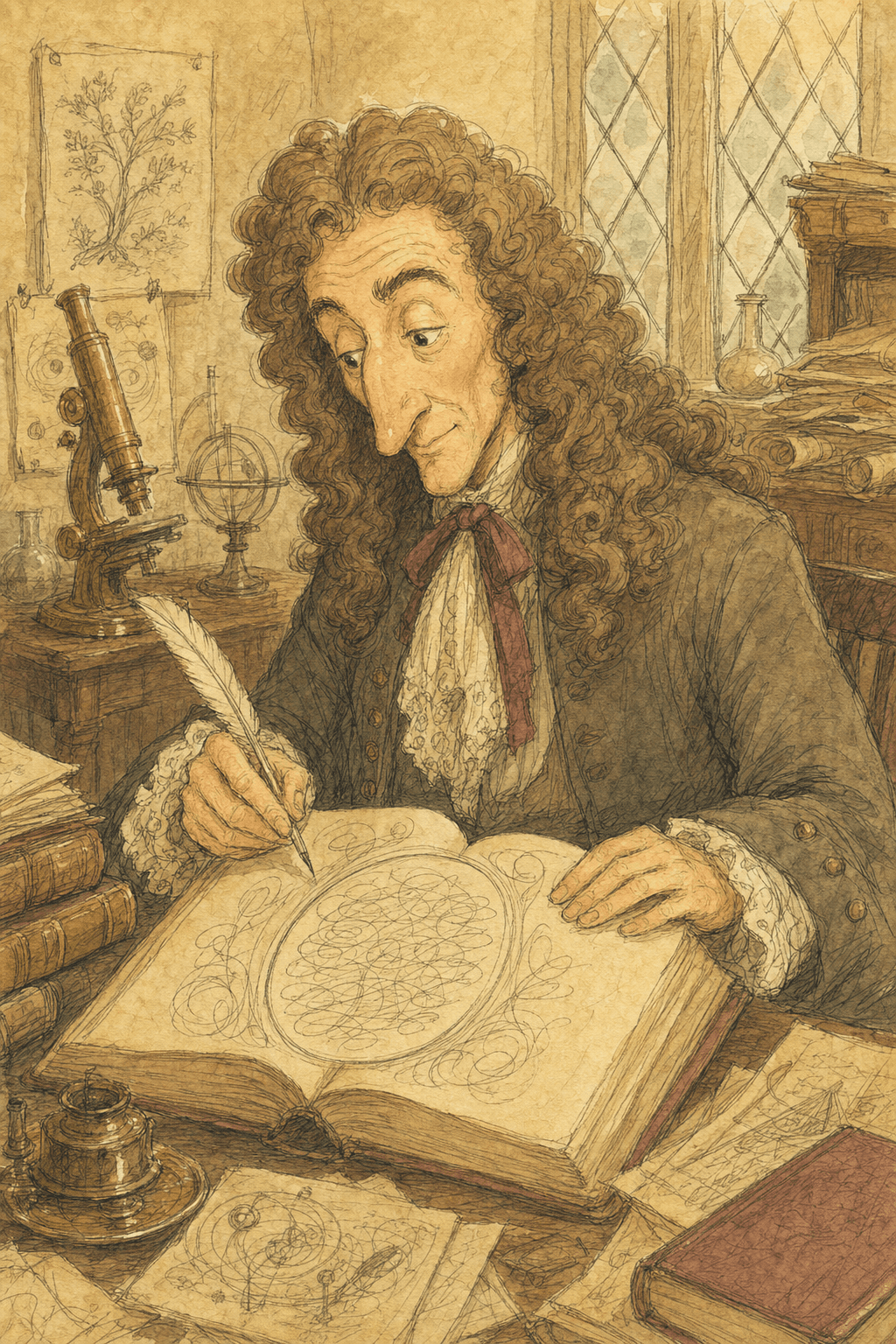
How do you lose the face of the man who coined the word cell, wrote a law of physics, and rebuilt half of London?
Robert Hooke looked at a sliver of cork in 1665 and gave us the word cell. He wrote the law that holds every bridge and bedspring together. He surveyed roughly four thousand burned London plots after the Great Fire, designed Bedlam and the Royal College of Physicians, raised the Monument with a secret laboratory hollowed out beneath it, and for forty years he invented three or four new experiments every week for the Royal Society, on contract, like a milkman.
Nobody knows what he looked like.
The closest thing we have was written by Richard Waller, his friend and editor, who in 1705 sat down to edit Hooke's posthumous works with a portrait-sized blank at the front of the book and filled it with this: "always very pale and lean, and latterly nothing but Skin and Bone, with a meagre Aspect... his Mouth meanly wide, and upper Lip thin." The most-quoted humility line in science, Newton's letter about giants' shoulders, was written to a man who was crooked and five feet tall. Make of that what you will. In 1891 workmen lifting the floor of St Helen's Bishopsgate found roughly a thousand crushed coffins; ten were identified; his was not, and his bones were carted to a common grave in Wanstead. The face on every textbook page today was painted in 2004 by a woman who had to guess from these descriptions.
He built a city and named a building block of life.
We are still looking for him.
Know someone who’d love this?
- Britannica — Robert Hooke — Encyclopedic biographical overview confirming birth (18 July 1635, Freshwater, Isle of Wight), death (3 March 1703, London), Royal Society appointments, Micrographia, Hooke's law, and the Newton dispute.
- Wikipedia — Robert Hooke — Detailed biography with dates: £80 Curator of Experiments salary (11 January 1665), Gresham Professor 20 March 1665, Joint Secretary 19 December 1677, architectural commissions, £8,000 found at death.
- Royal Society blog — Hooke, Newton, and the 'missing' portrait — Primary source on the missing-portrait controversy: documents von Uffenbach's 1710 claim, the move to Crane Court under Newton, and the scholarly skepticism about a contemporary portrait having existed.
- UC Berkeley Museum of Paleontology — Robert Hooke — Academic museum source on his scientific inventions (universal joint, iris diaphragm, anchor escapement, balance spring), role as Chief Surveyor after the Great Fire, and Pepys's praise of Micrographia.
- Notes and Records of the Royal Society — Hooke, Wren and the Monument — Peer-reviewed article on the Hooke/Wren collaboration on the Monument, including its design as a scientific instrument.
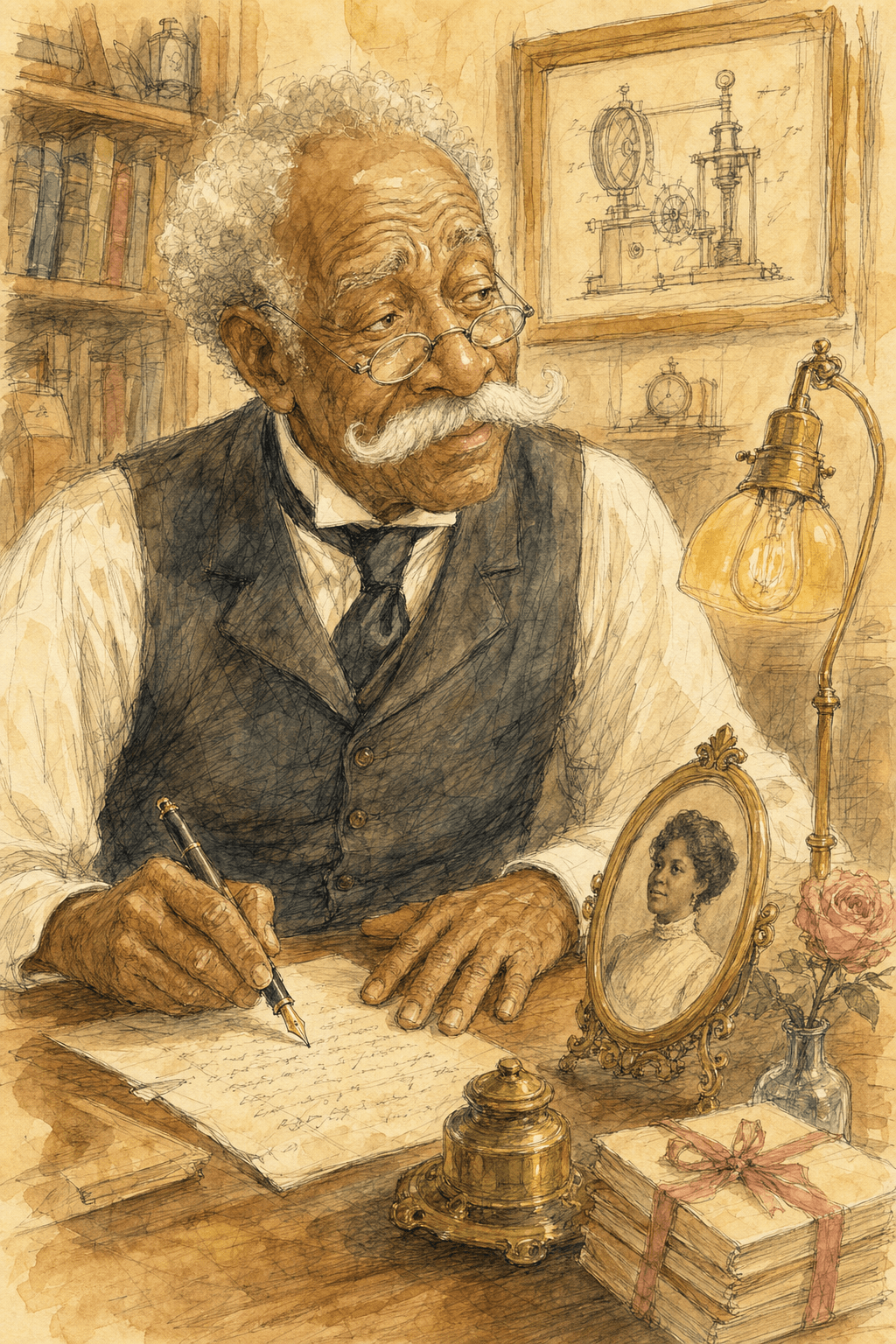
Fifty Copies
The only Black member of the Edison Pioneers, the man who drafted Bell's telephone patent and fixed the lightbulb, wrote love poems on the side.
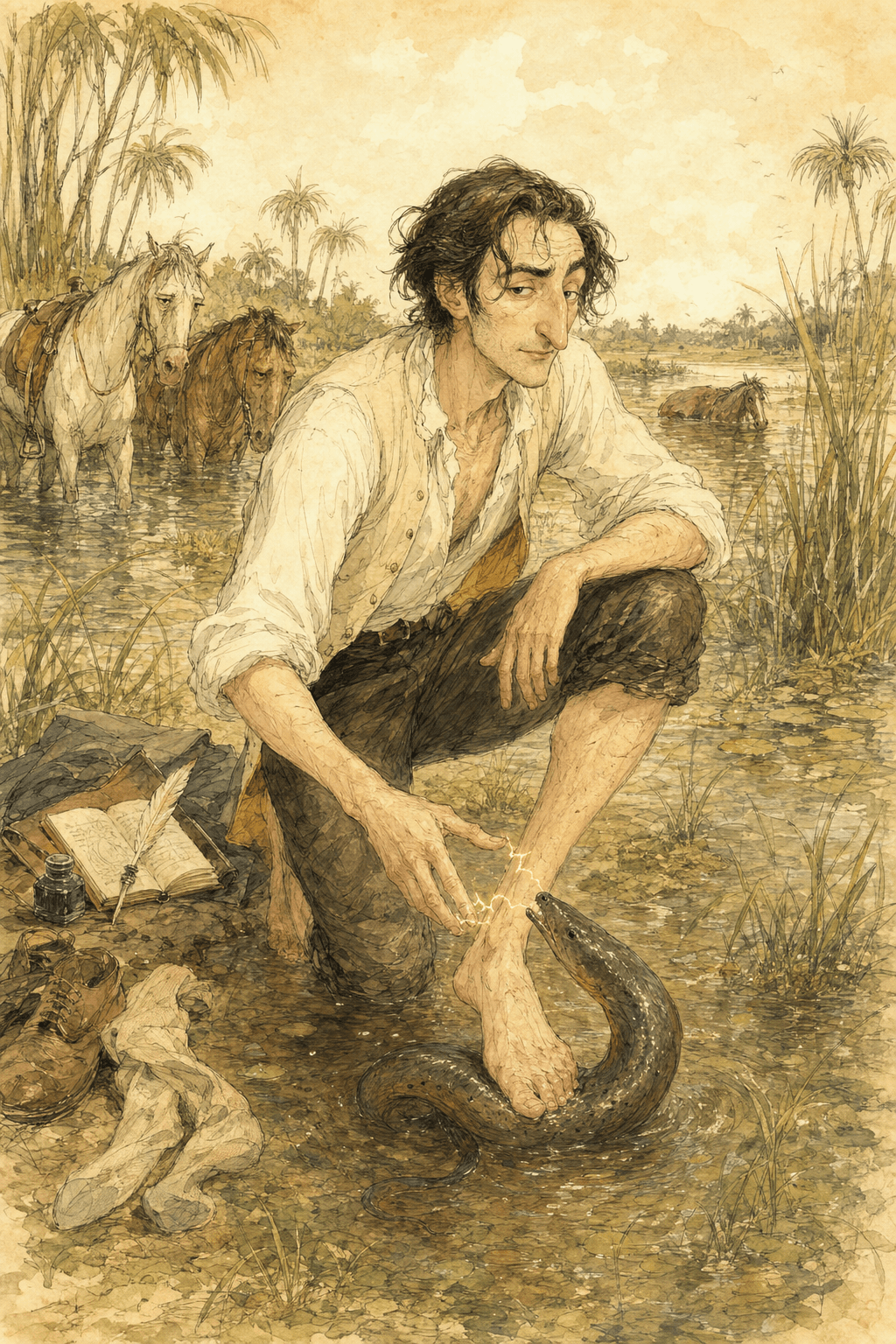
The Horses and the Eels
In March 1800, Alexander von Humboldt drove thirty wild horses into a Venezuelan pool to exhaust the electric eels, then waded in barefoot and dissected one while it kept shocking him.
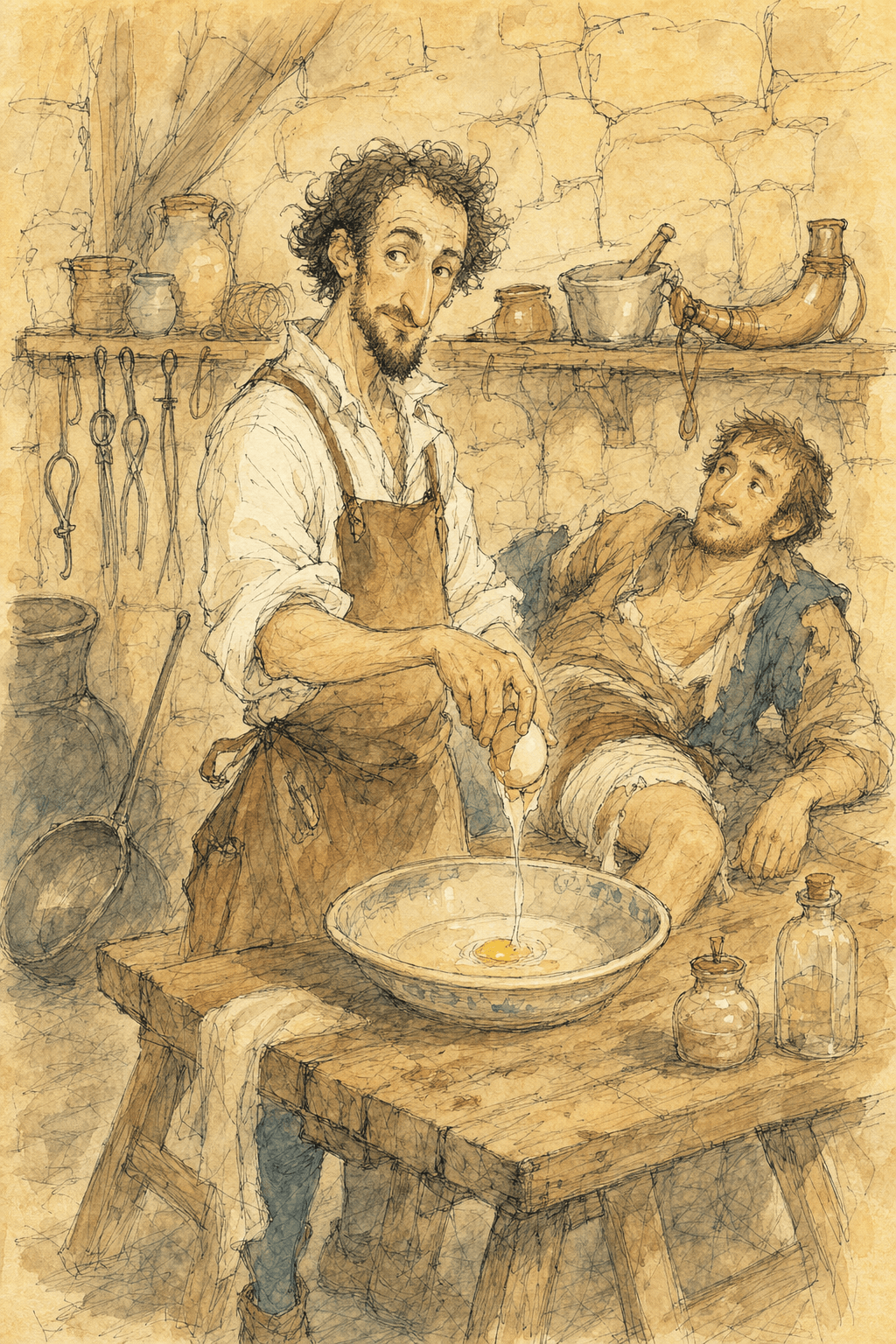
Egg Yolk, Rose Oil, Turpentine
One night in October 1537, a French army surgeon ran out of the boiling oil he was supposed to pour into gunshot wounds, and improvised a dressing of egg yolk, rose oil, and turpentine.
Wonder, delivered.
A fresh Oddlet in your inbox every morning, a full day before everyone else. True, strange and under a minute.
Free forever. Unsubscribe anytime.