Oddlet: Lord Byron · 1 min read
Mar 6, 2026
The Poet Who Brought a Bear to College
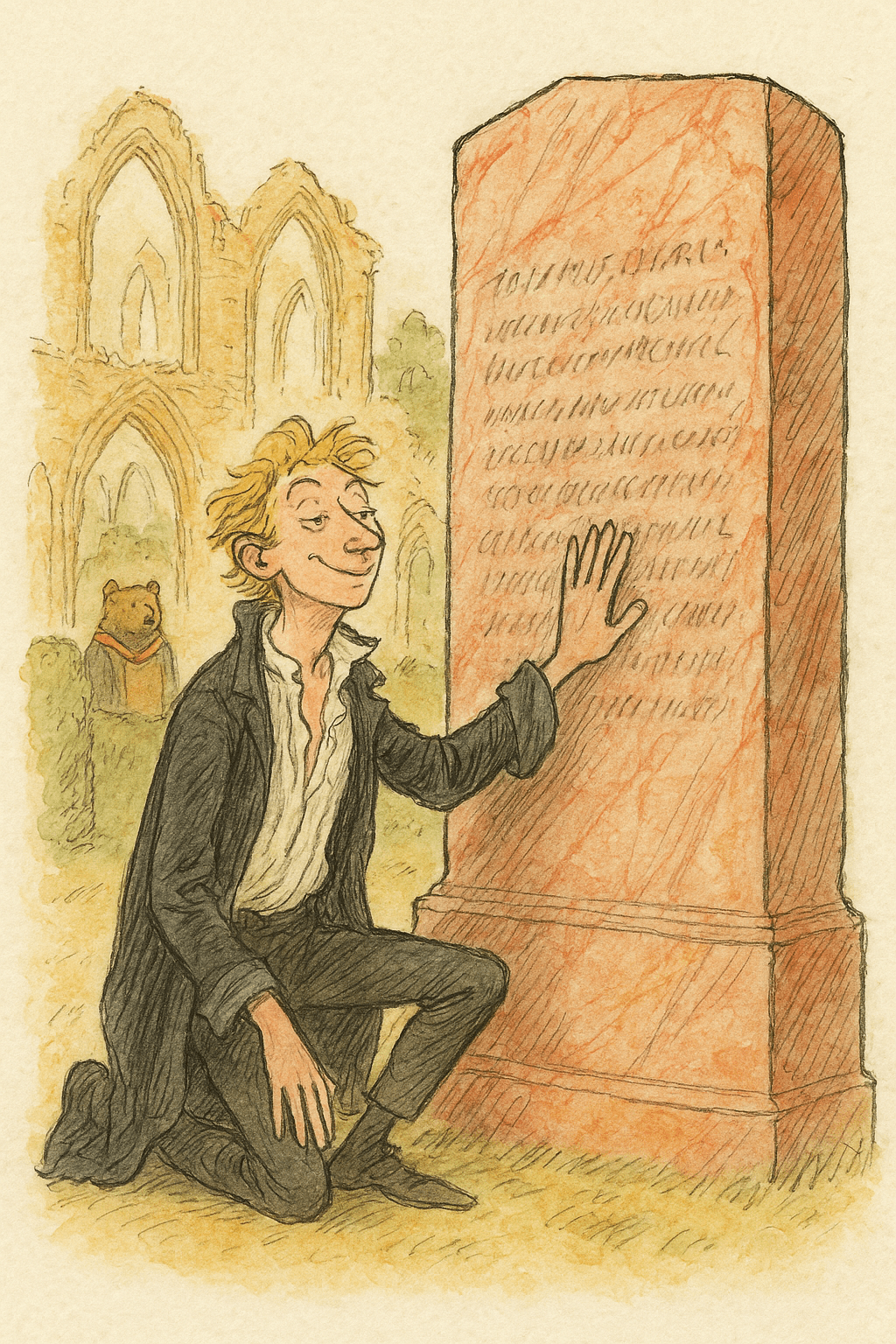
When Trinity College banned dogs from student rooms, Byron checked the statutes, confirmed they said nothing about bears, and installed one.
George Gordon Byron wrote some of the most celebrated poetry in the English language. He became famous overnight when Childe Harold's Pilgrimage sold out in three days. He swam the Hellespont. He died at thirty-six fighting for Greek independence, and his death arguably helped win the war.
He also kept a bear at Cambridge because nobody said he couldn't.
When Trinity College informed Byron that dogs were not permitted in student rooms, he consulted the statutes, confirmed that they mentioned nothing about bears, and installed a tame one in his turret lodgings. He reportedly suggested it might sit for a fellowship. At his ancestral home, Newstead Abbey, the menagerie eventually included a wolf, a fox, a badger, monkeys, an eagle, a crow, a falcon, and — if secondary sources are to be believed — a crocodile. He once described his household as a Noah's Ark without the flood.
But the animal Byron loved most was a Newfoundland dog named Boatswain. When Boatswain contracted rabies in November 1808, Byron nursed him through it personally, wiping the foam from his dying dog's mouth with his bare hands. He knew what rabies was. He did not care.
He buried Boatswain at Newstead Abbey and built him a monument. It is larger than Byron's own grave.
Know someone who’d love this?
- Wikipedia — Lord Byron — Covers the Cambridge bear episode, the Newstead menagerie, Boatswain's death, and Byron's death in Greece. A useful overview but a secondary/tertiary source; specific claims should be verified against primary sources.
- Fiona MacCarthy, 'Byron: Life and Legend' (2002), via Google Books preview — Regarded as the authoritative modern biography; covers the Cambridge bear story and the Newstead menagerie in detail. Direct URL to full text requires library access; Google Books preview available. The crocodile claim appears in some secondary sources but MacCarthy's treatment should be checked for primary confirmation.
- Newstead Abbey Heritage Site — Boatswain's Monument — The monument to Boatswain at Newstead Abbey is a documented physical artefact; the inscription includes Byron's 'Epitaph to a Dog.' The monument's dimensions being larger than Byron's own grave marker is widely reported in Byron scholarship.
- British Library — Romantics and Victorians: Byron — Covers Byron's overnight fame after 'Childe Harold' (1812), his exile from England in 1816, and his death at Missolonghi. Reliable institutional source.
- Poetry Foundation — Lord Byron biography — Concise factual biography covering key dates, works, and the Greek campaign. Notes Byron's death on 19 April 1824 and the role of his physicians' bloodletting.

Wonder, delivered.
A fresh Oddlet in your inbox every morning, a full day before everyone else. True, strange and under a minute.
Free forever. Unsubscribe anytime.